
Decoding the technologies of tomorrow, today.
Exploring the breakthrough innovations shaping our world. From AI infrastructure and robotics to biotech, quantum computing, and spatial tech.
Exploring the breakthrough innovations shaping our world. From AI infrastructure and robotics to biotech, quantum computing, and spatial tech.
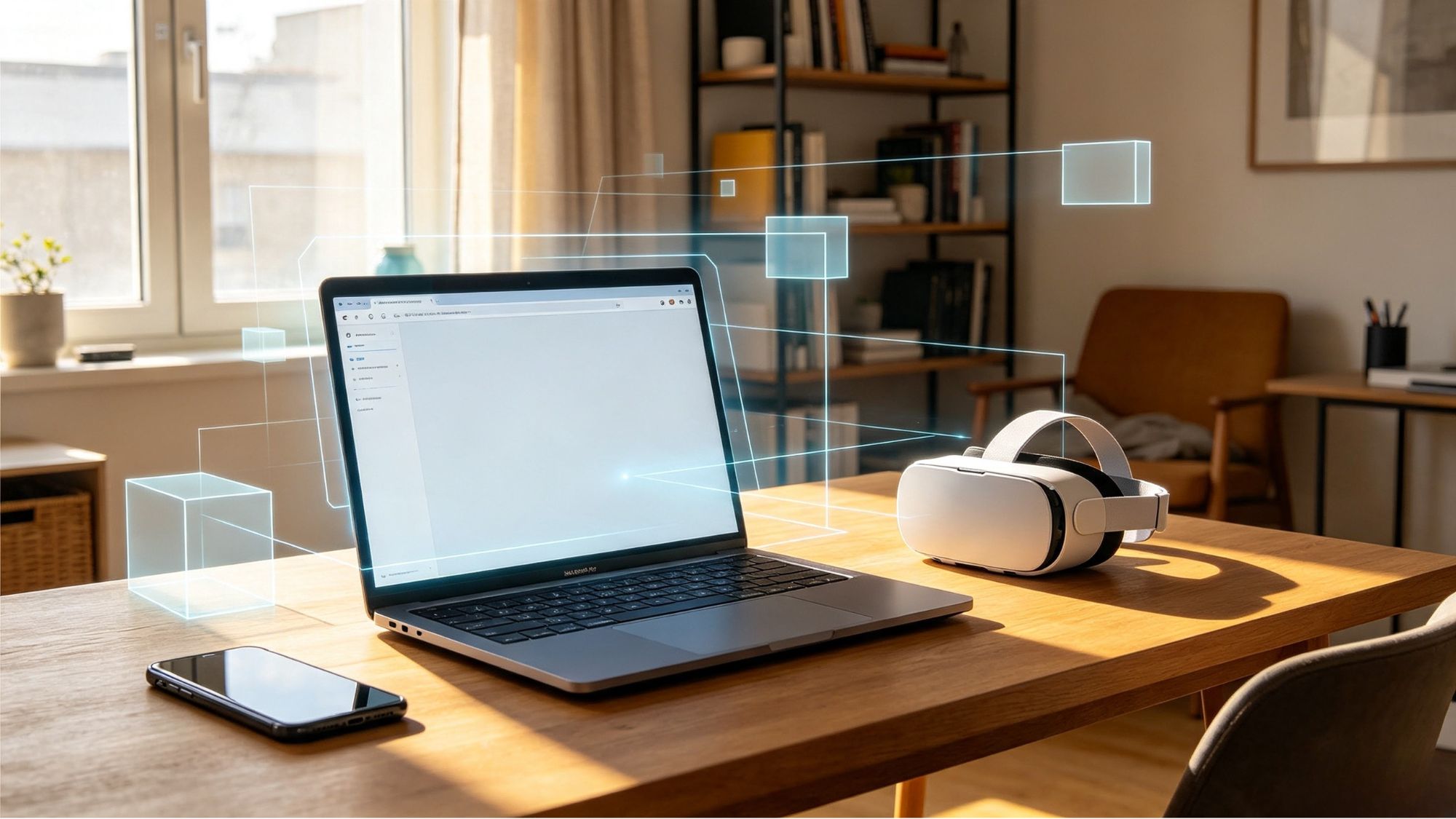
For years, experiencing virtual reality (VR) or augmented reality (AR) required users to install dedicated applications, download large software packages, create platform-specific accounts, and reserve local storage space. This approach created friction similar to the early stages of mobile computing, when users often needed separate applications for nearly every digital experience.
As spatial computing continues to develop, browser-based immersive technology is introducing a different approach: WebXR. By bringing interactive 3D graphics, virtual environments, and augmented reality experiences directly into web browsers, WebXR allows users to access immersive content through familiar web interactions. Instead of installing a separate application, users can open a compatible webpage and enter a 3D environment or view digital objects within their physical surroundings.
WebXR is an open web standard developed through the Immersive Web community and standardized through W3C processes. It provides application programming interfaces (APIs) that allow web browsers to communicate with immersive hardware, including virtual reality headsets, augmented reality devices, and motion-tracking systems.
Rather than replacing native applications entirely, WebXR creates another pathway for delivering spatial experiences through existing web technologies.
At the core of browser-based 3D experiences is the graphics pipeline. WebGL and the newer WebGPU technology allow browsers to access the processing power of a device’s Graphics Processing Unit (GPU), enabling real-time rendering directly within web pages.
Hardware-Accelerated Graphics: Instead of relying only on basic software rendering, WebGL and WebGPU allow browsers to send optimized graphics instructions to the device’s GPU, improving performance for complex visual scenes.
Real-Time 3D Rendering: Developers can use shaders, lighting models, and optimized 3D assets to create interactive environments with detailed geometry, animations, and visual effects.
These technologies form the foundation that allows modern browsers to display immersive content without requiring traditional desktop software installations.
The WebXR Device API connects browser-based applications with spatial hardware. It provides access to information such as device position, orientation, controller input, and immersive display settings.
When a user enters a VR or AR session, the browser coordinates the rendering process, including stereoscopic image delivery, head movement tracking, and interaction input. Maintaining accurate tracking and low latency is essential because delays between physical movement and visual updates can reduce immersion and contribute to discomfort.
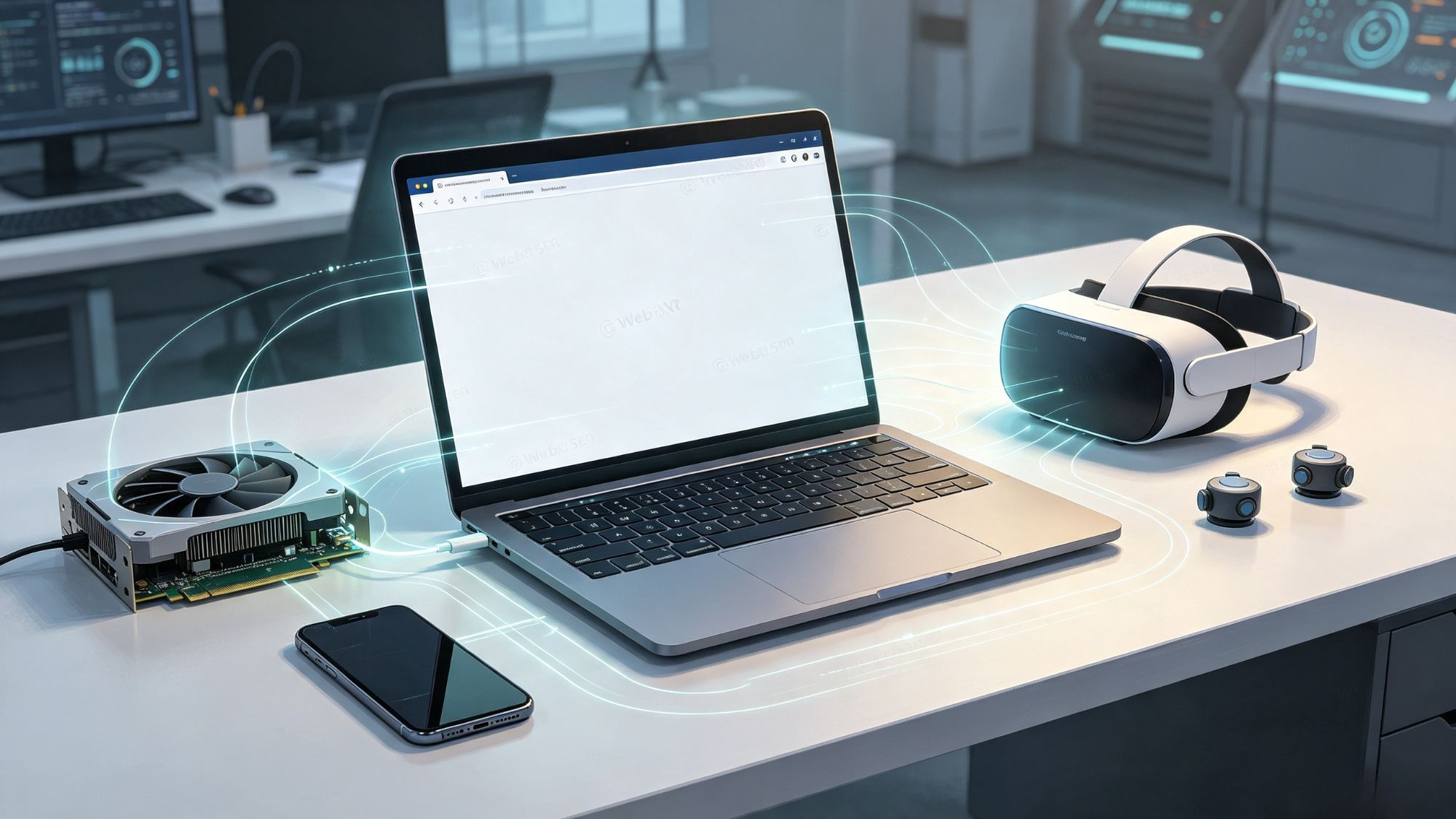
Moving spatial experiences from dedicated applications to web-based platforms offers several benefits for developers, businesses, and users.
One of the biggest advantages of WebXR is simplified access. Traditional applications often require users to search an app store, complete installation steps, and manage updates. Browser-based experiences can be accessed through a standard URL.
For example, an online furniture retailer can provide an interactive 3D product preview that allows customers to view a virtual chair or table in their own room through augmented reality, without requiring a separate application download.
This approach can reduce barriers for users who want to quickly explore an immersive experience.
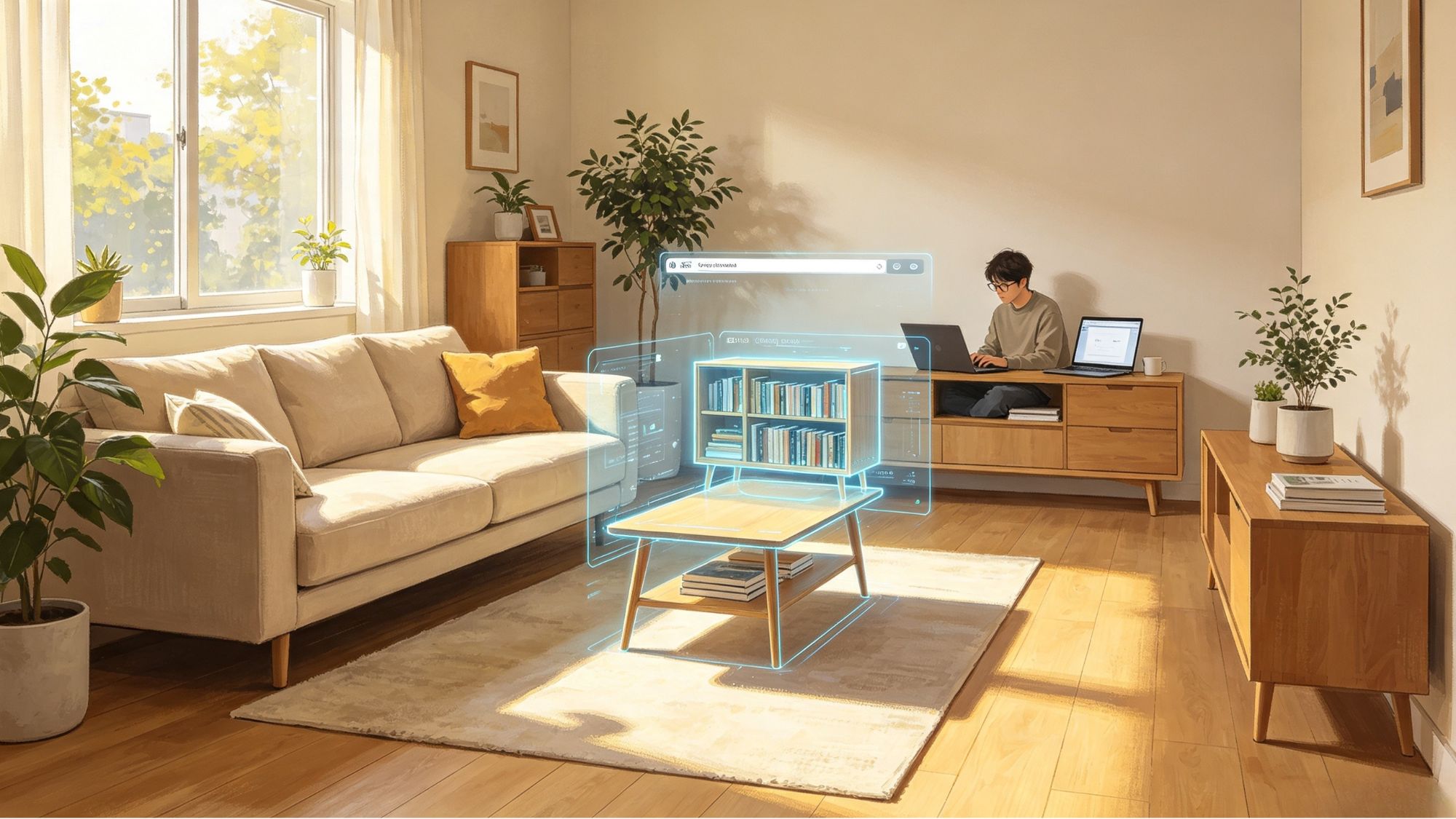
Native immersive applications are often developed separately for different operating systems and hardware platforms. WebXR provides a more flexible development model by allowing creators to build experiences using common web technologies.
The same project can potentially be adapted for different environments, including VR headsets, smartphones, and desktop browsers, depending on each device’s hardware capabilities and browser support.
Web browsers operate within security environments designed to limit unauthorized access to device resources. WebXR follows these principles by requiring permission before accessing features such as cameras, motion sensors, or spatial tracking capabilities.
These permission systems help users maintain control over how immersive applications interact with their devices.
Although WebXR expands access to immersive experiences, browser-based spatial computing still faces several technical limitations compared with highly optimized native applications.
Performance Considerations: Modern browser engines use advanced optimization techniques, but dynamic memory management and web-based execution environments can introduce challenges for demanding real-time applications, especially those involving complex physics, large 3D scenes, or advanced simulations.
Asset Optimization Requirements: Web experiences must balance visual quality with loading speed. Developers often rely on optimized formats such as glTF, mesh compression methods, and level-of-detail systems to reduce file sizes while maintaining acceptable performance.
Hardware Feature Differences: Although WebXR provides common APIs, individual devices may support different capabilities. Advanced features such as precise hand tracking, eye tracking, or specialized sensors may not be available consistently across all platforms.
Because of these limitations, many high-performance immersive applications still use native software when direct hardware access and maximum optimization are required.
As browser technologies and immersive hardware continue to improve, WebXR is being explored across multiple industries.
Immersive E-Commerce: Retail companies use browser-based 3D experiences to help customers examine products from different angles or preview how objects may appear in real environments through augmented reality.
Collaborative Design and Visualization: Architecture, engineering, and manufacturing teams can use shared web-based 3D environments to review digital models and collaborate remotely without requiring every participant to install specialized software.
Education and Training: Museums, universities, and training organizations can create interactive learning experiences that users access through browsers, making immersive content easier to distribute across classrooms and public environments.
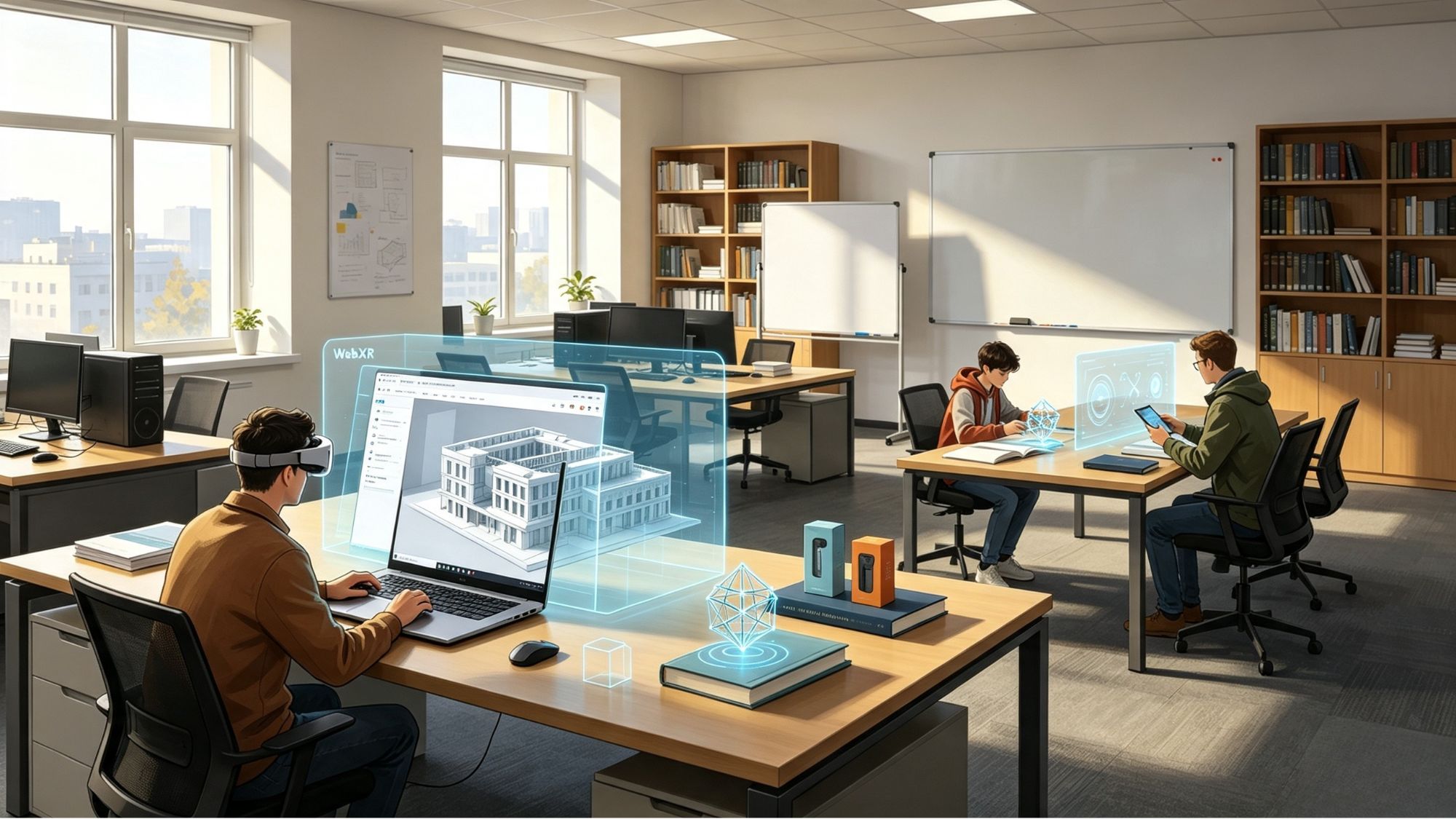
WebXR represents an important development in how immersive experiences are delivered through the web. By combining browser technologies, real-time graphics, and spatial hardware support, it provides a more accessible way for users to interact with virtual and augmented reality content.
While challenges remain in areas such as performance optimization, hardware compatibility, and complex 3D content delivery, continued improvements in browser graphics and immersive devices are expanding the role of web-based spatial computing. As the technology matures, WebXR is likely to become an increasingly important method for creating and sharing immersive digital experiences.