
Decoding the technologies of tomorrow, today.
Exploring the breakthrough innovations shaping our world. From AI infrastructure and robotics to biotech, quantum computing, and spatial tech.
Exploring the breakthrough innovations shaping our world. From AI infrastructure and robotics to biotech, quantum computing, and spatial tech.
Medicine has traditionally worked with snapshots. A patient arrives at a clinic, undergoes a scan or laboratory test, receives a treatment, and returns later for another assessment. That model remains essential, but it provides only a limited view of physiology, which changes continuously across hours, days, and years. A digital twin offers a different approach: a computational representation that can be updated with information about a particular person, organ, or physiological process and used to explore how that system might behave under different conditions.
The concept is borrowed from engineering, where digital models are used to represent physical systems and evaluate their behavior before or alongside real-world operation. In medicine, however, the idea is considerably more complicated because the human body is not a fixed machine. Researchers must combine imaging, physiological measurements, molecular information, mathematical models, and increasingly machine learning while accounting for uncertainty and incomplete data. Current work therefore treats medical digital twins less as perfect virtual copies and more as evolving computational tools for research, simulation, and decision support.
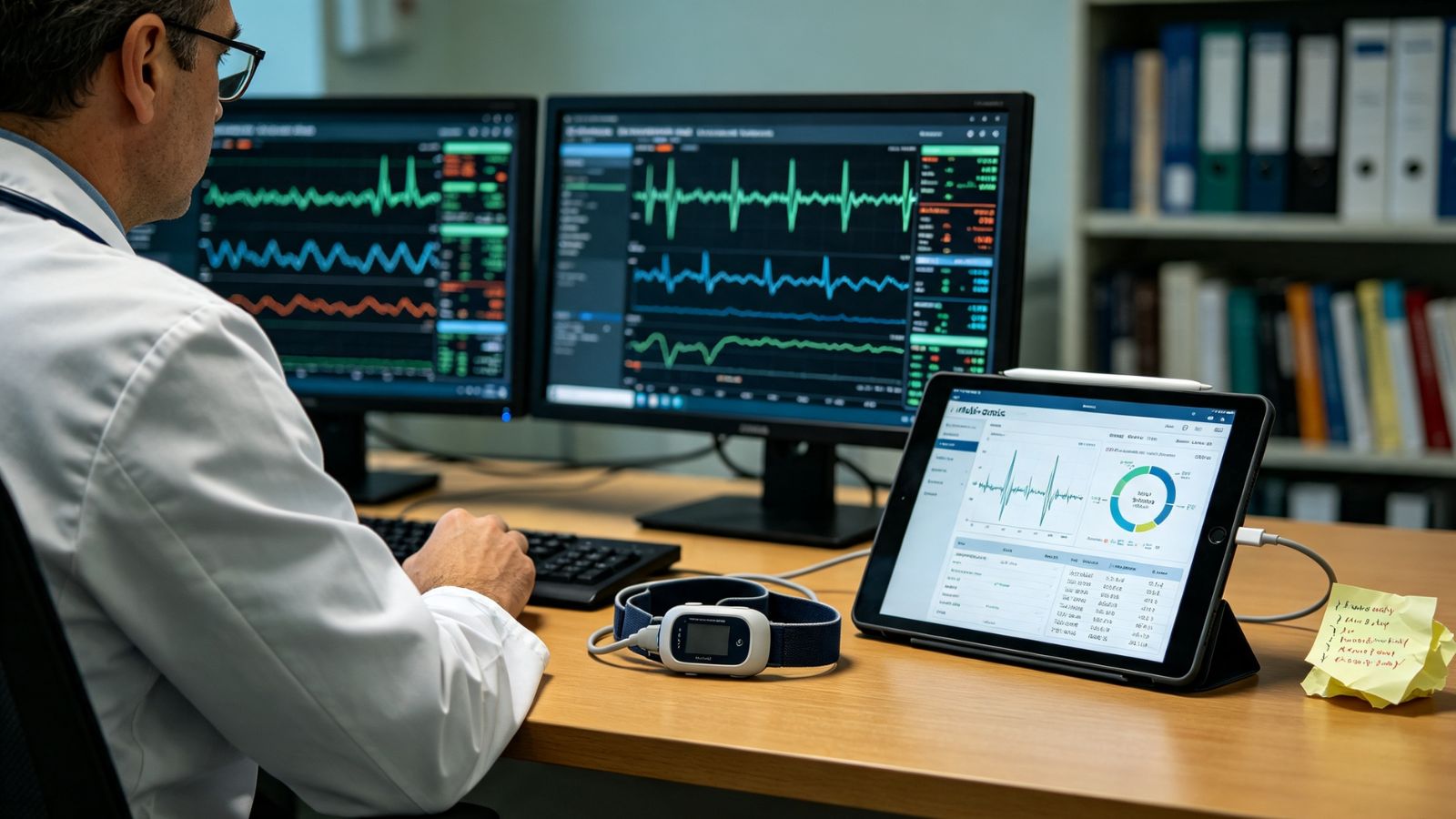
A conventional electronic health record is primarily designed to document care. It can contain laboratory results, imaging reports, medication histories, diagnoses, and notes from previous encounters, but those records do not automatically constitute a computational model of how a person's physiology behaves. A digital twin adds another layer by connecting observations to a model that can be updated as new information becomes available. The distinction matters because the value of a twin lies not simply in collecting more data, but in relating those measurements to an interpretable representation of a biological system. A useful model might represent the geometry of a patient's heart, the mechanics of a joint, the electrical behavior of cardiac tissue, or another physiological process. The exact definition is still evolving, and researchers have noted that there is not yet universal agreement about what qualifies as a medical digital twin.
Building such a representation usually requires several different kinds of information. Medical imaging can provide anatomical structure, while laboratory measurements and physiological sensors describe changing biological states. Genomic or molecular information may add another layer when the question requires it, although not every digital twin needs multi-omics data. Mathematical models can then describe relationships governed by known physical or biological mechanisms, while machine learning can identify patterns that are difficult to express explicitly. The resulting system is therefore better understood as a connected modeling framework than as a literal digital duplicate of a human being. Its usefulness depends on the quality, relevance, and frequency of the data entering the model, as well as on whether the underlying assumptions have been appropriately validated.

One of the most interesting applications is the use of patient-specific models to compare possible interventions before they are tested in the real world. In cardiovascular research, for example, a computational model can incorporate anatomical measurements and physiological information to investigate blood flow, tissue mechanics, or electrical activity. A researcher might then alter a parameter in the model and examine how the simulated system responds. This does not mean the computer has determined what will happen to an individual patient. Instead, the model provides a structured way to explore possible outcomes and identify questions that may deserve further clinical investigation. The FDA has long recognized computational modeling and simulation as useful tools in medical-device development, including applications involving fluid dynamics, solid mechanics, electromagnetics, and thermal behavior.
Drug research presents a more complicated version of the same idea because medicines interact with multiple biological systems at once. Researchers can combine pharmacokinetic and pharmacodynamic information with patient characteristics to investigate how different exposure patterns might affect a modeled physiological system. In oncology, digital-twin research is exploring whether computational representations can help connect tumor characteristics, treatment response, and patient-specific biological information. These applications remain an active research area rather than a universal replacement for clinical trials or physician judgment. A model can compare scenarios only within the limits of its data and assumptions, and a prediction that appears convincing computationally still requires appropriate experimental or clinical validation before it can support consequential medical decisions.
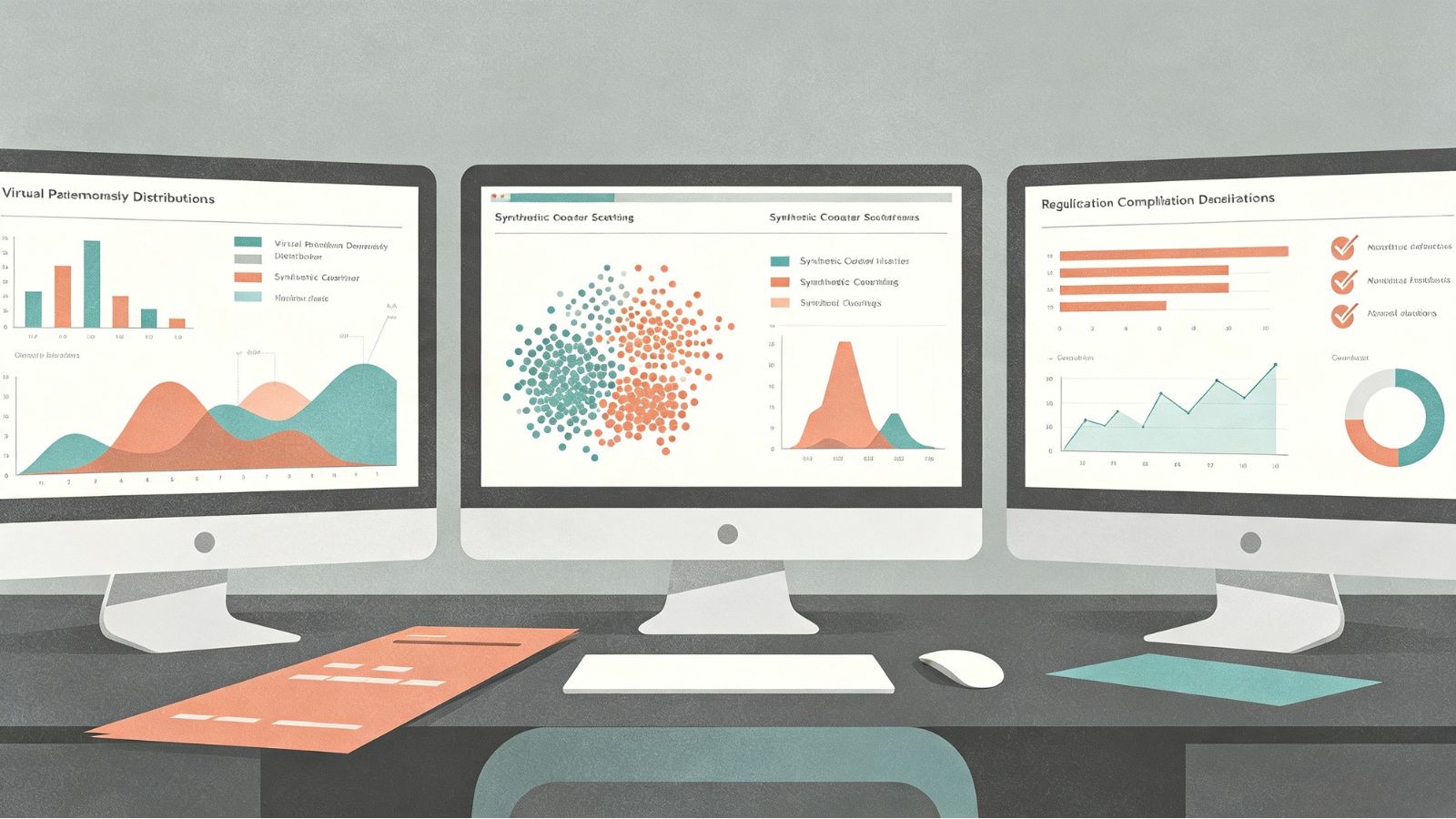
Digital twins also have implications beyond the treatment of a single patient. Researchers can construct virtual cohorts containing modeled anatomical and physiological variations and use them to investigate how a medical device might behave across a broader range of circumstances. This approach is particularly attractive for device development because traditional experiments cannot easily reproduce every possible combination of anatomy, material properties, loading conditions, and physiological states. Computational simulations can provide additional evidence about those variations and may reveal potential failure modes that deserve physical testing. The FDA describes computational modeling and simulation as an established area of medical-device development and has developed guidance for reporting such studies in regulatory submissions.
The important distinction is that a virtual cohort does not automatically become a substitute for human evidence. The credibility of a computational model depends on how well its assumptions, inputs, implementation, and outputs have been evaluated. The FDA's computational-modeling program specifically emphasizes credibility because the predictive capability of a model needs supporting evidence before it can be relied upon for regulatory purposes. In practice, this creates a layered research process: computational experiments can help narrow questions, explore scenarios, or complement physical studies, while laboratory experiments, clinical investigations, and other forms of evidence remain important. The most realistic future is therefore not a completely virtual healthcare system, but a workflow in which simulations and real-world evidence inform one another.
The cardiovascular system illustrates why digital twins are attractive to researchers. The heart combines anatomy, electrical signaling, tissue mechanics, blood flow, and changing physiological conditions, making it difficult to represent with a single measurement. Researchers can construct computational models that represent parts of this system and connect them with patient-specific observations. The goal is not necessarily to reproduce every biological detail, but to create a model sufficiently useful for a particular question. A model focused on cardiac electrophysiology may emphasize electrical propagation, while another designed to study blood flow may focus on vessel geometry and fluid dynamics. The U.S. National Heart, Lung, and Blood Institute has highlighted ongoing research into virtual heart and broader virtual-twin concepts as part of efforts to understand how individualized computational models could eventually contribute to precision medicine.
This example also illustrates an important limitation: a digital twin is usually task-specific rather than an all-purpose simulation of an entire human body. A model designed to investigate cardiac rhythm cannot automatically answer questions about kidney function, immune response, or drug metabolism. Expanding the model requires additional data, biological assumptions, computational methods, and validation. That complexity is one reason researchers increasingly describe medical digital twins as combinations of a person, a data connection, an in-silico representation, an interface, and a mechanism for synchronization rather than as a single piece of software. This framework also helps explain why the field is still developing. The challenge is not simply creating a detailed model, but maintaining a useful relationship between the model and the changing biological system it represents.
The sophistication of a digital twin cannot compensate for poor input data. Medical information is frequently incomplete, collected at irregular intervals, recorded using different instruments, or affected by changes in a patient's environment. A model may also contain assumptions that are reasonable for one population but less appropriate for another. These issues become especially important when machine-learning components are introduced, because a model can reproduce patterns in its training data without necessarily capturing the biological mechanisms responsible for those patterns. For this reason, building a useful digital twin involves much more than assembling large datasets. Researchers must determine which measurements are relevant, how frequently they should be collected, how uncertainty should be represented, and how the model behaves when information is missing or contradictory.
Validation presents a related challenge. A computational model can produce a precise numerical result even when its underlying assumptions are uncertain, so apparent precision should not be confused with predictive reliability. The FDA's work on computational-model credibility reflects this distinction: simulations can contribute to medical-device development, but confidence in their predictive capability must be supported by evidence appropriate to the intended use. For a digital twin intended only for exploratory research, the validation requirements may differ from those for a model that could influence a clinical decision. Establishing that boundary is essential because the consequences of model error increase substantially when computational predictions move closer to direct patient care.
A detailed digital twin could potentially combine some of the most sensitive categories of personal information available, including medical images, physiological measurements, genetic information, medication histories, and behavioral data. The privacy challenge is therefore larger than simply protecting an electronic health record. A continuously updated computational model may contain derived information that is not explicitly present in the original data, creating additional questions about who can access the model, how long it should be retained, and whether it can be reused for purposes beyond the original research or clinical application. These concerns become particularly important as data from wearable devices and home monitoring systems are incorporated into longitudinal models.
Security and governance must consequently develop alongside the technology. Access controls, encryption, careful data governance, transparent consent practices, and appropriate separation between research and clinical systems are important parts of responsible implementation. There is also a broader question of patient expectations: someone may consent to the collection of a particular measurement without fully anticipating that the same information could later contribute to a much more sophisticated computational profile. Digital-twin research therefore requires attention not only to model accuracy but also to how individuals understand and control the data used to construct these models. The more comprehensive the virtual representation becomes, the more important it is to treat privacy and governance as engineering requirements rather than as administrative afterthoughts.
The most credible future for medical digital twins is likely to be incremental rather than revolutionary. Computational models are already used in areas such as medical-device development, while researchers are investigating broader applications involving cardiovascular systems, oncology, diabetes, and other aspects of precision medicine. The field is also becoming more clearly defined as researchers examine what information a medical twin should contain, how it should remain synchronized with a real patient, and what evidence is necessary before its predictions can be trusted. These developments suggest that the technology is moving from an appealing metaphor toward a more disciplined research framework, although widespread clinical adoption remains dependent on validation, interoperability, infrastructure, and governance.
Rather than replacing physicians, clinical trials, or direct observation, digital twins are more plausibly positioned as an additional layer of computational reasoning. They can provide a way to organize complex information, explore hypothetical scenarios, and test certain questions that would be difficult or expensive to investigate directly. Their limitations are equally important: biological systems remain highly variable, models are necessarily incomplete, and predictions are only as dependable as the evidence supporting them. If these constraints are acknowledged, digital twins could become a useful bridge between data collection and clinical reasoning. The long-term significance of virtual physiology may therefore come not from creating a perfect digital copy of a person, but from developing better ways to connect biological measurements, mechanistic knowledge, and computational experimentation.