
Decoding the technologies of tomorrow, today.
Exploring the breakthrough innovations shaping our world. From AI infrastructure and robotics to biotech, quantum computing, and spatial tech.
Exploring the breakthrough innovations shaping our world. From AI infrastructure and robotics to biotech, quantum computing, and spatial tech.
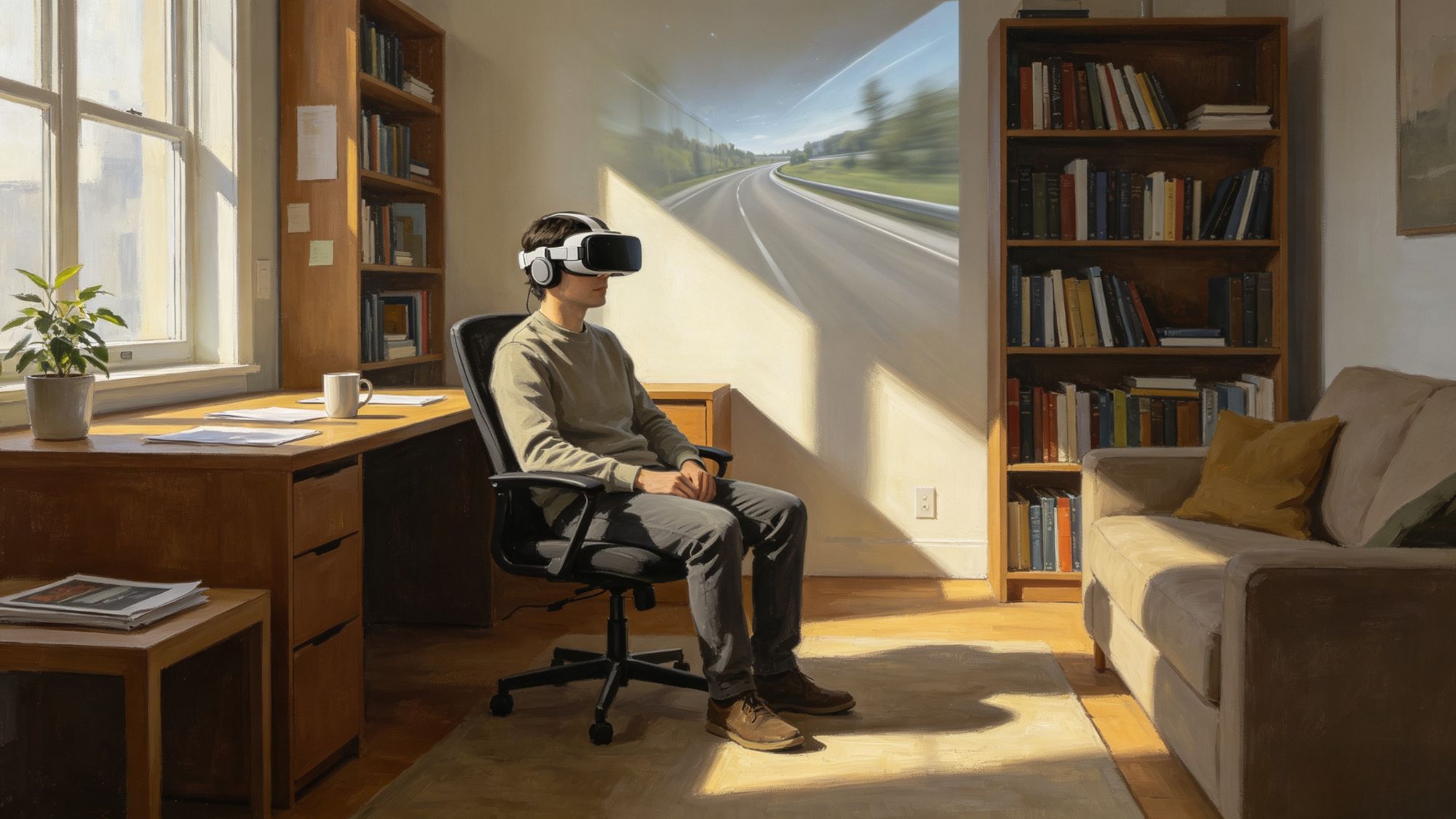
For all the technical progress in modern virtual, augmented, and mixed reality hardware, one challenge continues to influence user experience: motion sickness. Often called cybersickness or simulator sickness, this condition shares many symptoms with traditional motion sickness, including nausea, dizziness, fatigue, sweating, and a feeling of disorientation. The difference is that it can occur while users remain completely still in a physical environment.
Understanding why a digital experience can trigger a physical reaction requires examining the relationship between human perception, sensory processing, and immersive technology. By exploring sensory conflict, display latency, and optical limitations, developers can better understand why some virtual environments feel uncomfortable and how future systems may reduce these effects.
The most widely accepted explanation for motion sickness is the sensory conflict theory, also known as neural mismatch theory. This concept suggests that discomfort occurs when the brain receives inconsistent information from the different systems responsible for balance and spatial awareness.
Humans rely on three major sensory systems to understand movement and position:
The Vestibular System: Located in the inner ear, this system detects acceleration, rotation, and changes in head orientation.
The Visual System: The eyes provide information about movement, depth, and the surrounding environment.
Proprioception: Sensors in muscles, joints, and tendons provide feedback about body position and physical movement.
In everyday situations, these systems usually work together. When a person walks through a room, visual movement, inner-ear signals, and muscle feedback all confirm the same physical action.
Virtual environments can disrupt this balance. For example, a user sitting in a chair may use a controller to move smoothly through a virtual landscape. The eyes suggest forward movement, while the inner ear and muscles indicate that the body is stationary. This disagreement between sensory inputs can create discomfort.
Some researchers suggest that this response may be connected to an evolutionary mechanism that treats conflicting sensory signals as a possible warning sign. Regardless of the exact cause, the result is a physical reaction that can include nausea, dizziness, and fatigue.
Sensory conflict is not the only factor behind cybersickness. Technical performance also plays an important role, particularly the delay between physical movement and visual response.
Motion-to-photon latency refers to the time between a user's movement—such as turning their head—and the moment the updated image appears on the display. In immersive environments, even small delays can affect the feeling of realism because the human brain expects visual feedback to closely match physical movement.
The vestibular system detects movement quickly, and the eyes naturally expect the surrounding visual scene to change at the same time. If a headset responds slowly after a user moves their head, the brain receives slightly different timing information from different senses.
This mismatch can reduce the feeling of presence and increase discomfort. High frame rates, responsive tracking systems, and optimized rendering pipelines help reduce these problems by keeping visual feedback closely synchronized with physical movement.
Beyond tracking performance, virtual reality systems face another biological challenge related to human vision: the vergence-accommodation conflict.
In the real world, the eyes perform two coordinated actions when focusing on an object:
Accommodation: The eye lens changes shape to focus clearly on an object at a specific distance.
Vergence: The eyes rotate to align both views toward the same object.
These two processes normally work together. When an object is closer or farther away, both the focus distance and eye alignment adjust naturally.
Most current VR headsets, however, display images on screens positioned at a fixed optical distance. The virtual scene may show objects appearing at different depths, but the eyes continue focusing at the physical distance of the display.
This difference between perceived depth and optical focus can contribute to eye fatigue, visual discomfort, and reduced comfort during longer sessions. Future display technologies, such as advanced optical systems and improved depth rendering, aim to reduce this limitation.
Not every user experiences cybersickness in the same way. Sensitivity varies depending on factors such as previous exposure to immersive technology, individual physiology, age, and personal tolerance for motion-related discomfort.
Some users become more comfortable over time through gradual exposure, while others remain more sensitive.
Hardware and software developers use several approaches to improve comfort:
Higher Refresh Rates: Faster display updates help create smoother motion and reduce visual instability.
Motion Reprojection Technologies: Techniques such as frame prediction and space warping help maintain stable visuals when rendering performance is limited.
Comfort Settings: Many applications reduce discomfort by limiting artificial movement speed, adjusting field of view during movement, or providing alternative navigation methods such as teleportation.
These approaches aim to reduce the gap between what users see and what their bodies physically experience.
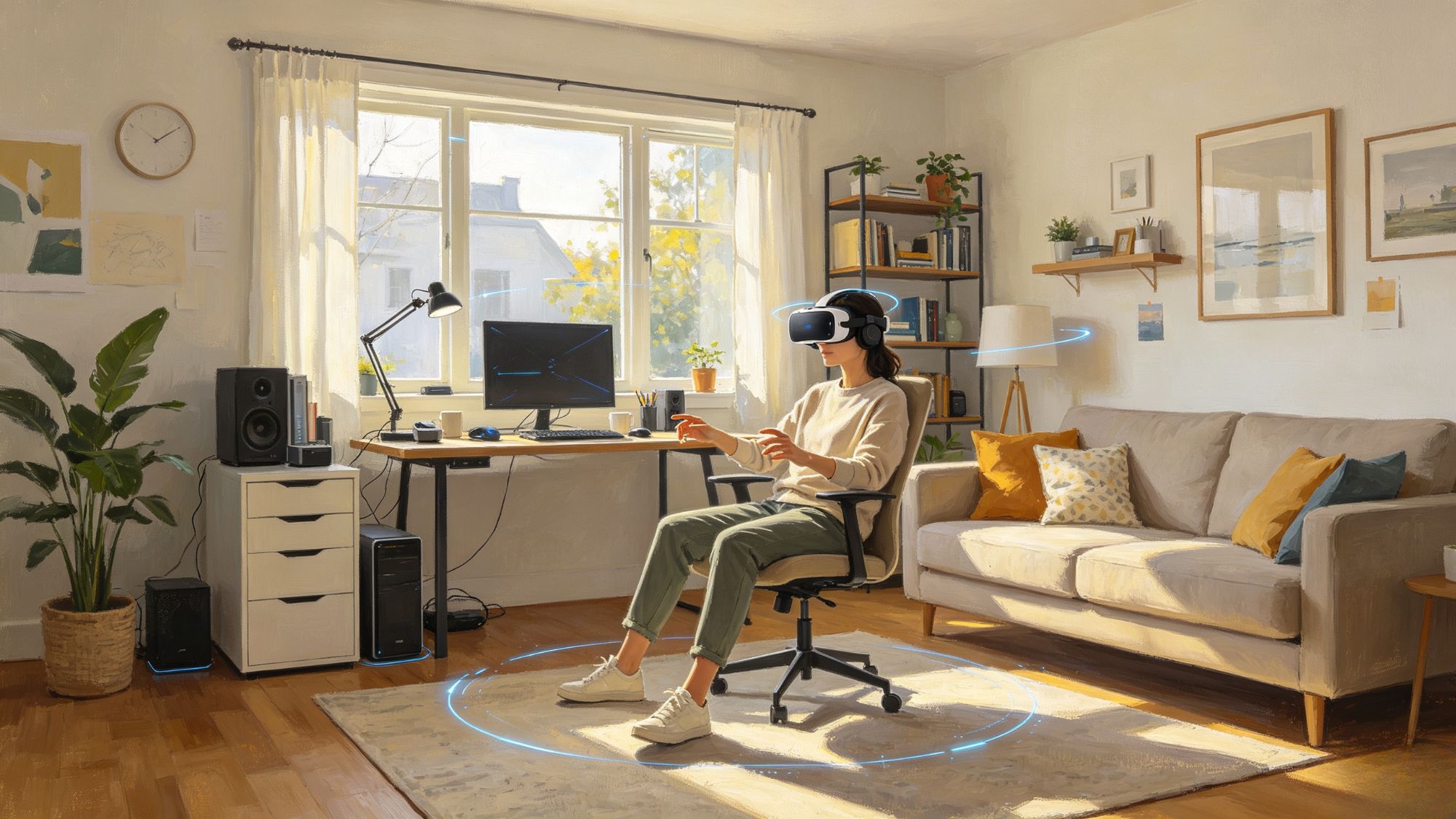
Motion sickness in virtual environments is the result of a complex interaction between human biology and technical limitations. When visual information, inner-ear signals, and body movement feedback do not align, the brain may interpret the mismatch as a problem, resulting in discomfort.
Improving VR comfort requires advances across multiple areas, including lower-latency hardware, better optical designs, more accurate tracking, and thoughtful software experiences. As immersive technology continues to evolve, understanding human perception will remain essential for creating virtual environments that feel natural, comfortable, and accessible to more users.