
Decoding the technologies of tomorrow, today.
Exploring the breakthrough innovations shaping our world. From AI infrastructure and robotics to biotech, quantum computing, and spatial tech.
Exploring the breakthrough innovations shaping our world. From AI infrastructure and robotics to biotech, quantum computing, and spatial tech.
For decades, the promise of quantum computing has been built on an extraordinary idea: information does not have to follow the rigid rules of classical electronics. Instead of processing data through binary switches that exist exclusively as either 0 or 1, quantum systems can encode information within probabilistic states governed by the principles of quantum mechanics. This theoretical advantage has inspired researchers to pursue solutions to problems that overwhelm even the most powerful supercomputers, including molecular simulation, materials discovery, cryptographic analysis, and large-scale optimization.
Yet the greatest obstacle to practical quantum computing has never been algorithm design alone. The real challenge is preserving quantum information long enough to perform meaningful calculations. Unlike classical transistors, which are remarkably resilient to small fluctuations in voltage or temperature, quantum systems are exceptionally sensitive to their surroundings. Even tiny environmental disturbances can alter a qubit's state and introduce computational errors. As a result, the gap between laboratory demonstrations and large-scale commercial quantum computing is defined less by mathematical theory and more by the difficult engineering problem of managing noise.
The conversation surrounding quantum computing often focuses on increasing qubit counts, with announcements highlighting processors containing dozens, hundreds, or even thousands of physical qubits. However, raw qubit numbers reveal only a small part of the story. A processor containing a large collection of unstable qubits may still be incapable of executing complex algorithms reliably. The real milestone researchers are pursuing is the creation of fault-tolerant logical qubits—protected computational units capable of preserving information despite the inevitable errors that arise in physical quantum hardware.
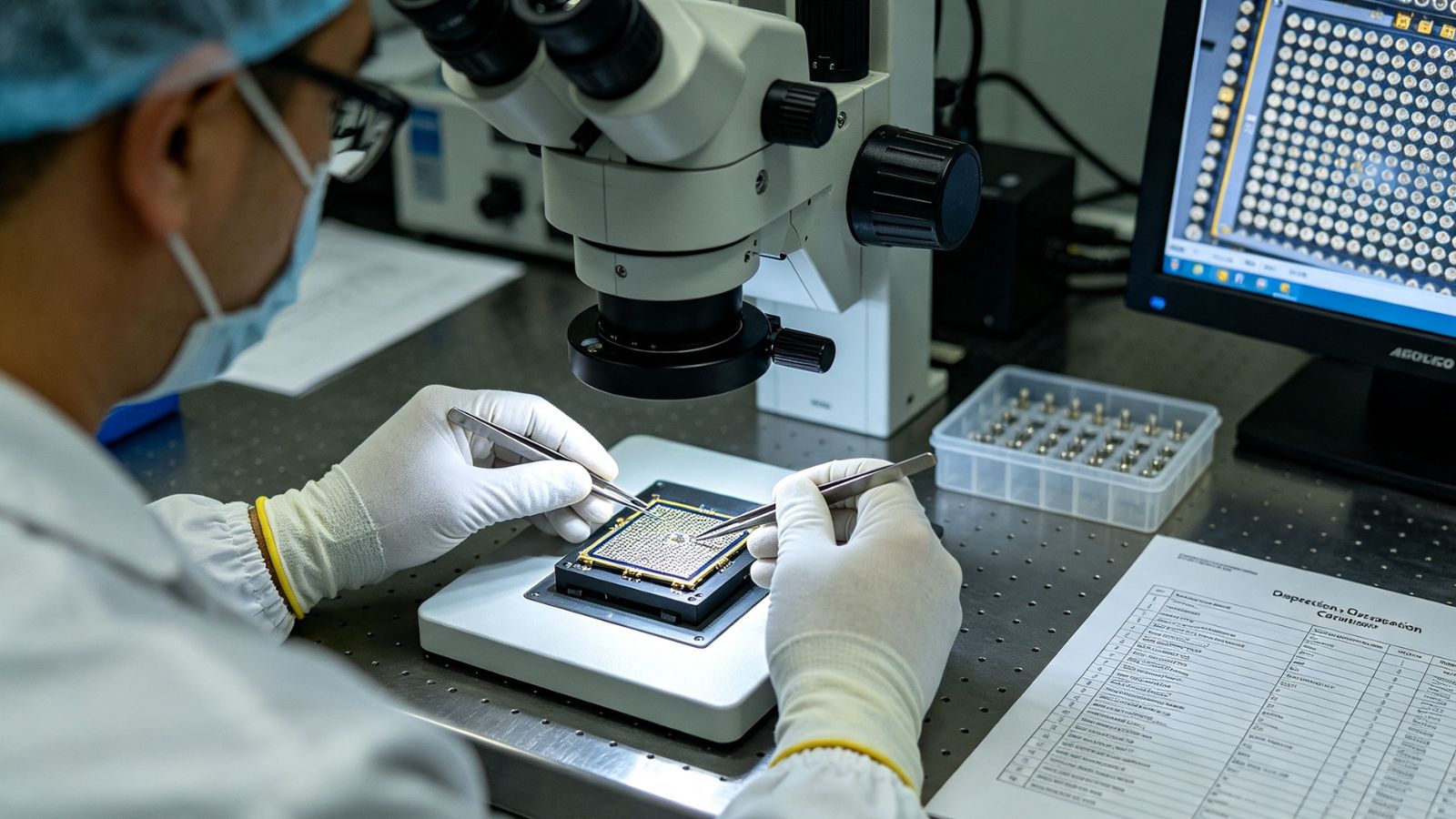
Classical computers achieve reliability because their information is represented collectively by enormous numbers of electrons. If a minor electrical fluctuation affects a transistor, the system can usually distinguish between a high-voltage state and a low-voltage state without losing the underlying information. Modern digital systems continuously regenerate signals, filter out noise, and correct minor disturbances before they propagate through the computational pipeline. This ability to restore information has allowed classical computing to scale from simple circuits into the highly reliable systems that power modern smartphones, cloud data centers, and enterprise servers.
Quantum systems operate under fundamentally different physical rules. A qubit does not simply store a binary value; it maintains a delicate quantum state defined by probability amplitudes and phase relationships. These states are extremely vulnerable to interactions with the external environment. Thermal radiation, electromagnetic interference, cosmic rays, material impurities, and manufacturing imperfections can all disrupt the coherence of a quantum system. This phenomenon, known as decoherence, gradually destroys the information encoded within a qubit, reducing its ability to participate in complex calculations.
The challenge becomes even more severe as quantum circuits grow larger. Every additional gate operation introduces another opportunity for error, and every additional qubit increases the complexity of maintaining a stable system. Today's leading quantum platforms—including superconducting circuits, trapped ions, neutral atoms, and silicon-based architectures—continue to improve their coherence times, but they remain susceptible to environmental noise. Without a mechanism for continuously identifying and correcting these errors, calculations involving millions of operations become practically impossible, regardless of how elegant the underlying algorithm may be.
When classical computers encounter errors, they often rely on redundancy. A common strategy involves storing multiple copies of the same piece of information and comparing them to determine whether one copy has been corrupted. If two copies contain identical data while a third differs, the system can usually identify and repair the incorrect value. This majority-voting approach has become a cornerstone of classical fault-tolerant computing and is widely used in everything from memory systems to spacecraft electronics.
Quantum information cannot use this strategy because it is constrained by two fundamental principles of quantum mechanics. The first is the no-cloning theorem, which states that it is impossible to create a perfect copy of an arbitrary unknown quantum state. Unlike a document stored on a hard drive, a qubit cannot simply be duplicated and backed up. The second limitation arises from the measurement problem. Observing a quantum state directly collapses its superposition, converting a probabilistic quantum system into a definite classical outcome and destroying the very information researchers are attempting to preserve.
These restrictions force scientists to rethink the entire concept of error correction. Instead of asking how to duplicate quantum information, researchers must ask how to detect the presence of an error without learning the value of the underlying data itself. This distinction represents one of the most important conceptual differences between classical and quantum computing. Error correction in quantum systems is not an extension of classical engineering; it is an entirely new discipline that requires different mathematical tools, different hardware architectures, and fundamentally different ways of thinking about information.
 The solution developed by quantum researchers is the logical qubit. Rather than storing information inside a single physical component, a logical qubit distributes quantum information across an interconnected network of many physical qubits. This approach does not eliminate noise, but it allows the system to identify and correct errors before they accumulate to the point of computational failure. In effect, the logical qubit acts as a protective layer that shields fragile information from the imperfections of the underlying hardware.
One of the most widely studied approaches is the surface code. In this architecture, physical qubits are organized into a two-dimensional lattice containing both data qubits and specialized measurement qubits, often called ancilla qubits. Instead of measuring the data directly, the system repeatedly measures the ancilla qubits to extract what researchers call error syndromes. These syndromes provide information about whether an error has occurred and whether the error represents a phase shift, a bit flip, or a combination of both, all without revealing the actual quantum information stored within the system.
This process creates a hierarchy that separates physical implementation from computational abstraction. Physical qubits remain noisy and imperfect, but the logical layer continuously monitors their behavior and applies corrective operations when necessary. The result is a more stable computational environment capable of preserving information across longer calculations. Although building a single logical qubit may require dozens or even thousands of physical qubits, this overhead is the price of transforming fragile laboratory experiments into reliable computational systems capable of solving practical problems.
One of the most surprising realities of quantum computing is that increasing the number of physical qubits does not automatically improve computational performance. In fact, adding more qubits can make a system less reliable if the underlying error rates remain too high. Every additional qubit introduces new opportunities for decoherence, calibration drift, control errors, and measurement inaccuracies. Consequently, the path toward fault tolerance depends not only on scale but also on achieving sufficiently low physical error rates.
Researchers describe this requirement using the concept of an error threshold. If a hardware platform can reduce its error rate below a specific threshold, additional physical qubits begin to improve reliability rather than undermine it. Once the threshold is crossed, error-correcting codes can suppress logical errors exponentially as more resources are added. If the hardware remains above the threshold, however, expanding the system simply creates more failure points and accelerates computational instability.
This requirement explains why quantum computing companies focus so heavily on hardware refinement rather than pursuing qubit counts alone. Improving materials, developing more precise control electronics, reducing environmental interference, and optimizing fabrication techniques are all essential components of the fault-tolerance roadmap. Achieving reliable logical qubits requires advances across every layer of the technology stack, from cryogenic engineering and microwave control systems to software compilers and automated error-correction algorithms.
The transition from noisy quantum processors to fault-tolerant systems is already reshaping the industry's priorities. Companies such as IBM, Google, Quantinuum, IonQ, and several academic research groups have increasingly shifted their focus away from simple demonstrations toward the development of error-corrected architectures. Recent experiments have shown encouraging evidence that increasing the size of an error-correcting code can reduce logical error rates under certain conditions, providing an important proof of concept for large-scale quantum computation.
Despite these advances, the industry remains in an intermediate stage often described as the Noisy Intermediate-Scale Quantum (NISQ) era. Current devices can perform impressive demonstrations, but they still struggle with the stability required for commercially transformative applications. Drug discovery, advanced materials research, climate modeling, logistics optimization, and cryptographic analysis all require computational depths that exceed the capabilities of most contemporary systems. Bridging this gap will require years of continued progress in both hardware and software.
For readers outside physics laboratories, quantum error correction may appear to be an obscure technical topic, but it ultimately determines whether quantum computing becomes a practical technology or remains an academic curiosity. The future of the field will not be decided by the existence of qubits alone. It will be determined by our ability to organize those qubits into fault-tolerant logical structures that can withstand the noisy, imperfect realities of the physical world. Only then will quantum computing fulfill its long-promised potential and move from experimental science into everyday technological infrastructure.