
Decoding the technologies of tomorrow, today.
Exploring the breakthrough innovations shaping our world. From AI infrastructure and robotics to biotech, quantum computing, and spatial tech.
Exploring the breakthrough innovations shaping our world. From AI infrastructure and robotics to biotech, quantum computing, and spatial tech.
Hydrogen has become a major focus in discussions about future energy systems because it can store and transport energy while producing no carbon dioxide emissions at the point of use. Unlike fossil fuels, hydrogen does not release greenhouse gases when consumed in a fuel cell or used in industrial processes. However, the environmental impact of hydrogen depends heavily on how it is produced.
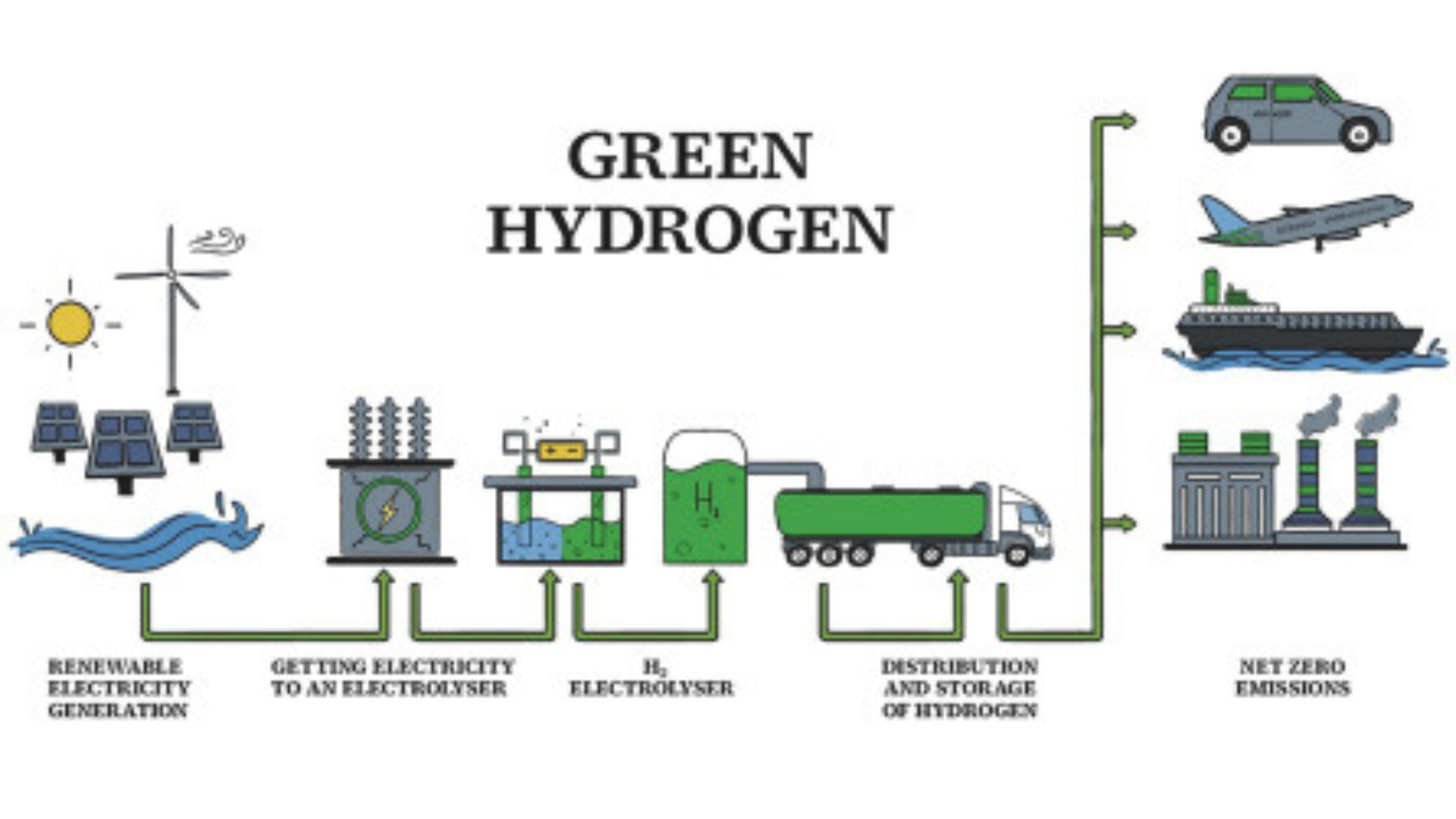
Today, most hydrogen is produced from natural gas through processes that generate significant carbon emissions. Green hydrogen represents a different approach: producing hydrogen through water electrolysis powered by renewable electricity.
The concept of a hydrogen economy involves using hydrogen across multiple sectors, including heavy industry, transportation, energy storage, and chemical production. While hydrogen has significant potential, large-scale adoption depends on solving challenges related to production costs, infrastructure development, transportation, and practical application.
Green hydrogen is created through electrolysis, a process that uses electricity to separate water molecules into hydrogen and oxygen.
The basic chemical reaction is:
2H₂O → 2H₂ + O₂
An electrolyzer contains electrodes separated by an electrolyte material. When electricity is applied, water molecules are split, producing hydrogen at one electrode and oxygen as a byproduct at the other.
The environmental advantage comes from the electricity source. If renewable electricity from solar, wind, or hydropower is used, the hydrogen production process can operate with very low direct carbon emissions.
Several electrolyzer technologies are currently being developed and deployed.
Alkaline electrolyzers are one of the oldest commercial hydrogen production technologies.
They use a liquid alkaline electrolyte, commonly based on potassium hydroxide or sodium hydroxide, to transport ions between electrodes.
Advantages include:
Long operational history
Lower material costs
Commercial availability
However, alkaline systems generally respond more slowly to changing electricity supply, which can make them less flexible when paired with variable renewable sources.
PEM electrolyzers use a solid polymer electrolyte that allows proton movement between electrodes.
Their advantages include:
Rapid response to changing electricity input
Compact design
High operating flexibility
These characteristics make PEM systems attractive for renewable energy integration because solar and wind generation can fluctuate throughout the day.
The main challenge is that PEM systems often require expensive catalyst materials, including platinum-group metals.
Solid oxide electrolyzers operate at high temperatures and use ceramic materials as electrolytes.
They may achieve higher efficiency because some of the energy required for electrolysis can come from heat rather than electricity alone.
However, high operating temperatures create engineering challenges related to durability, material degradation, and system complexity.
Although hydrogen is versatile, producing it requires significant energy.
The overall process involves several efficiency losses:
1. Renewable electricity generation
2. Electricity conversion through electrolysis
3. Hydrogen compression or liquefaction
4. Transportation and storage
5. Final conversion back into electricity or useful energy
When renewable electricity is directly available, using electricity immediately is often more efficient than converting it into hydrogen and later converting it back.
For this reason, hydrogen is generally considered most valuable in applications where direct electrification is difficult, such as heavy industry, shipping, and long-distance transport.
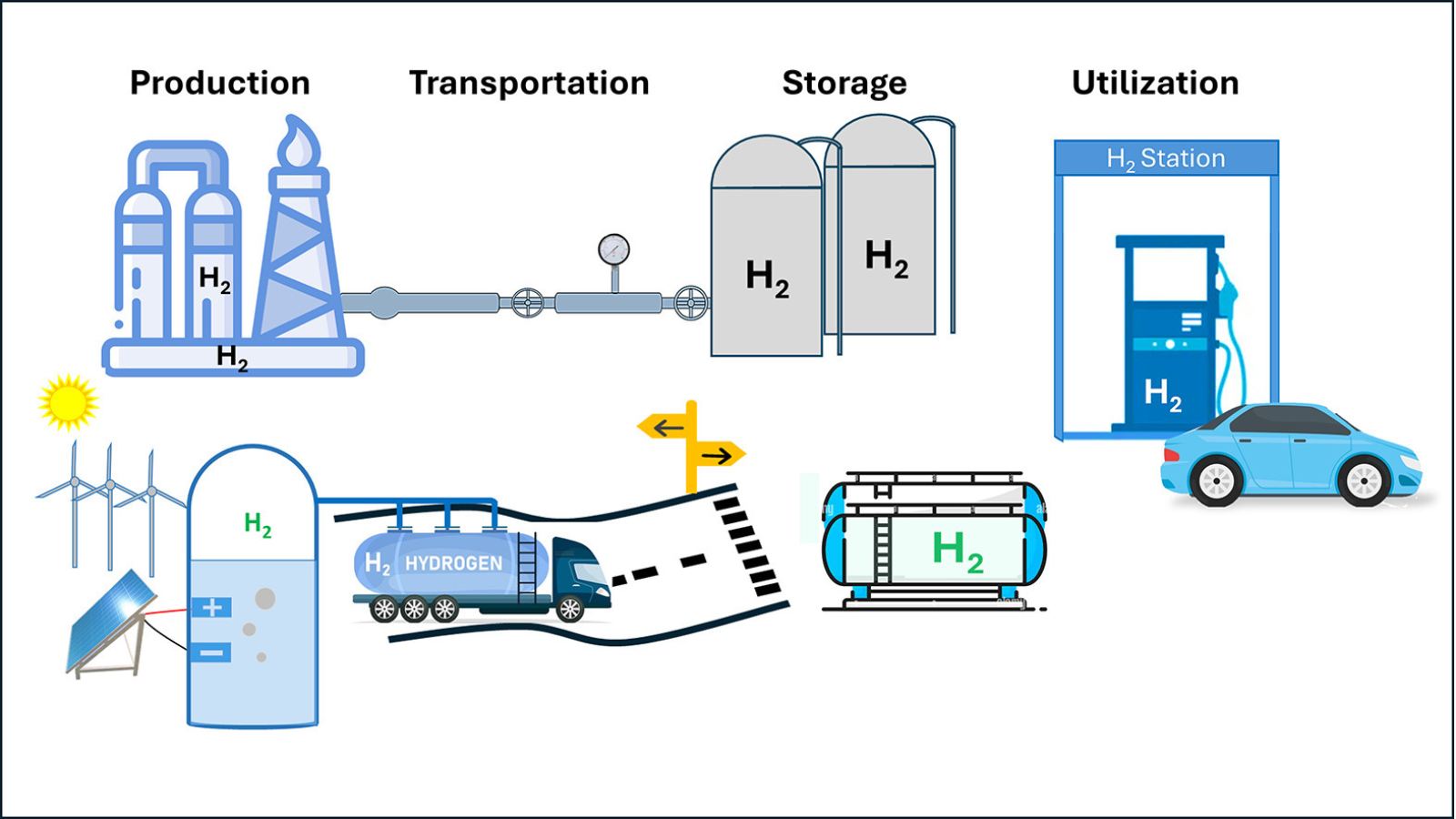
Producing hydrogen is only one part of creating a hydrogen economy. Moving and storing hydrogen presents additional technical and economic challenges.
Hydrogen has a low energy density by volume, meaning it requires specialized methods for transportation.
Common distribution approaches include:
Hydrogen can be compressed and stored in high-pressure tanks.
This method is commonly used for smaller-scale applications, including some hydrogen fueling stations.
However, compression requires energy and specialized infrastructure capable of handling high pressures.
Hydrogen can be cooled to extremely low temperatures to become a liquid.
Liquid hydrogen has higher energy density than compressed gas, making it useful for certain transportation applications.
The challenge is that liquefaction consumes significant energy and requires complex cryogenic equipment.
Dedicated hydrogen pipelines can transport large quantities of hydrogen over certain distances.
Existing natural gas infrastructure may sometimes be adapted for hydrogen blends, but pure hydrogen transportation presents challenges because hydrogen can interact with pipeline materials and contribute to embrittlement.
Another approach involves converting hydrogen into other chemical forms that are easier to transport.
Examples include ammonia and liquid organic hydrogen carriers. These methods can simplify transportation but require additional conversion steps.
The strongest near-term opportunities for green hydrogen are industries where hydrogen already plays an important role or where alternatives are limited.
Traditional steelmaking relies heavily on coal-based processes that generate substantial carbon emissions.
Hydrogen can replace coal-derived reducing agents in direct reduced iron production, creating a pathway toward lower-carbon steel manufacturing.
Several industrial projects are exploring hydrogen-based steel production, although cost competitiveness remains a major factor.
Hydrogen is already widely used in chemical industries, particularly for ammonia production and petroleum refining.
Replacing conventional hydrogen with green hydrogen could significantly reduce emissions from existing industrial processes.
Ammonia production is especially important because ammonia is also being studied as a potential energy carrier and shipping fuel.
Hydrogen fuel cells may provide advantages for certain transportation sectors where battery-electric systems face limitations.
Potential applications include:
Long-distance trucking
Maritime transport
Aviation-related fuel research
Heavy industrial vehicles
However, hydrogen vehicles must compete with improving battery technologies, and infrastructure availability remains a challenge.
Hydrogen can act as a form of long-duration energy storage.
When renewable electricity production exceeds demand, excess electricity can produce hydrogen. The hydrogen can later be used in fuel cells, turbines, or industrial processes.
This approach could help manage seasonal renewable variations, although round-trip efficiency is lower than direct battery storage.
The biggest obstacle to widespread green hydrogen adoption is cost.
Green hydrogen production depends on several expensive components:
Renewable electricity prices
Electrolyzer equipment costs
Infrastructure investment
Storage and transportation systems
Conventional hydrogen produced from natural gas remains cheaper in many markets because fossil fuel infrastructure is already established.
Reducing costs will require improvements in electrolyzer manufacturing, renewable energy availability, and supply chain development.
Hydrogen is unlikely to replace electricity as a universal energy solution. Instead, its strongest role may be as a complementary technology for sectors that are difficult to electrify directly.
Future hydrogen systems will likely combine:
Large-scale renewable electricity
More efficient electrolyzers
Expanded storage networks
Industrial hydrogen applications
Improved transportation infrastructure
Government policies, investment decisions, and technological progress will influence how quickly hydrogen markets develop.
The hydrogen economy offers a potential pathway for reducing emissions in industries where direct electrification is challenging. Green hydrogen produced through renewable-powered electrolysis provides a cleaner alternative to conventional hydrogen production, but significant barriers remain.
Electrolyzer efficiency, distribution infrastructure, storage methods, and production costs all require further improvement before hydrogen can achieve widespread adoption.
Rather than serving as a replacement for every energy technology, hydrogen is likely to become a specialized tool within a broader clean energy system. Its success will depend on focusing development where hydrogen provides the greatest environmental and economic value.