
Decoding the technologies of tomorrow, today.
Exploring the breakthrough innovations shaping our world. From AI infrastructure and robotics to biotech, quantum computing, and spatial tech.
Exploring the breakthrough innovations shaping our world. From AI infrastructure and robotics to biotech, quantum computing, and spatial tech.
For most of scientific history, biology functioned as a discipline of discovery rather than design. Researchers devoted enormous effort to observing living systems, cataloging species, sequencing genomes, and mapping the biochemical pathways that govern life. This approach transformed medicine, agriculture, and ecology by revealing how organisms evolved and adapted, but it also imposed an important limitation. Scientists could describe and analyze biological systems with increasing precision, yet they remained largely dependent on solutions that nature had already produced. If a particular metabolic pathway, enzyme, or cellular behavior did not already exist, researchers had relatively few tools for creating entirely new biological functions.
Synthetic biology emerged as a response to those limitations. Instead of treating cells as mysterious biological entities that could only be studied and manipulated indirectly, synthetic biology treats them as systems that can be designed, assembled, tested, and optimized using principles borrowed from engineering disciplines. The shift is comparable to the transition from studying electrical phenomena to designing electrical circuits. Rather than asking only how a cell behaves, researchers now ask how biological components can be combined to perform new functions that solve specific human problems. This design-oriented perspective has fundamentally altered how scientists approach genetics, molecular biology, manufacturing, and biotechnology.
The field remains far more complex than software engineering because living systems continuously evolve, interact with their environments, and respond unpredictably to internal and external pressures. Nevertheless, advances in DNA synthesis, computational modeling, automated laboratory platforms, and machine learning have transformed synthetic biology into one of the most influential interdisciplinary fields in modern science. Understanding how biology became an engineering discipline requires examining the frameworks that make programmable life possible.
Traditional genetic engineering often relied on modifying one variable at a time. Scientists might transfer a single gene into another organism and then spend months evaluating whether the desired trait appeared. Success depended heavily on cellular context because genes do not operate independently. They interact with promoters, transcription factors, metabolic pathways, environmental signals, and countless molecular processes that influence their behavior. As a result, outcomes were frequently inconsistent, and even small modifications could produce unexpected consequences.
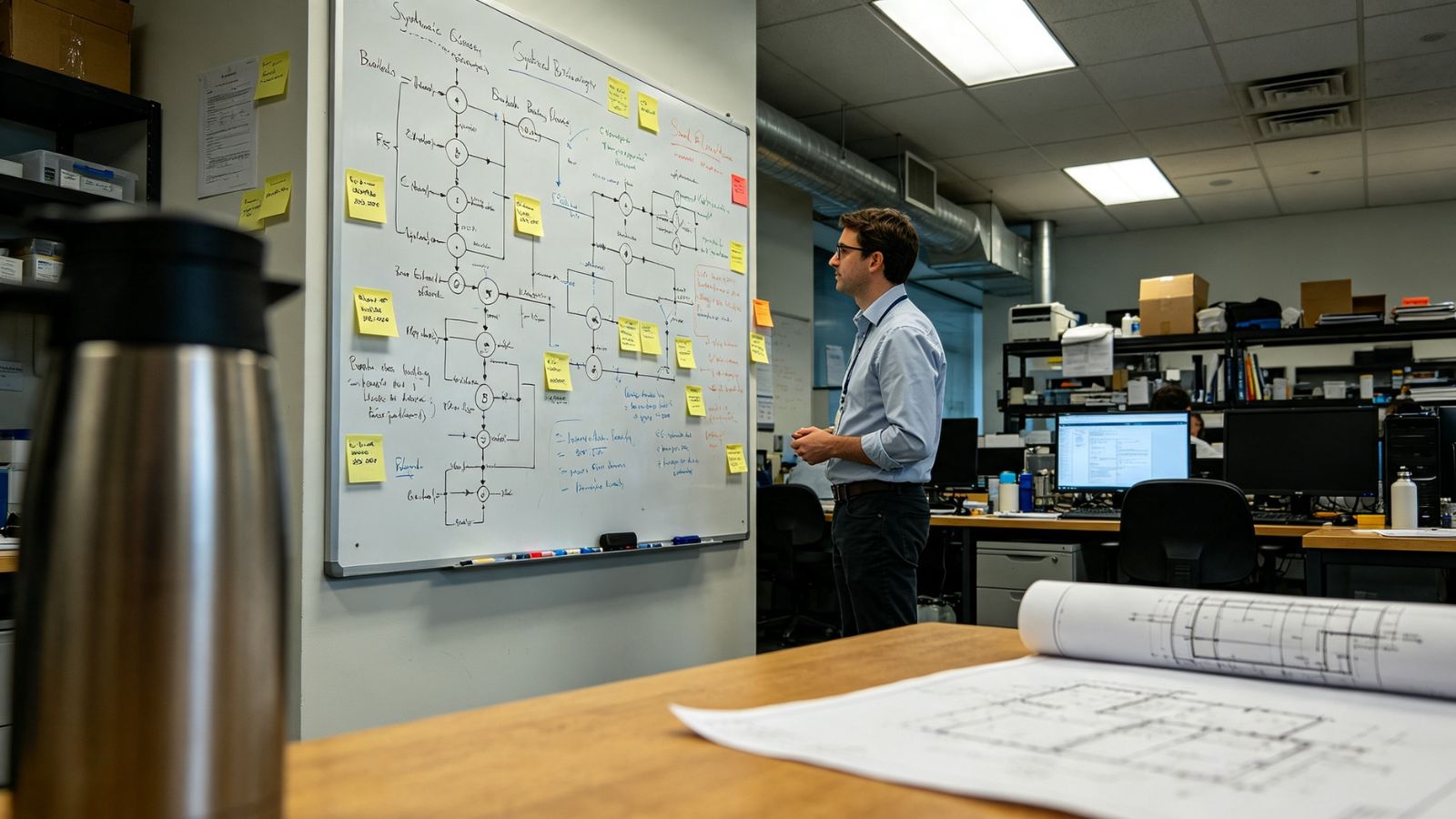
Synthetic biology introduced a different methodology by adopting three core engineering concepts: standardization, modularity, and abstraction. Standardization seeks to characterize biological components so they can be reused in multiple systems. Modularity allows those components to be combined into larger functional assemblies without redesigning every element from scratch. Abstraction enables researchers to focus on higher-level biological functions without becoming overwhelmed by molecular details during every stage of development. These principles transformed biology from an experimental craft into a more systematic design process.
One of the most influential examples of this philosophy was the development of standardized biological part libraries. Instead of creating every genetic sequence individually, researchers began cataloging promoters, regulatory elements, coding sequences, and terminators according to their known characteristics. Similar to reusable software libraries, these genetic components could be selected and combined to build increasingly complex biological systems. While biological behavior remains more variable than computer code, the establishment of standardized design frameworks dramatically accelerated experimentation and reduced development time across research laboratories worldwide.

One of synthetic biology's most important innovations is the development of engineered genetic circuits. These circuits borrow concepts directly from electrical engineering by treating genes and proteins as components capable of receiving inputs, processing information, and generating outputs. Instead of simply inserting a gene into a cell and hoping for a beneficial result, scientists design networks that allow cells to make decisions based on specific environmental or molecular signals.
Natural biological systems already perform sophisticated information processing. Cells continuously detect changes in temperature, nutrient concentrations, chemical signals, and physical stress. Synthetic biology builds upon these existing capabilities by rewiring cellular communication pathways to produce new behaviors. Researchers have engineered microorganisms that activate therapeutic responses only when specific disease biomarkers are detected. Other systems have been designed to respond to pollutants, identify toxic compounds, or regulate metabolic activity based on changing environmental conditions.
Building these circuits is considerably more difficult than assembling electronic hardware because cells operate in dynamic and unpredictable environments. Gene expression fluctuates naturally, proteins degrade over time, and cellular resources are limited. Introducing a synthetic circuit into a microorganism creates competition for energy, amino acids, ribosomes, and other molecular machinery. If an engineered pathway consumes too many resources, the host cell may reduce its activity, mutate, or eliminate the foreign genetic material altogether. Consequently, modern genetic circuit design increasingly incorporates feedback mechanisms, regulatory insulation, and computational modeling to improve stability across multiple cellular generations.
The practical impact of synthetic biology extends far beyond academic research. One of its most significant applications involves converting living organisms into programmable manufacturing systems capable of producing valuable compounds more efficiently and sustainably than conventional industrial methods. Instead of relying exclusively on petrochemical feedstocks and energy-intensive chemical synthesis, scientists can engineer microorganisms to function as miniature biological factories that transform renewable materials into commercially valuable products.
This transition has profound implications across several industries. In medicine, engineered cells already play an essential role in producing insulin, vaccines, monoclonal antibodies, and other therapeutic molecules. Synthetic biology expands these capabilities by enabling the development of personalized medicines, advanced cell therapies, and next-generation biological treatments that can be manufactured more rapidly and with greater precision. The ability to redesign metabolic pathways also allows researchers to increase production yields while reducing waste and manufacturing costs.
Industrial applications extend beyond pharmaceuticals. Researchers have developed engineered microorganisms capable of producing biodegradable plastics, specialty chemicals, alternative proteins, fragrances, and advanced biomaterials that traditionally depended on petroleum extraction or environmentally damaging production methods. Agricultural applications are equally promising. Scientists are exploring engineered microbial communities that improve nutrient availability, enhance crop resilience, and reduce dependence on synthetic fertilizers. In each case, the underlying principle remains the same: living systems can be programmed to convert biological processes into practical manufacturing solutions.

Despite impressive technological advances, living systems continue to resist many of the assumptions that work well in traditional engineering. Machines operate according to relatively predictable physical laws, whereas biological systems constantly adapt, mutate, and evolve. This distinction creates one of the greatest challenges in synthetic biology. Engineers cannot simply design a biological system once and expect it to perform identically forever because natural selection continuously acts upon engineered organisms.
Evolutionary pressure frequently undermines synthetic constructs that impose a metabolic burden on host cells. If a synthetic pathway reduces growth efficiency, mutations that disable the engineered system may provide an immediate survival advantage. Over time, those mutations can spread throughout a microbial population and eliminate the very characteristics researchers worked to create. Maintaining genetic stability therefore requires sophisticated strategies that include chromosomal integration, redundant control systems, metabolic balancing, and genetic containment technologies.
Regulatory and ethical considerations add another layer of complexity. Advances in DNA synthesis have significantly lowered technical barriers, allowing researchers to construct increasingly sophisticated genetic systems. While these capabilities create extraordinary opportunities for medicine and sustainable manufacturing, they also raise important questions regarding biosafety, environmental release, intellectual property, and biosecurity. Effective governance requires balancing scientific innovation with appropriate safeguards that prevent misuse while preserving the collaborative environment necessary for continued research and development.
Synthetic biology represents one of the clearest examples of scientific convergence in the twenty-first century. Biology, computer science, engineering, chemistry, and artificial intelligence increasingly operate as interconnected disciplines rather than isolated fields. Automated laboratories can now design, synthesize, test, and analyze thousands of genetic variants simultaneously, while machine learning algorithms help researchers predict protein structures and optimize metabolic pathways before laboratory experiments even begin.
Future progress will likely depend on improving the predictability and scalability of biological design. Researchers continue to develop more reliable genetic components, more accurate computational models, and more efficient manufacturing platforms capable of supporting increasingly complex biological systems. The long-term objective is not simply to modify individual genes but to establish a mature engineering framework that enables scientists to design biological systems with the same confidence that engineers design electronic circuits or software applications.
The transition from discovery to design has fundamentally changed how humanity interacts with living systems. Synthetic biology no longer treats life as something that can only be observed and interpreted. Instead, it approaches biology as a programmable medium that can be engineered to manufacture medicines, create sustainable materials, improve agriculture, and solve problems that extend far beyond the boundaries of traditional biological research. As the field continues to mature, the concept of programmable life will almost certainly become one of the defining scientific and industrial paradigms of the coming decades.