
Decoding the technologies of tomorrow, today.
Exploring the breakthrough innovations shaping our world. From AI infrastructure and robotics to biotech, quantum computing, and spatial tech.
Exploring the breakthrough innovations shaping our world. From AI infrastructure and robotics to biotech, quantum computing, and spatial tech.
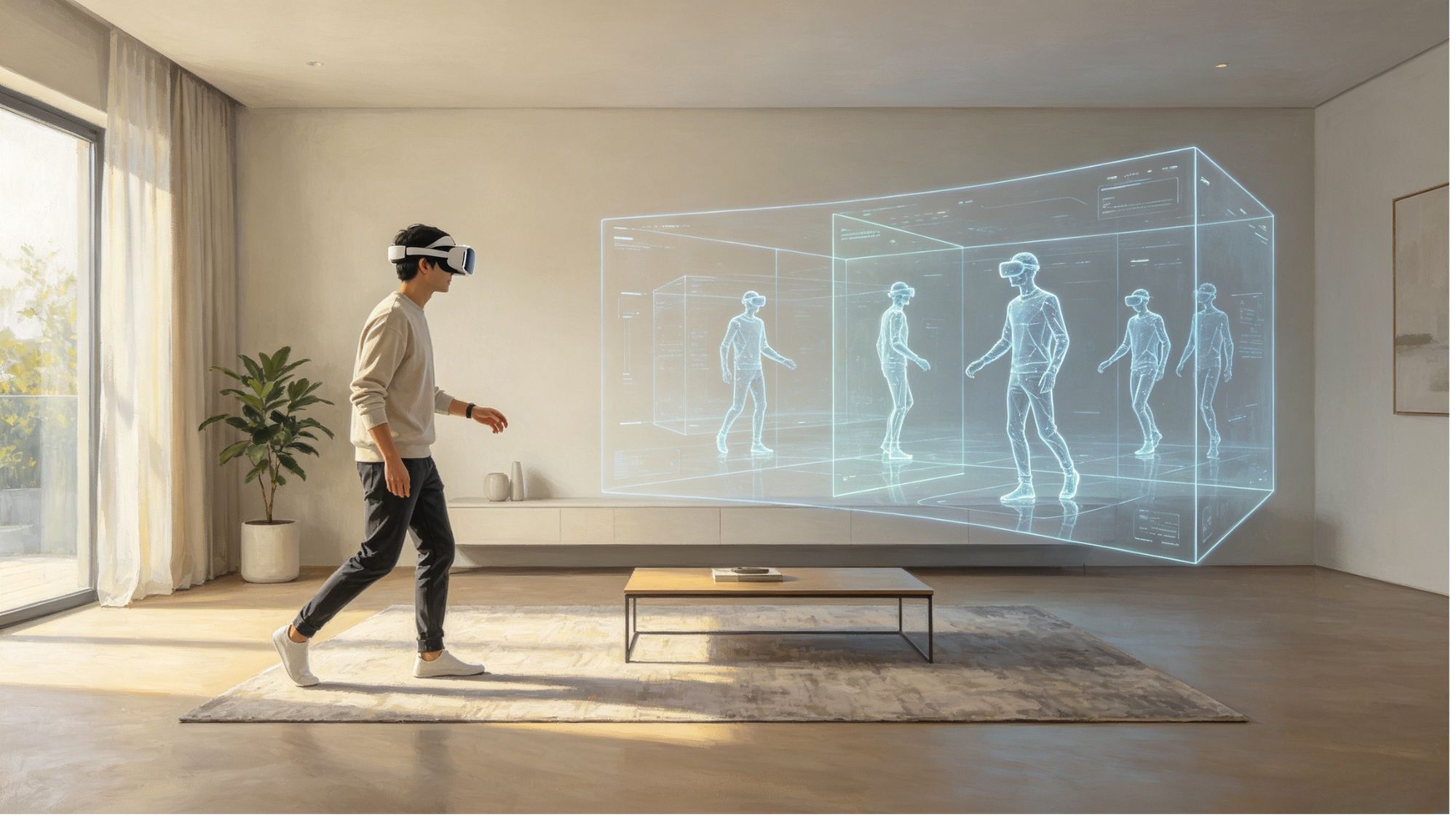
The feeling of presence in virtual and mixed reality depends on one fundamental capability: allowing digital environments to respond naturally to human movement. When users look around, lean closer to inspect an object, or move around a virtual space, the scene must update accurately to match their physical actions.
This capability is powered by Six Degrees of Freedom, commonly known as 6DoF. By combining head rotation tracking with positional movement tracking, 6DoF allows immersive systems to understand not only where a user is looking, but also where they are physically located in space.
Without 6DoF, immersive experiences are limited because users cannot naturally move around digital environments or change their viewpoint based on physical movement. Understanding how 6DoF works reveals the engineering behind modern virtual reality (VR) and mixed reality (MR) experiences.
Six Degrees of Freedom describes six possible ways an object can move in three-dimensional space. These movements are divided into two categories: rotational motion and positional movement.
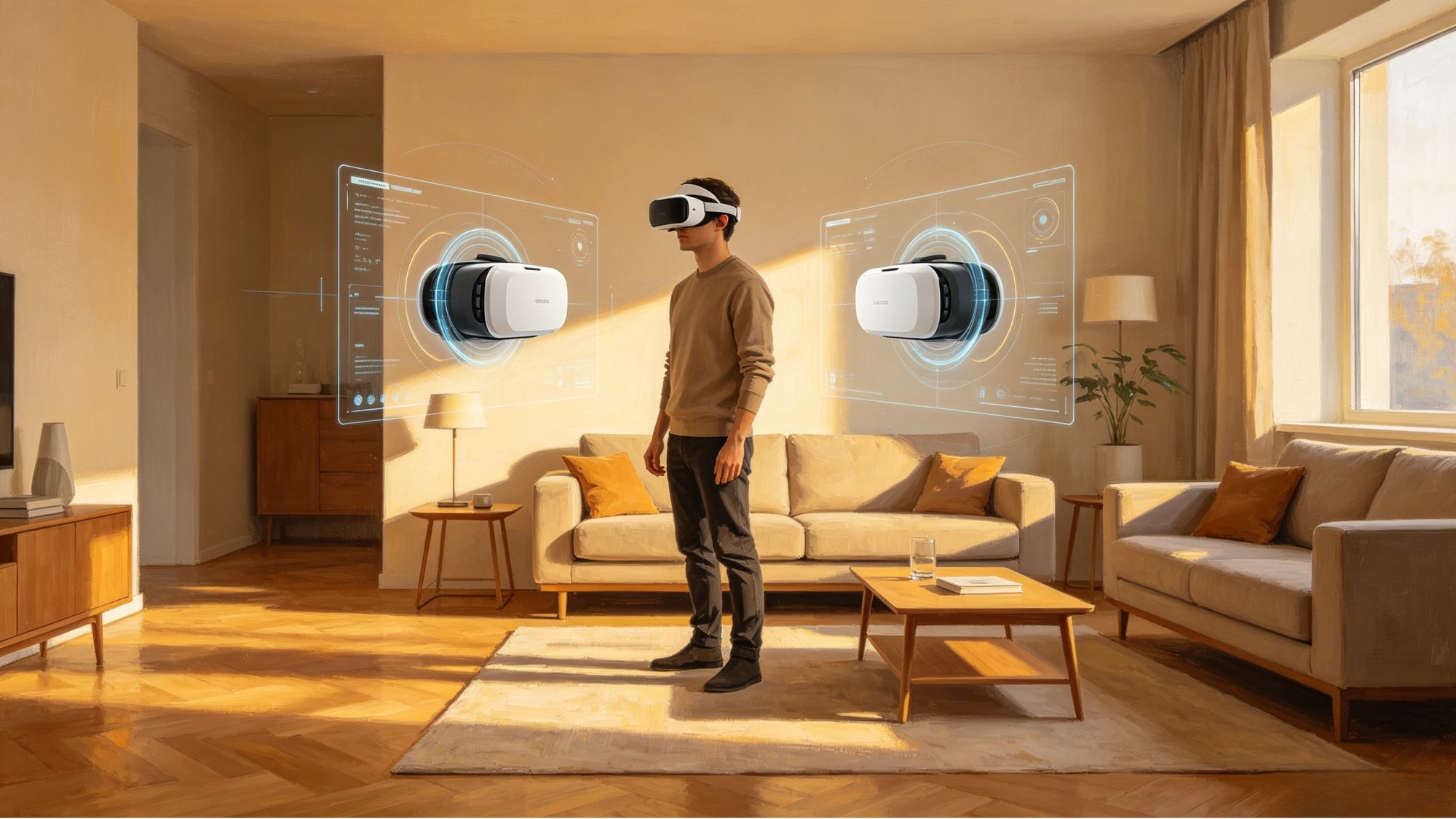
The first three degrees of freedom involve rotation around three axes:
Pitch: Looking up and down, similar to nodding.
Yaw: Turning the head left and right.
Roll: Tilting the head toward either shoulder.
Devices that only track these rotational movements are known as 3DoF systems. They allow users to look around a virtual scene but do not track physical movement through space.
For example, a user wearing a 3DoF headset can look around a virtual environment but cannot lean closer to examine a virtual object or change their viewpoint by moving their body. This limitation can reduce realism because the digital world does not fully respond to natural movement.
The remaining three degrees of freedom track physical movement:
Moving forward and backward
Moving up and down
Moving left and right
When rotational tracking and positional tracking are combined, the system achieves full 6DoF. Users can naturally walk around, lean toward objects, and view digital environments from different perspectives.
This creates realistic depth perception through parallax, where nearby objects appear to shift differently from distant objects as the user moves.
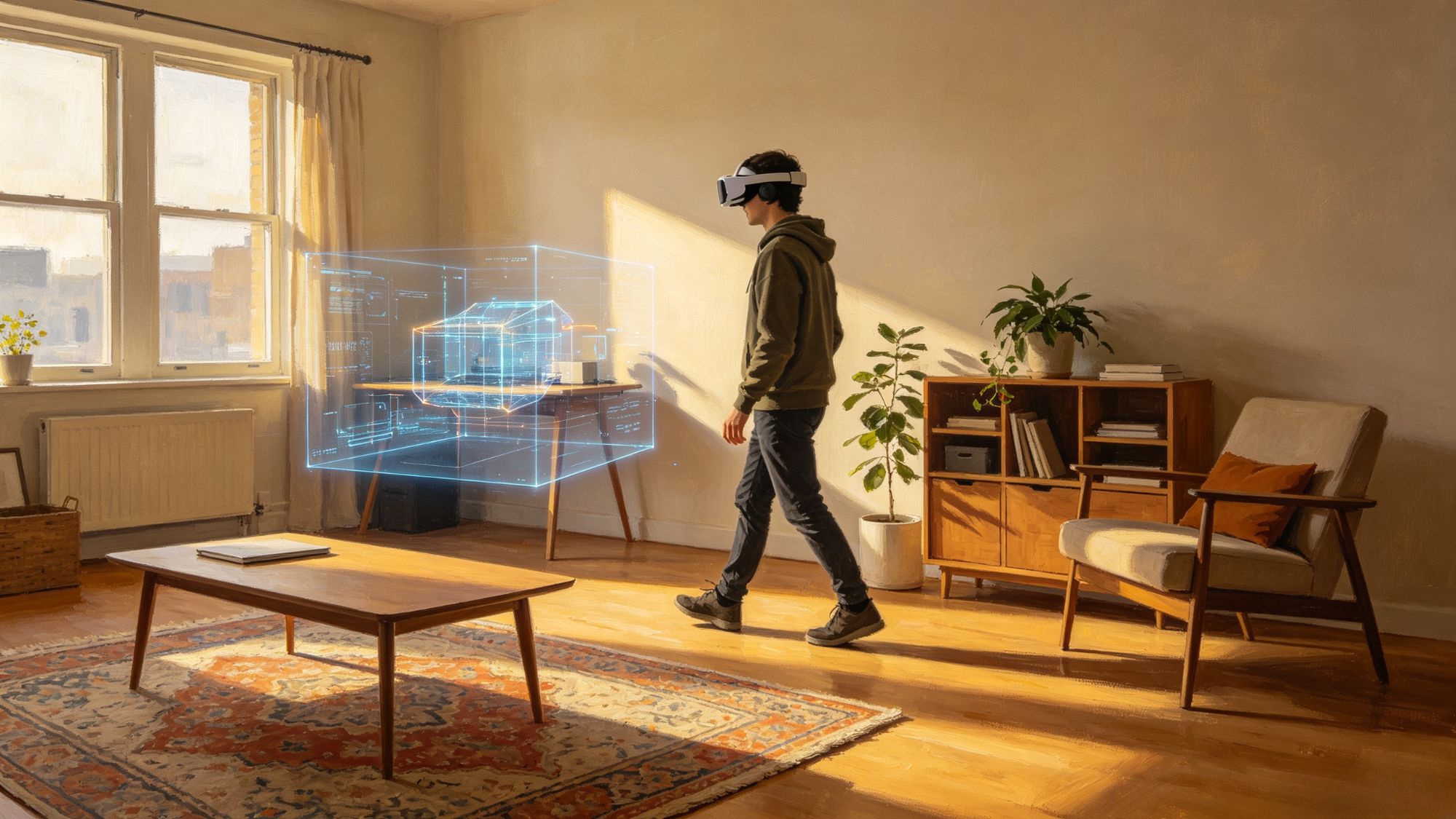
Achieving accurate 6DoF tracking requires multiple sensors working together. Modern systems typically combine inertial sensors with computer vision technology.
IMUs are essential components in VR and MR devices. They contain accelerometers and gyroscopes that measure movement, rotation, and acceleration.
These sensors respond extremely quickly to head movements, allowing the system to detect small changes instantly. However, IMUs alone cannot maintain perfect accuracy over long periods because small measurement errors can accumulate over time.
To solve this problem, immersive devices combine IMU data with visual information from cameras and environmental tracking systems.
There are two major approaches to positional tracking:
Outside-In Tracking
Outside-in systems use external cameras or sensors placed around the room to track the headset and controllers. These systems can provide highly accurate tracking but require dedicated hardware installation and a prepared play area.
Inside-Out Tracking
Inside-out tracking uses cameras mounted directly on the headset to observe the surrounding environment. The system identifies visual features such as walls, furniture edges, and other stable objects to calculate the user's position.
This approach has become common in modern standalone VR and MR devices because it allows users to move freely without external sensors.
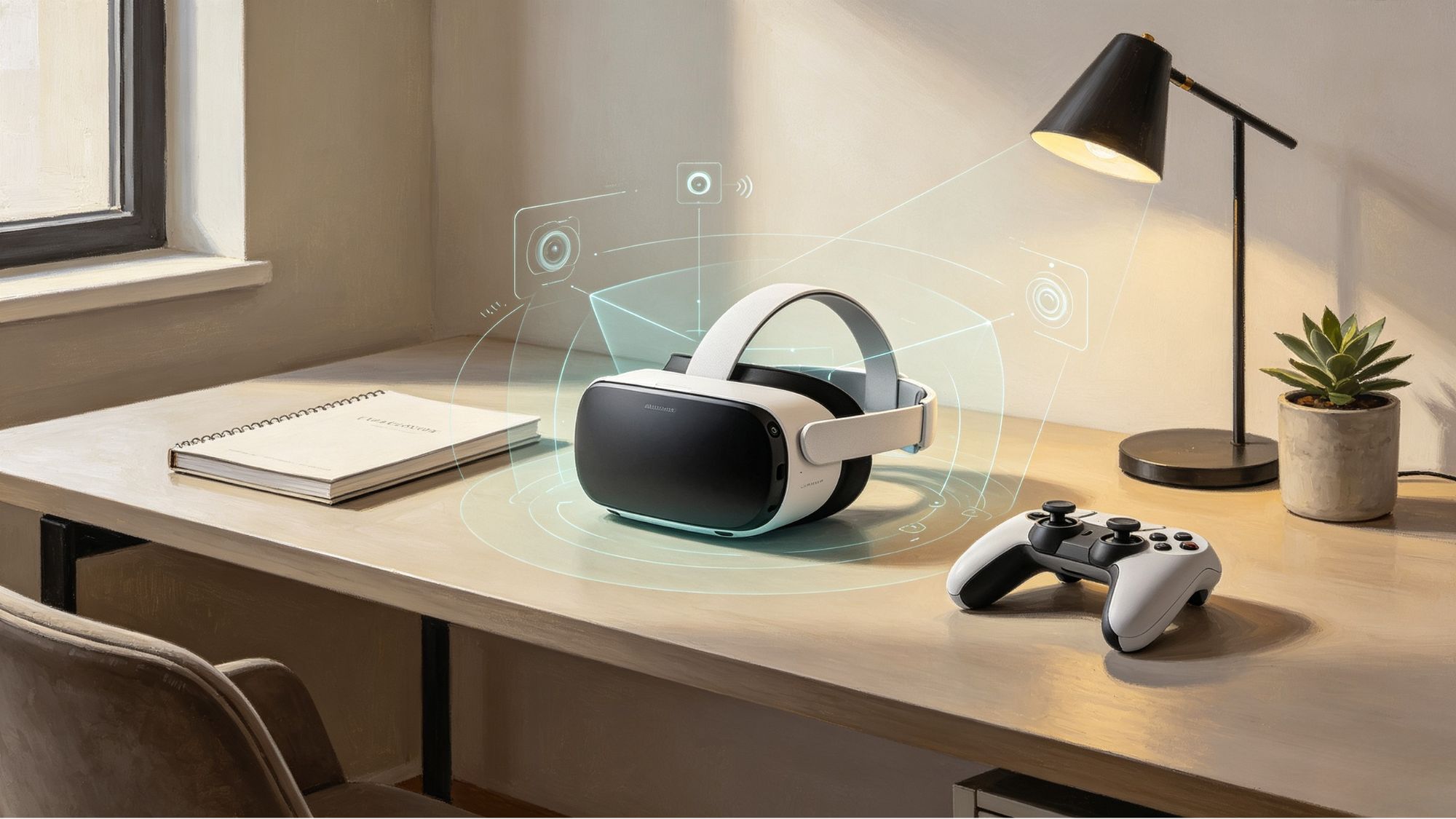
Although 6DoF technology has improved significantly, maintaining reliable tracking remains challenging.
Tracking systems can struggle when cameras cannot see important reference points. For example, a controller may temporarily disappear from view when placed behind the user's body.
To handle these situations, devices combine visual tracking with IMU predictions. The system estimates movement during short periods when visual information is unavailable and reconnects tracking when the object becomes visible again.
Computer vision-based tracking depends on recognizing features in the surrounding environment. Dark rooms, reflective surfaces, or empty spaces with few visual details can make tracking more difficult.
Modern systems improve reliability by combining multiple sensors, including infrared cameras and depth sensors, allowing devices to maintain better spatial awareness in different environments.
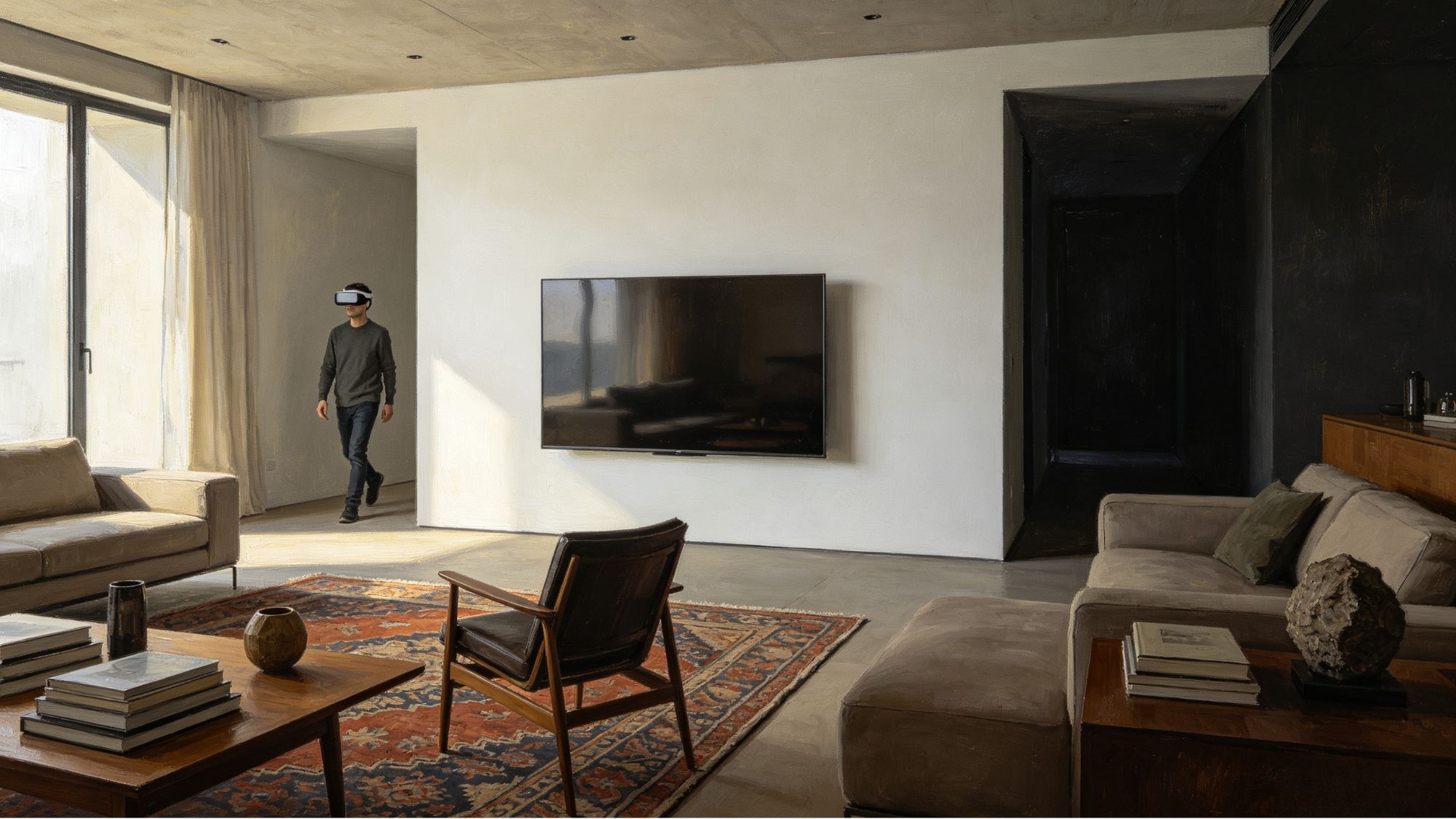
The importance of 6DoF goes beyond technical specifications. It changes how users interact with digital content.
With accurate positional tracking, virtual objects feel more connected to the user's physical environment. A person can walk around a virtual model, inspect details from different angles, or interact with digital content as if it occupies real space.
This capability supports many applications, including:
VR training simulations: Allowing workers to practice complex tasks in realistic environments.
Industrial design: Enabling teams to review and modify 3D models collaboratively.
Medical education: Helping students explore detailed anatomical models.
Mixed reality workspaces: Creating digital tools that remain anchored in physical locations.
By matching visual movement with physical movement, 6DoF reduces the disconnect between the human body and digital environments, making immersive experiences feel more natural.
Six Degrees of Freedom is one of the core technologies that transforms VR and MR from passive viewing experiences into interactive spatial environments. By combining rotational tracking, positional tracking, sensor fusion, and computer vision, 6DoF allows digital content to respond naturally to human movement.
As tracking systems become more accurate, efficient, and accessible, 6DoF will continue to play a central role in the development of immersive computing, enabling more realistic interactions between people and digital worlds.