
Decoding the technologies of tomorrow, today.
Exploring the breakthrough innovations shaping our world. From AI infrastructure and robotics to biotech, quantum computing, and spatial tech.
Exploring the breakthrough innovations shaping our world. From AI infrastructure and robotics to biotech, quantum computing, and spatial tech.
Industrial machines have traditionally been designed around fixed architectures. Manufacturers typically develop equipment for a specific production process, install motors, actuators, tooling systems, and control components in dedicated positions, and operate that configuration for many years.
This approach provides excellent efficiency in stable production environments, but it becomes challenging when product designs change, production volumes fluctuate, or manufacturers need to introduce new processes. Machine modifications often require mechanical redesign, electrical rewiring, software updates, and extended downtime.
Reconfigurable mechanics introduces a different design philosophy. Instead of treating industrial equipment as a permanent structure, engineers are developing machines as adaptable platforms built from modular mechanical components, intelligent actuator systems, and flexible control architectures.
The objective is not to create a machine that performs every possible task. Instead, reconfigurable systems aim to reduce the engineering effort required when production requirements change, allowing manufacturers to adapt equipment without completely replacing existing infrastructure.
Reconfigurable mechanics refers to mechanical systems that can change their structure, motion capabilities, or operational functions through the replacement or rearrangement of standardized components.
Traditional automation systems are usually optimized for dedicated tasks. A machine designed for assembling a specific product may achieve excellent performance, but adapting it to a different product often requires new fixtures, tooling, mechanical redesign, and additional engineering work.
A reconfigurable machine separates the basic platform from the specific production function. Mechanical modules, actuator units, sensors, and control components are designed to work together through standardized interfaces. This allows manufacturers to modify selected parts of the system rather than replacing the complete machine.
For example, an electronic assembly workstation may initially perform component installation. If production requirements change, the same platform can be adapted for inspection, testing, or packaging by replacing specific tools, sensors, or motion modules.
This approach extends equipment usability and allows manufacturers to respond more efficiently to changing production demands.
Industrial robots have transformed manufacturing by providing accurate and repeatable motion for applications such as welding, assembly, painting, and material handling. However, many traditional robot installations are built around fixed layouts and dedicated tooling.
Modular robotics changes this approach by treating robots as configurable systems rather than permanent machines. A modular robot can combine standardized joints, structural components, sensors, and end-effectors to create different configurations for different tasks.
This flexibility is valuable in industries where product variations are increasing and production requirements change frequently.
Modular robotics has already been adopted in industrial automation systems where flexibility is more important than maximum specialization.
One example is Bosch Rexroth, which has developed modular automation concepts through its ctrlX AUTOMATION platform. The approach combines standardized hardware, software, and communication technologies to help manufacturers create adaptable automation solutions. Instead of developing completely separate control architectures for every machine design, engineers can integrate compatible automation components into different configurations.
Another example is KUKA, which has developed robotic solutions combining industrial robots, mobile platforms, and software-based coordination. Mobile industrial robot systems demonstrate how robotic capabilities can extend beyond traditional fixed robot cells. By combining transportation, sensing, and robotic manipulation functions, manufacturers can create production environments that are easier to modify when factory layouts or workflows change.
These examples demonstrate that modular robotics is not simply about creating robots with interchangeable parts. The broader objective is to create automation systems where mechanical hardware, software control, and production processes can be adjusted together.
Actuators are fundamental components of industrial machines because they convert electrical, hydraulic, or pneumatic energy into controlled movement. They include electric motors, servo drives, hydraulic systems, and pneumatic mechanisms.
Traditional machines often integrate actuators as dedicated components designed around one specific mechanical structure. Plug-and-play actuator nodes attempt to make motion systems more adaptable by combining mechanical, electrical, sensing, and communication functions into standardized units.
A modern actuator node may integrate a motor, drive electronics, position or force sensors, local processing capability, and industrial communication interfaces. This design allows engineers to add or replace motion capabilities without redesigning the entire machine architecture.
Industrial communication technologies are essential for making these systems practical.
EtherCAT is widely used in motion-control applications because it enables high-speed synchronization between controllers and distributed devices.
PROFINET provides industrial Ethernet communication for automation systems, supporting real-time data exchange between machines, controllers, and field devices.
IO-Link enables communication with intelligent sensors and smaller automation devices, allowing manufacturers to access configuration information and diagnostic data beyond traditional signal transmission.
However, true plug-and-play operation requires more than mechanical connection and network communication. New modules must also be recognized by control software, correctly calibrated, verified for compatibility, and evaluated for safe operation.
For this reason, reconfigurable machines combine hardware modularity with software intelligence. The system must understand what components are connected, how they behave, and how they influence overall machine performance.
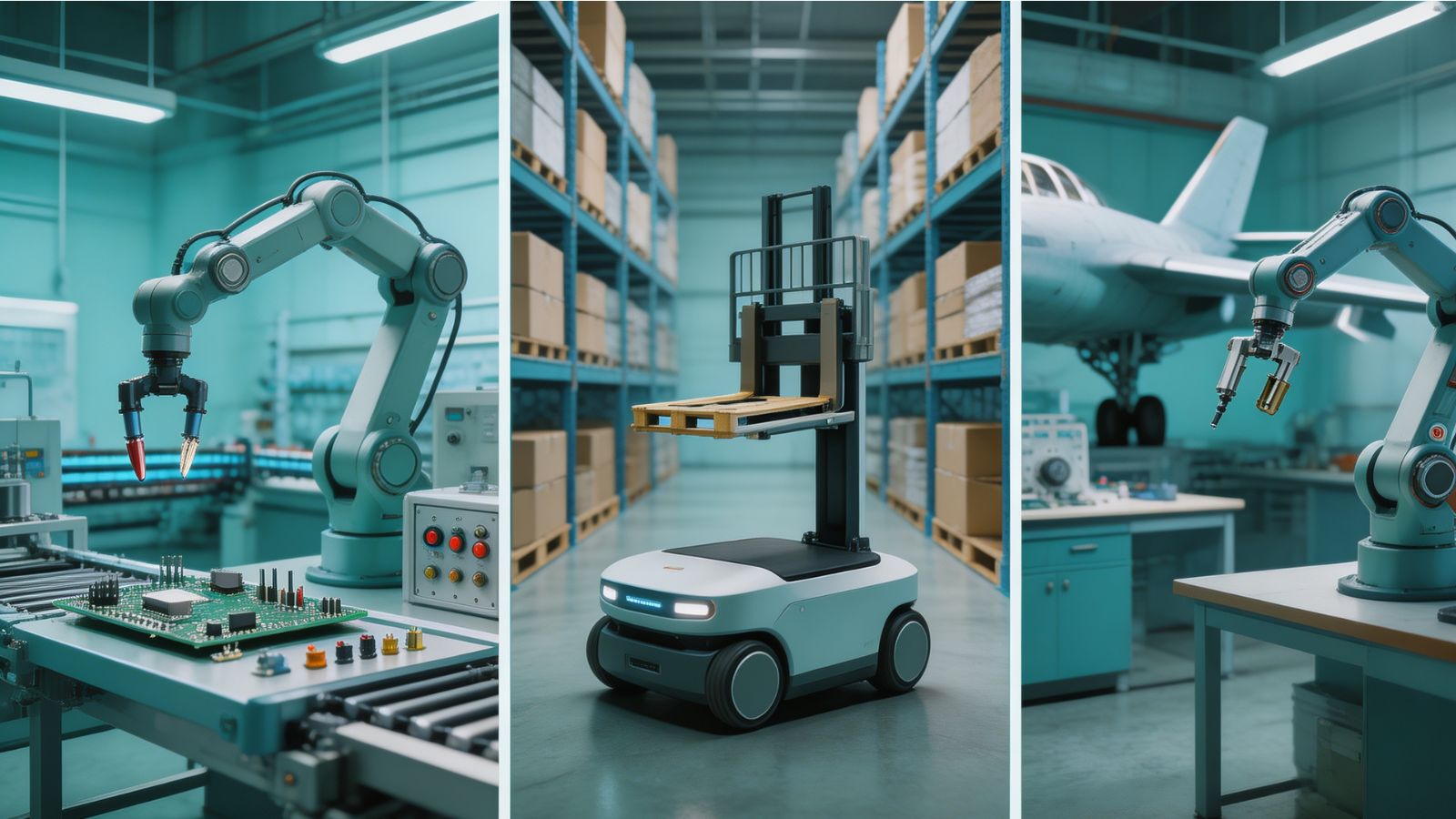
Electronics manufacturing demonstrates why adaptable automation has become increasingly valuable.
Consumer electronics products often experience rapid design changes, shorter product cycles, and increased product variation. Fixed automation equipment may become inefficient when manufacturers introduce new product generations.
Modular production cells allow factories to replace assembly tooling, inspection equipment, and robotic handling modules while keeping the core automation platform.
This approach helps manufacturers support smaller production batches and frequent product transitions without investing in completely new production systems.
Warehouse operations face continuous changes in product types, order volumes, and storage requirements.
Modern logistics automation increasingly uses modular robotic platforms that combine mobile robots, sensors, lifting systems, and software coordination.
Instead of designing a warehouse around a single fixed workflow, modular systems allow operators to adjust robotic capabilities as operational requirements change. Additional robotic units or new handling modules can be introduced when warehouse demand increases.
This flexibility helps logistics companies adapt automation systems without major infrastructure replacement.
Aerospace and research environments often require specialized robotic systems that operate under uncertain conditions.
Building a completely new robot for every experiment can be expensive and time-consuming. Modular robotic platforms allow researchers to modify robot structures, sensors, and tools according to different experimental requirements.
This approach is useful in environments where engineers need to test multiple configurations before selecting a final design.
Although reconfigurable mechanics provides significant advantages, modular machines are not the best solution for every manufacturing environment.
High-volume production lines with stable product designs often continue to benefit from traditional dedicated equipment. In industries where millions of identical components are produced, highly optimized fixed systems can achieve shorter cycle times, predictable maintenance schedules, and maximum production efficiency.
In these situations, the additional flexibility of modular equipment may not justify the increased engineering complexity and initial investment.
The value of modular machines becomes more apparent when manufacturers frequently change products, operate smaller production batches, or need to support customized manufacturing. Electronics production, laboratory automation, and flexible assembly operations are examples of environments where rapid adaptation can provide greater economic value.
The key consideration is not whether a machine is modular, but whether the production environment requires frequent change. A fixed machine optimized for one task may remain the most efficient choice for stable, large-scale manufacturing, while a reconfigurable system provides greater advantages in industries where adaptability is a priority.
Modularity should therefore be viewed as an engineering strategy rather than a universal replacement for traditional automation. The most effective industrial solutions balance flexibility with performance, reliability, safety, and cost efficiency.
Although reconfigurable mechanics provides significant advantages, several engineering challenges must be addressed before widespread adoption.
Mechanical standardization remains one of the biggest challenges. A successful modular ecosystem requires compatibility between physical connections, power delivery, communication systems, and software interfaces. Without sufficient standardization, modular machines can become collections of proprietary components that are difficult to integrate.
Control complexity is another major issue. When a machine changes its physical structure, its mechanical characteristics also change. The control system must understand new configurations, account for different loads and motion behaviors, and maintain accurate performance.
Software systems capable of automatically identifying connected components and adapting control parameters are improving, but industrial applications require extremely reliable solutions.
Safety is one of the most important considerations for reconfigurable industrial systems. When a machine changes its physical structure, its operating risks may also change. Additional actuator modules, robot joints, or tools can affect movement range, collision zones, and interaction conditions with human operators.
A modular machine cannot be considered safe simply because each individual component has passed testing. The complete machine configuration must be evaluated as an integrated system.
Several international standards provide guidance for industrial robot safety:
ISO 10218: Robotics — Safety Requirements for Industrial Robots and Robot Applications
This standard defines general safety requirements for industrial robot systems, including robot design, integration, and operation. For reconfigurable machines, ISO 10218 provides a framework for evaluating whether safety functions remain effective when robot structures or production layouts are modified.
ISO/TS 15066: Robots and Robotic Devices — Collaborative Robot Safety Requirements
This technical specification focuses on collaborative robot (cobot) applications where humans and robots operate in shared workspaces. It provides guidance on human-robot interaction safety, including contact force considerations, speed limitations, and protective measures.
In addition to these standards, manufacturers must perform appropriate risk assessments when machine configurations change. Emergency stops, protective monitoring systems, access controls, and operational limits may require verification after modifications.
The flexibility of modular machines must always be balanced with reliable safety validation.
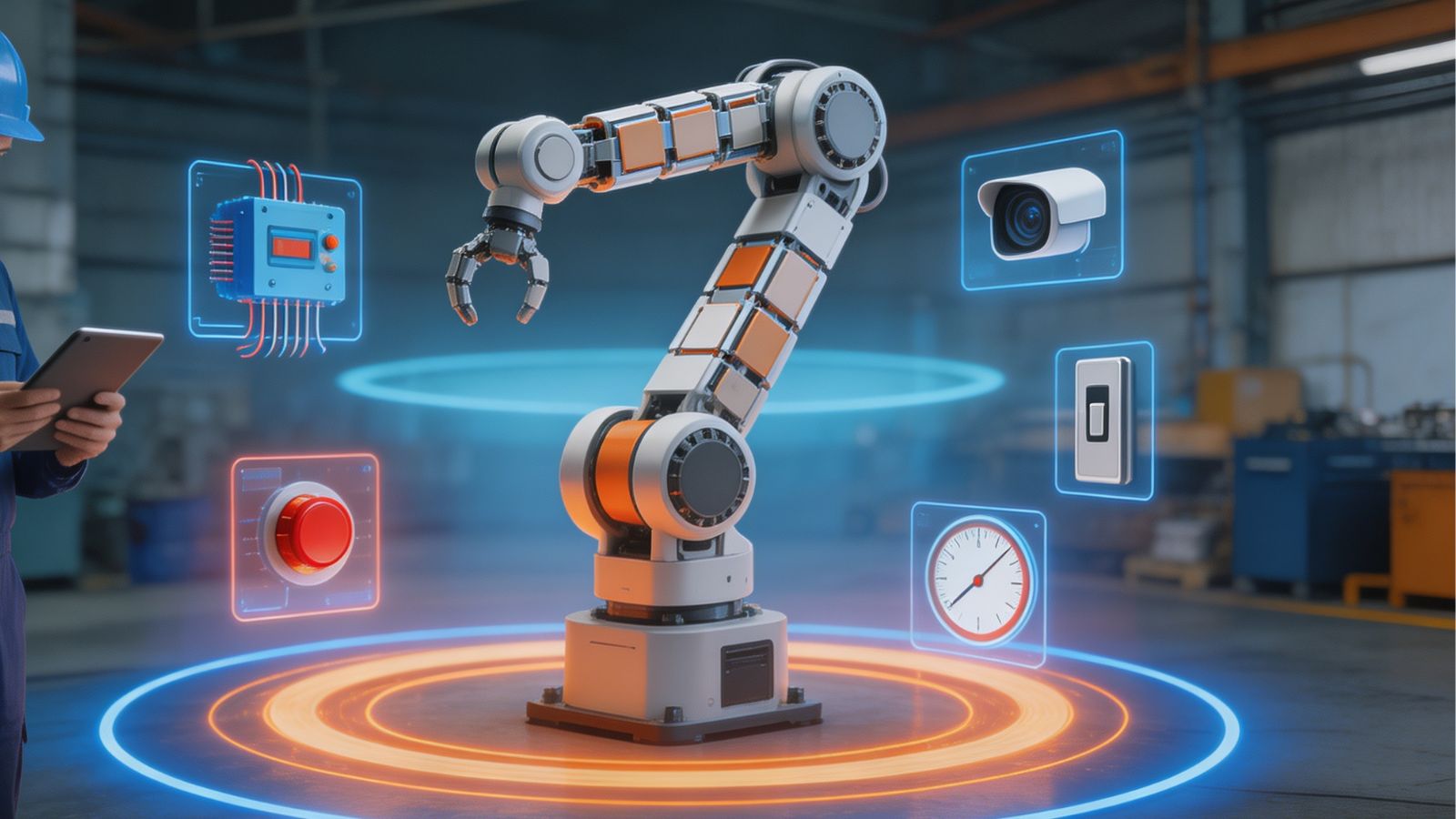
Reconfigurable mechanics represents a shift from fixed industrial equipment toward adaptable manufacturing platforms.
The most successful systems will not simply provide maximum flexibility. They will combine adaptability with reliability, safety, interoperability, and economic value.
Dedicated machines will continue to dominate applications where extremely high production volume justifies specialized equipment. However, industries facing frequent product changes, customized manufacturing requirements, and shorter production cycles can benefit significantly from modular approaches.
By combining modular robotics, intelligent actuator nodes, and flexible control systems, reconfigurable mechanics provides manufacturers with another approach for building machines that can adapt alongside changing production requirements.