
Decoding the technologies of tomorrow, today.
Exploring the breakthrough innovations shaping our world. From AI infrastructure and robotics to biotech, quantum computing, and spatial tech.
Exploring the breakthrough innovations shaping our world. From AI infrastructure and robotics to biotech, quantum computing, and spatial tech.
A robot joint is more than a motor attached to a moving link. Between the source of power and the final motion, the system has to manage torque, speed, force, compliance, heat, and mechanical load. That intermediate architecture can determine whether a robot feels rigid and precise, light and responsive, or naturally compliant. It also affects where mass is placed in the body, how much energy is lost before reaching the joint, and how difficult the system is to maintain. For that reason, choosing a transmission is often a system-level decision rather than a component-level choice.
Four approaches illustrate the range of available solutions: geared electric actuation, tendon-based transmission, hydraulic power transmission, and artificial-muscle-style actuators. They should not be treated as perfectly equivalent technologies. A gearbox is primarily a mechanical reduction mechanism, a tendon is a remote force-transmission architecture, hydraulics form a fluid-power system, and artificial muscles describe a family of actuator technologies with very different operating principles. A useful comparison therefore needs to look beyond peak force or positioning accuracy and consider how each approach changes the robot's overall mechanical architecture.
The most useful comparison begins with the requirements imposed by the robot rather than with the transmission technology itself. Precision is important for a factory manipulator following a repeatable path, but it may be less important than low distal mass for a legged robot that repeatedly accelerates its limbs. A hand designed to manipulate delicate objects may benefit from compliance that would be undesirable in a machining application. Likewise, a mobile robot operating for long periods may place more emphasis on system efficiency, thermal management, and serviceability than on achieving the highest possible peak force.
Mass distribution is particularly important because the location of an actuator can matter almost as much as its total mass. A motor and gearbox mounted close to the robot's torso can drive a distant joint through a tendon, while the same actuator mounted directly at the joint adds mass to the moving structure. That difference changes the limb's rotational inertia and therefore the effort required to accelerate and decelerate it. The comparison below focuses on five recurring engineering questions: how effectively the system produces useful force or torque, where its mass is located, how precisely it can be controlled, how much compliance it naturally provides, and what mechanical infrastructure is required to keep it operating reliably.
Geared electric actuation remains one of the most established approaches for robotic joints because it combines mature electric motors with mechanical reduction. A motor can operate efficiently at relatively high speed while the gearbox reduces output speed and increases available torque. Planetary gearboxes, strain-wave gears, and cycloidal reducers each offer different combinations of torque capacity, stiffness, efficiency, size, and durability. The gearbox therefore becomes an important part of the actuator rather than merely an accessory. In many industrial applications, precision gearing is used specifically because repeatable motion and controlled positioning are central to the task.
Strain-wave gearing is a good example of why the details matter. Harmonic Drive describes its strain-wave technology as offering high reduction ratios, compact packaging, high positional accuracy, and zero-backlash characteristics, and its products are used in industrial robot axes and other precision motion applications. These characteristics make geared actuators attractive when a robot needs predictable trajectories and high torque from a relatively compact joint. The trade-off is that gearing introduces another mechanical interface between the motor and load. Gear teeth, bearings, lubrication, seals, and housing all contribute to the system's mass and mechanical losses, while shock loading and repeated reversals place demands on the transmission that a direct-drive system would avoid.
The placement of that mass also matters. A heavy geared actuator mounted at the end of a long robotic arm increases the inertia seen by the upstream joints, which can raise the torque required for rapid movement. This is one reason designers may accept a more complicated transmission architecture when low distal mass is important. Gearboxes also do not automatically provide the compliance that is desirable for physical interaction. A rigid geared joint can be extremely useful for precise industrial motion, but a robot expected to absorb unexpected contact may require additional mechanical compliance, torque sensing, or a series-elastic element. In other words, gearing solves the problem of speed and torque conversion very effectively, but it does not eliminate the need to design the rest of the joint around those characteristics.
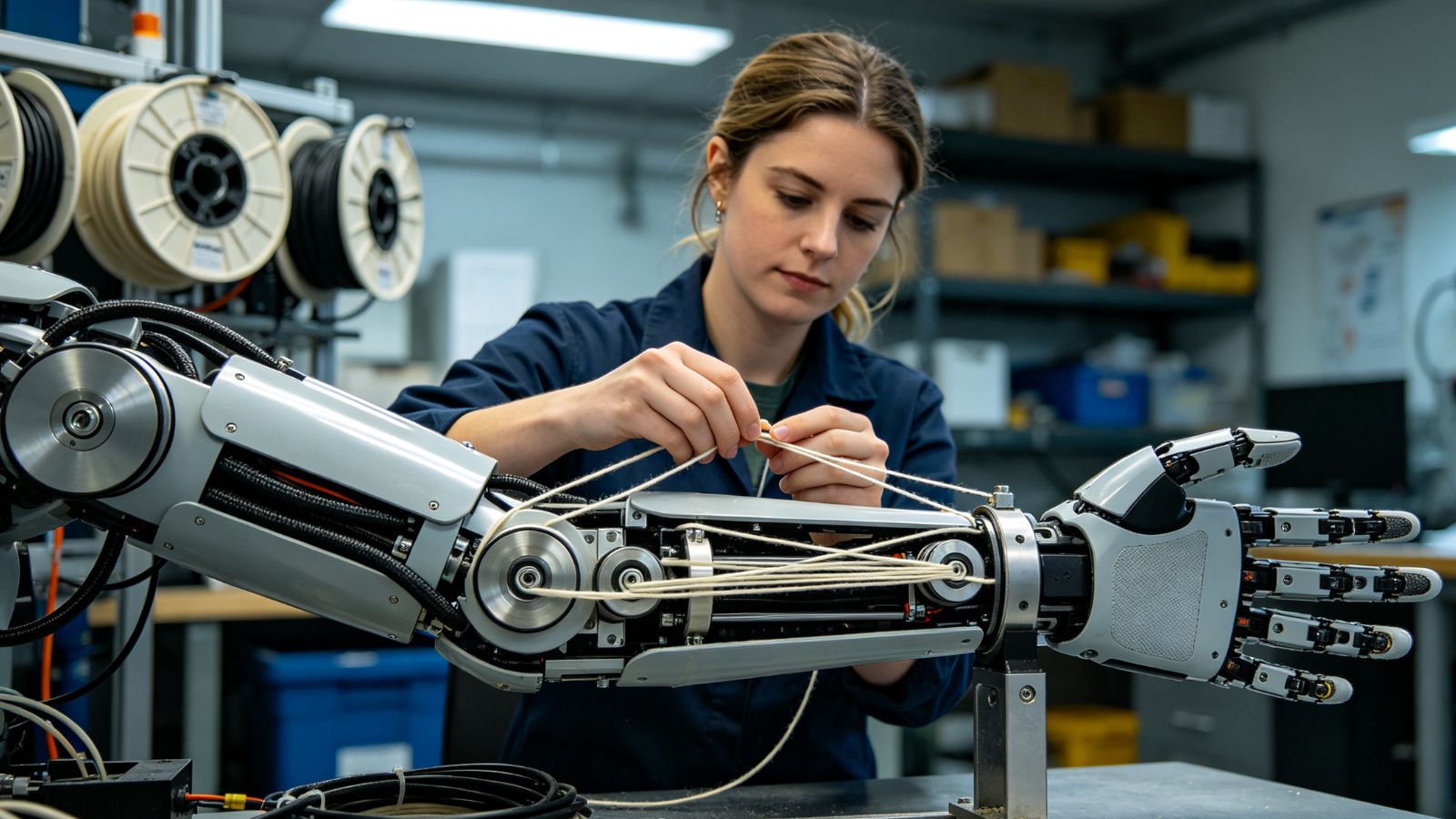
Tendon-driven robots move the actuator away from the joint and transmit force through a flexible element. The tendon may run through pulleys, guides, or sheaths, allowing a motor positioned in the torso, upper arm, or forearm to control a more distant joint. This architecture is particularly useful when designers want to keep hands, fingers, feet, or other moving structures light. Instead of placing a separate motor and gearbox at every joint, several actuators can remain in a more central location while cables distribute their force to the places where motion is needed.
The main benefit is not simply lower component weight; it is the effect that lower distal mass has on the robot's dynamics. A lightweight hand can move quickly with less effort, and a lightweight leg can be accelerated and stopped more easily than one carrying a large collection of motors. Tendon transmission can also make compact multi-joint mechanisms possible because the actuators do not all have to fit inside the moving links. These properties make tendon architectures attractive for anthropomorphic hands and other mechanisms in which packaging and mass distribution are major design constraints. The approach does, however, move complexity away from the actuator and into the transmission path, where routing, tensioning, friction, and alignment become important parts of the design.
The central challenge is that a tendon is not a perfectly rigid connection. Elastic stretch changes with load, while friction at pulleys, guides, and sheaths can make the relationship between motor position and joint position dependent on the direction and history of motion. That behavior contributes to hysteresis and makes accurate control more complicated than simply commanding a motor angle. Pretension also has to be managed carefully: too little tension can introduce slack, while excessive tension can increase wear and bearing loads. As the number of tendons and joints increases, routing becomes harder to maintain and troubleshoot. Tendon systems can therefore offer an excellent mechanical solution for lightweight limbs, but their advantages come with a greater need for calibration, tension management, and careful mechanical routing.
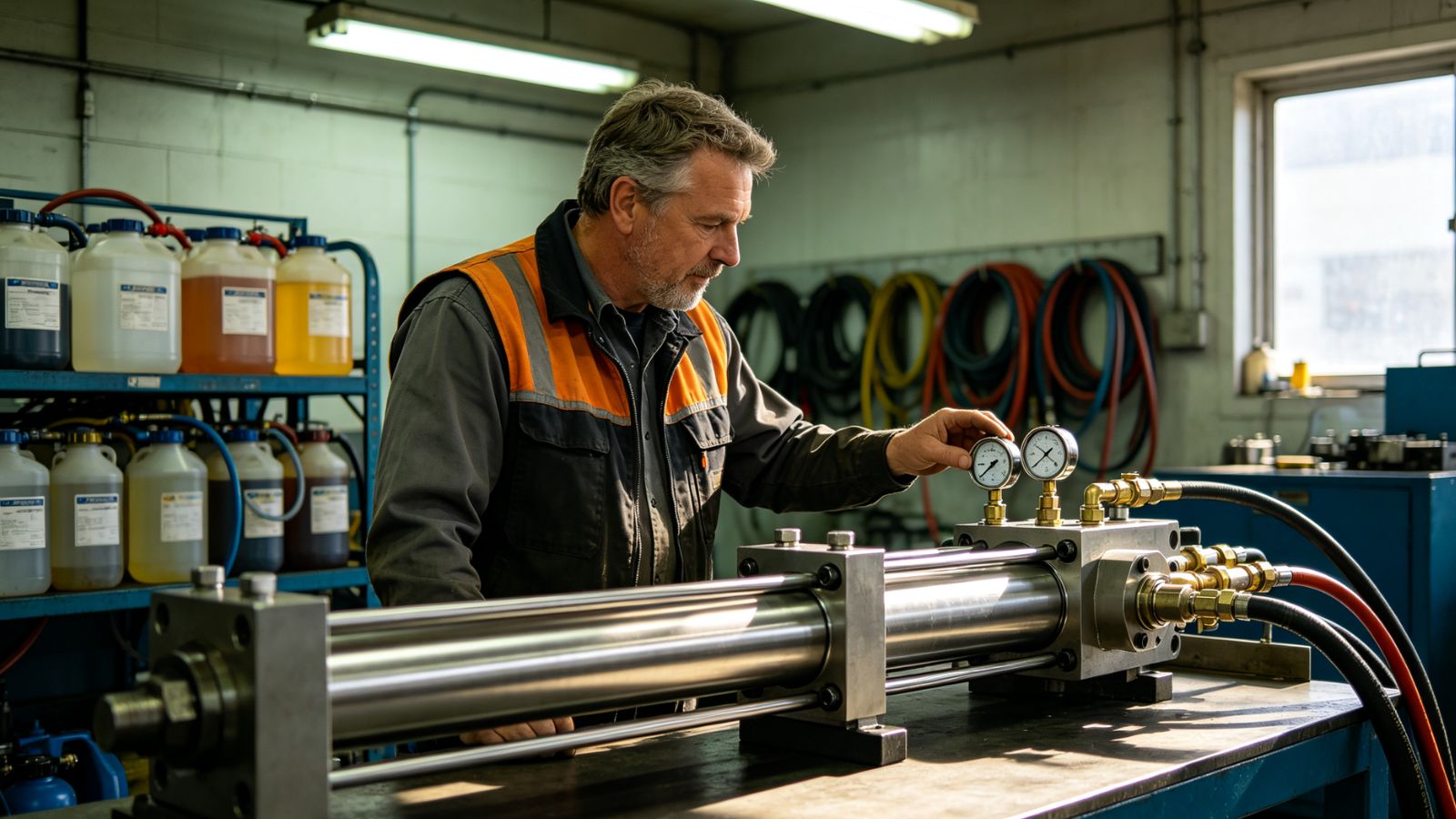
Hydraulic transmission approaches the same problem from a different direction. Instead of converting motor speed into joint torque through gears, a pump creates fluid pressure and valves direct that pressure to hydraulic actuators. A cylinder produces linear force, while rotary hydraulic actuators can provide direct rotational output. Because pressure acts across a relatively large piston area, hydraulic systems can produce substantial force from compact actuators. This has historically made them attractive for machines that need high peak power, dynamic movement, or substantial force relative to actuator size.
Boston Dynamics' earlier Atlas platform provides a useful example of this design philosophy. The company's development history identifies the previous Atlas as hydraulic and describes its research role in dynamic motion, balance, and manipulation. Boston Dynamics later introduced an all-electric Atlas, explaining that the redesign was intended to reduce complexity and improve characteristics such as quiet operation and energy efficiency. The evolution is useful because it illustrates that actuator selection is rarely about one specification. Hydraulic power can enable demanding dynamic behavior, but a complete hydraulic system also requires pumps, valves, fluid lines, reservoirs or other fluid-management hardware, seals, and thermal management. Those supporting components influence the robot just as much as the actuator itself.
System-level efficiency is another consideration. Hydraulic losses can arise from pump inefficiency, pressure drops, leakage, valve throttling, and heat generated as fluid circulates through the system. Maintenance also becomes more involved because seals, hoses, fittings, and fluid condition become part of the reliability picture. None of these factors makes hydraulics inherently unsuitable for robotics; they simply make the architecture more dependent on the application. A heavy machine with demanding force requirements may have enough room for the supporting infrastructure to justify hydraulics, while a small collaborative or consumer robot may place a much higher value on quiet operation, compact packaging, cleanliness, and simplified maintenance. The right comparison is therefore between complete systems, not just between hydraulic cylinders and electric motors.
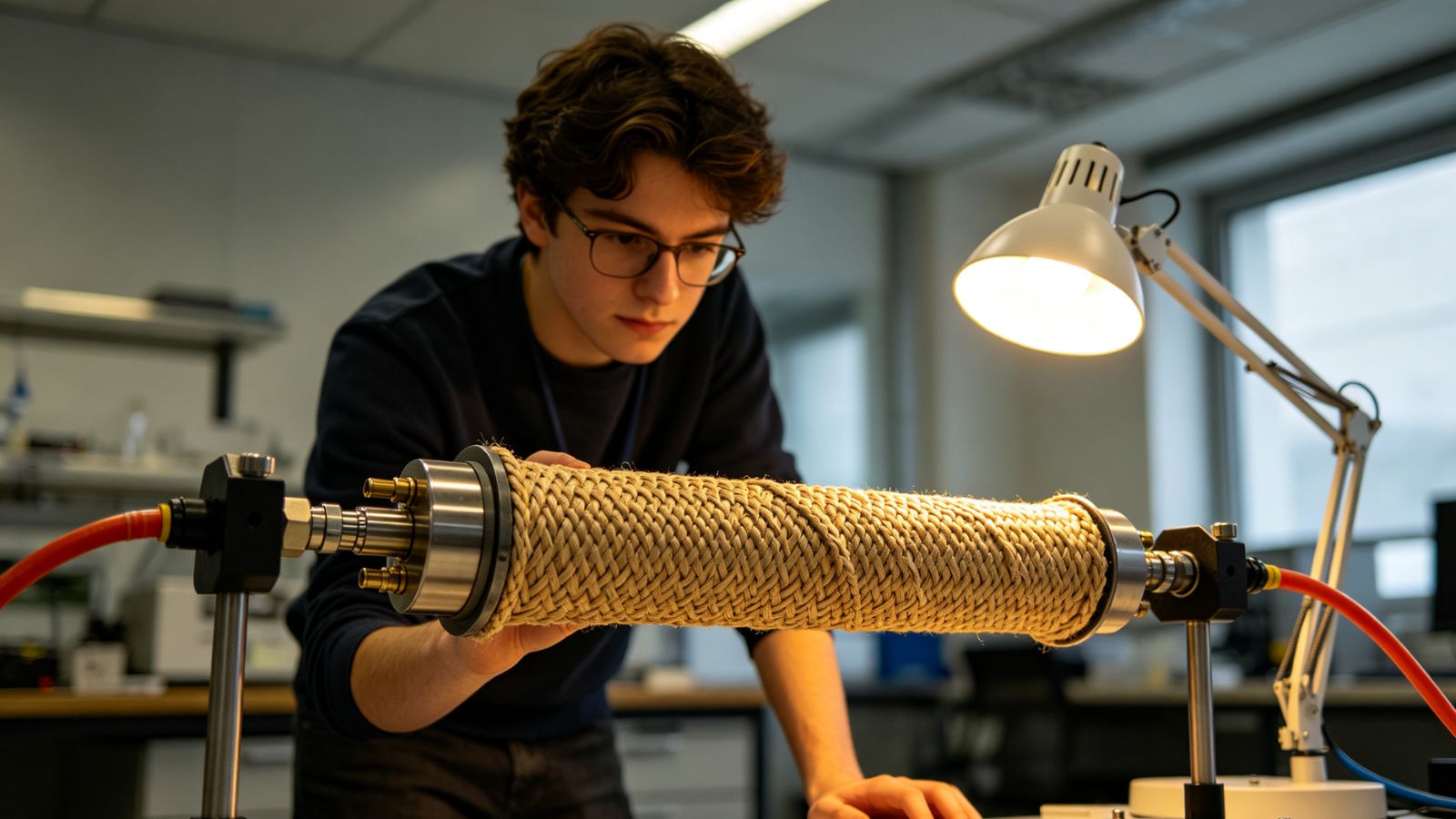
Artificial muscles are best understood as an umbrella term rather than a single transmission technology. Pneumatic artificial muscles such as McKibben muscles generate contraction through pressurized air, while dielectric elastomer actuators use electrically driven deformation. Shape-memory alloys rely on material phase changes to generate motion, and other soft-actuator concepts use different combinations of fluids, polymers, textiles, and smart materials. Research on McKibben actuators, for example, has addressed both their modeling and their control as robotic actuators, illustrating that their behavior involves different control considerations from conventional rigid transmissions. Treating all of these technologies as interchangeable would therefore hide important differences in speed, force, efficiency, sensing, fatigue, and control.
Their common attraction is the possibility of producing useful motion without building a completely rigid mechanical chain. Pneumatic muscles can contract while remaining compliant, and soft actuators can deform around objects or structures instead of transmitting every contact force through a rigid gearbox. This can be valuable in robotic hands, wearable mechanisms, rehabilitation devices, and experimental soft robots where interaction with people or irregular objects is central to the design. Compliance can also reduce the need to achieve perfect mechanical alignment at every point of contact. In these situations, a little mechanical deformation is not necessarily a loss of performance; it can be part of the behavior the robot is designed to produce.
The limitations become clearer when artificial muscles are evaluated as complete systems. Pneumatic muscles require a source of compressed air or stored gas, and the compressibility of the working medium can complicate precise position control. Hydraulic muscle concepts inherit many of the infrastructure requirements of conventional hydraulic systems. Dielectric elastomer actuators introduce high-voltage requirements and material reliability concerns, while shape-memory alloys can face limits related to heating, cooling, and cycle life. The result is a broad research and engineering field rather than a drop-in replacement for electric motors and gearboxes. Artificial muscles can be compelling when compliance, large deformation, or biological inspiration is central to the application, but conventional electric actuation remains easier to integrate when precise, mature, continuously controllable motion is the primary requirement.
The most important distinction among these approaches is not which one has the highest theoretical performance, but where each one places complexity. Gearboxes concentrate much of the mechanical conversion near the joint, making the actuator relatively self-contained but potentially increasing distal mass. Tendons move actuator mass away from the joint, but introduce friction, elasticity, routing, and pretension management into the transmission path. Hydraulics distribute power through fluid infrastructure, trading mechanical simplicity at the joint for pumps, valves, hoses, seals, and thermal-management requirements. Artificial muscles can build compliance into the actuator itself, but often require specialized materials, pressure sources, high-voltage systems, or more complicated control strategies.
That difference changes how a robot behaves under real operating conditions. A geared joint is attractive when the robot must repeatedly reach a known position with predictable mechanical behavior. A tendon-driven joint becomes more interesting when reducing moving mass is worth accepting transmission elasticity and calibration work. Hydraulic power becomes compelling when force and dynamic performance justify the supporting infrastructure. Artificial muscles become more interesting when deformation and compliant interaction are not merely tolerated but actively desired. These are not rigid categories, and real robots often combine them. A system might use electric geared joints for the main arm, tendon transmission in the hand, and a compliant element between a motor and its load.
This is also why simple claims such as “hydraulics are stronger” or “gearboxes are more precise” are incomplete engineering conclusions. The performance of the complete robot depends on the motor, transmission ratio, actuator geometry, sensors, controller, structural stiffness, thermal system, power source, and physical arrangement of the components. Even within a single transmission category, designs can vary substantially. Harmonic Drive's robotics materials, for example, emphasize different benefits such as precision, torque density, compact packaging, and repeatability depending on the application. A meaningful comparison therefore needs to evaluate the entire actuator architecture under the operating conditions the robot will actually encounter.
If precise, repeatable motion is the dominant requirement, geared electric actuation is often a strong starting point. Industrial manipulators, inspection systems, and other robots that repeatedly execute defined trajectories benefit from the mature combination of electric motors, encoders, servo control, and precision reduction. The advantage becomes particularly clear when packaging space is limited but the joint still needs substantial torque. A strain-wave gearbox, for example, can provide high reduction in a compact package and is widely used in robotic motion-control applications. The important qualification is that precision does not automatically mean rigidity is always desirable. If the same joint must interact physically with people or absorb unpredictable impacts, designers may need torque sensing, series elasticity, current-based force estimation, or another mechanism that gives the controller information about contact forces.
If low distal mass is the primary objective, tendon transmission deserves closer consideration. The architecture can keep motors closer to the robot's center of mass while transmitting force to lightweight fingers or limbs. This can improve dynamic response and simplify certain anthropomorphic mechanisms, but the benefit should be evaluated against tendon friction, stretch, routing, pretension, and maintenance. Hydraulics make more sense when the robot has unusually demanding force or dynamic requirements and can accommodate the supporting fluid-power system. Artificial muscles are most compelling when compliance, large strain, or soft interaction is a fundamental part of the application rather than a secondary feature. In each case, the design question should be framed around the robot's actual operating envelope rather than around a general ranking of technologies.
For many advanced robots, the final answer will be a hybrid architecture rather than a single transmission type. A designer may use geared electric actuators where stiffness and precision matter, remote tendons where distal mass is especially costly, and compliant elements where physical interaction creates unpredictable loads. The key is to decide where each property is most valuable and avoid forcing one mechanism to satisfy every requirement. A good transmission decision therefore starts with the task, maps the task to force, speed, precision, mass, compliance, thermal, and maintenance requirements, and then evaluates the complete actuator architecture against those constraints. The best transmission is not the one with the most impressive specification in isolation. It is the one that gives the robot the right mechanical behavior without creating a larger problem elsewhere in the system.