
Decoding the technologies of tomorrow, today.
Exploring the breakthrough innovations shaping our world. From AI infrastructure and robotics to biotech, quantum computing, and spatial tech.
Exploring the breakthrough innovations shaping our world. From AI infrastructure and robotics to biotech, quantum computing, and spatial tech.
For decades, digital trust has depended on a set of mathematical assumptions that most internet users never see. Every secure website, software update, encrypted message, online purchase, and cloud login relies on cryptographic systems operating silently in the background. Technologies such as RSA and elliptic curve cryptography became foundational because they solved a difficult problem: enabling strangers to exchange information securely across an untrusted network without first sharing a secret key.
That foundation, however, is beginning to shift. Advances in quantum computing have transformed what was once considered a purely theoretical concern into a practical infrastructure question for governments, technology companies, cloud providers, and cybersecurity teams. The discussion is no longer centered on whether quantum computers can threaten existing encryption models, but on how organizations should prepare for an eventual transition. As a result, post-quantum cryptography has evolved from an academic research field into one of the most important modernization efforts in contemporary information security.

Modern public-key cryptography works because certain mathematical problems are extremely difficult for classical computers to solve efficiently. RSA, for example, depends on the challenge of factoring very large composite numbers into their original prime factors. Multiplying two large prime numbers together is computationally straightforward, but reversing that process becomes exponentially more difficult as key sizes increase. This asymmetry created the security model that has protected web browsers, virtual private networks, email systems, software certificates, and countless other digital services for decades.
Elliptic curve cryptography approaches the same problem from a different mathematical direction. Instead of relying on prime factorization, it derives security from the complexity of solving discrete logarithm problems within carefully constructed mathematical curves. One of the primary advantages of ECC is efficiency. Smaller key sizes can provide security levels comparable to much larger RSA implementations, reducing computational overhead while maintaining strong protection. This efficiency explains why ECC became deeply integrated into smartphones, embedded systems, mobile applications, and cloud platforms.
The critical issue is that neither RSA nor ECC was designed with quantum computation in mind. Both systems assume that classical computing limitations will continue indefinitely. Once that assumption changes, the security guarantees built upon those mathematical foundations become significantly weaker. Understanding this dependency is essential because encryption is not a standalone technology; it is an interconnected layer woven into nearly every aspect of modern digital infrastructure.

The conversation surrounding quantum computing often becomes dominated by exaggerated claims about revolutionary processing speeds. In reality, the threat to cryptography originates from specific algorithms rather than from raw computational acceleration alone. The most significant development is Shor's algorithm, first introduced in 1994, which demonstrated that sufficiently powerful quantum computers could solve prime factorization and discrete logarithm problems far more efficiently than classical machines.
This distinction matters because quantum computers will not automatically outperform classical systems in every computational task. Many workloads, including web browsing, document editing, and traditional database operations, may continue to run more efficiently on conventional hardware. Cryptography represents a special case because the mathematical assumptions protecting existing encryption systems happen to align with problems that quantum algorithms can exploit particularly well.
Security researchers frequently emphasize that practical, fault-tolerant quantum computers capable of breaking widely deployed encryption standards do not yet exist. Nevertheless, the development timeline remains uncertain. Hardware architectures continue to improve, error-correction techniques are becoming more sophisticated, and research investment continues to expand across both public and private sectors. Because digital infrastructure often requires years or even decades to modernize, organizations cannot simply wait for a breakthrough announcement before beginning migration planning.
One of the most important concepts in post-quantum security is the idea that future threats can create present-day vulnerabilities. The strategy commonly described as "harvest now, decrypt later" recognizes that encrypted data intercepted today may remain valuable for many years. Attackers do not necessarily need immediate access to sensitive information if they can store encrypted archives and wait for future computational capabilities to become available.
This scenario is especially relevant for information with extended confidentiality requirements. Government communications, intellectual property, pharmaceutical research, legal records, engineering documentation, and certain categories of healthcare data may need to remain protected for decades rather than months. If adversaries capture and archive encrypted communications today, those records could eventually become vulnerable once sufficiently advanced quantum systems emerge.
The challenge extends beyond national security. Businesses increasingly rely on long-term cloud storage, distributed collaboration platforms, and globally synchronized databases. Encrypted backups that appear secure under today's standards may remain accessible far longer than the cryptographic algorithms protecting them. Consequently, the timeline for migration is determined not only by quantum hardware development but also by the lifespan of the information being protected.
Another important implication is that organizations must begin evaluating which data requires long-term confidentiality. Not every database, document, or communication channel carries the same level of risk. Effective migration strategies therefore depend on data classification, asset discovery, and an accurate understanding of which information remains valuable over extended periods.
Recognizing the need for standardized solutions, the U.S. National Institute of Standards and Technology launched a global evaluation process in 2016 to identify quantum-resistant cryptographic algorithms. Researchers from universities, government agencies, and private organizations submitted candidate systems designed to withstand attacks from both classical and quantum computers. This multi-year review emphasized not only theoretical security but also implementation practicality, performance, interoperability, and long-term resilience.
The resulting standards introduced several new cryptographic approaches. Many selected algorithms rely on lattice-based mathematics rather than prime factorization or elliptic curve operations. Instead of depending on problems that quantum algorithms can solve efficiently, these new systems derive security from mathematical challenges that currently appear resistant to known quantum attack techniques. Standardization efforts have also expanded beyond encryption to include digital signatures, key establishment, authentication protocols, and software verification mechanisms.
Despite these advances, adopting post-quantum cryptography introduces engineering trade-offs. Larger keys, larger ciphertexts, and more computationally intensive operations can affect bandwidth, storage requirements, and system performance. Organizations cannot simply replace one algorithm with another and expect identical behavior. Compatibility testing, application redesign, and infrastructure optimization become necessary components of the migration process.
Because of these complexities, many security teams are implementing hybrid approaches rather than immediately abandoning traditional cryptography. Hybrid systems combine established algorithms with quantum-resistant alternatives, creating overlapping layers of protection while standards continue to mature and deployment experience accumulates.
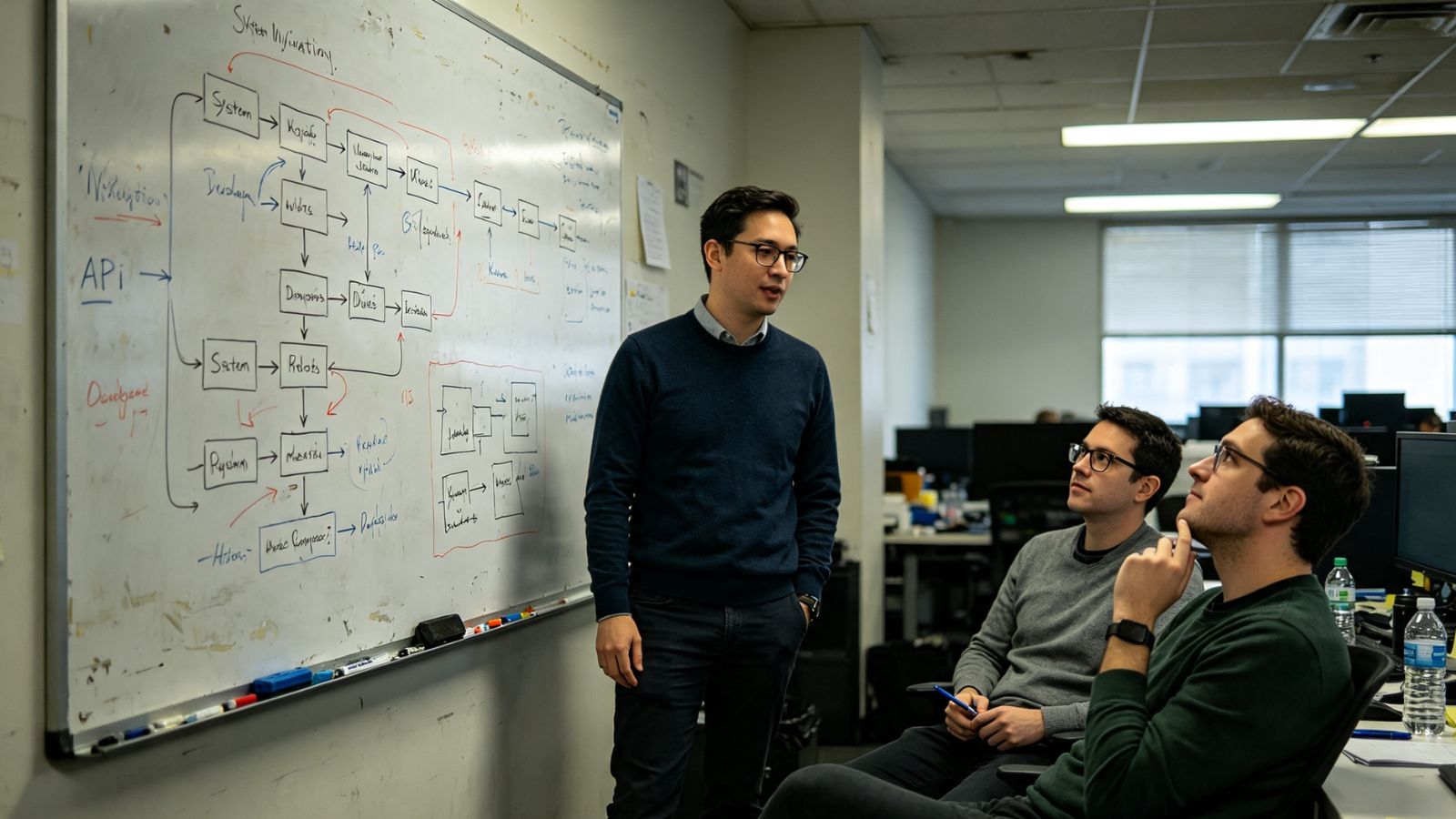
Perhaps the most important lesson emerging from the post-quantum transition is that security systems must become more adaptable. Historically, organizations often embedded cryptographic algorithms directly into applications, devices, firmware, and communication protocols. Once deployed, these systems became difficult to modify, resulting in technological debt that persisted for years.
Modern cybersecurity architecture increasingly emphasizes cryptographic agility. Instead of treating encryption as a permanent implementation decision, organizations are designing systems that can accommodate algorithm changes without requiring extensive application rewrites. This approach allows security teams to replace cryptographic components as standards evolve, vulnerabilities emerge, or new recommendations become available.
Achieving this flexibility requires a comprehensive understanding of existing infrastructure. Organizations must identify where cryptographic algorithms are deployed, how keys are managed, which applications depend on legacy implementations, and which third-party vendors introduce additional dependencies. Without this visibility, migration efforts become fragmented and difficult to coordinate across large technology environments.
The transition to post-quantum cryptography should therefore be viewed as an architectural modernization initiative rather than a simple security upgrade. Success depends on inventory management, software design, vendor coordination, and long-term planning as much as it depends on mathematics.
Post-quantum cryptography represents one of the largest infrastructure transitions since the widespread adoption of public-key encryption itself. The challenge is not that today's encryption suddenly stopped working; rather, the assumptions supporting that encryption are beginning to change. Organizations that recognize this shift early have an opportunity to modernize their systems gradually instead of reacting under pressure after quantum capabilities become commercially viable.
The future of cybersecurity will likely involve a combination of classical and quantum-resistant technologies operating simultaneously across cloud platforms, enterprise networks, mobile devices, embedded systems, and consumer applications. During this transitional period, adaptability will become just as important as algorithm selection. Systems designed for flexibility will be better positioned to accommodate future standards without disruptive redesigns.
Ultimately, the post-quantum movement is less about predicting exactly when a powerful quantum computer will arrive and more about acknowledging that cryptographic change is inevitable. By improving visibility, embracing hybrid deployments, and designing for long-term agility, organizations can build security architectures capable of protecting digital trust well beyond the limits of classical encryption.