
Decoding the technologies of tomorrow, today.
Exploring the breakthrough innovations shaping our world. From AI infrastructure and robotics to biotech, quantum computing, and spatial tech.
Exploring the breakthrough innovations shaping our world. From AI infrastructure and robotics to biotech, quantum computing, and spatial tech.
Solid-state batteries are widely considered one of the most promising next-generation battery technologies because they replace the conventional liquid electrolyte found in most lithium-ion batteries with a solid material. This design change could potentially improve energy density, safety, charging performance, and battery lifespan.
The concept is attractive for industries ranging from electric vehicles to grid storage. A solid electrolyte is generally less flammable than liquid electrolytes, and solid-state designs may enable the use of lithium metal anodes, which have much higher theoretical capacity than traditional graphite anodes.
However, moving from laboratory demonstrations to large-scale commercial production has proven far more difficult than early expectations suggested. Researchers and manufacturers continue to face several fundamental challenges, including high interfacial resistance between materials, complicated manufacturing processes, and the formation of lithium dendrites that can damage battery performance and safety.
Solving these issues is essential before solid-state batteries can compete with established lithium-ion technology on cost, reliability, and production scale.
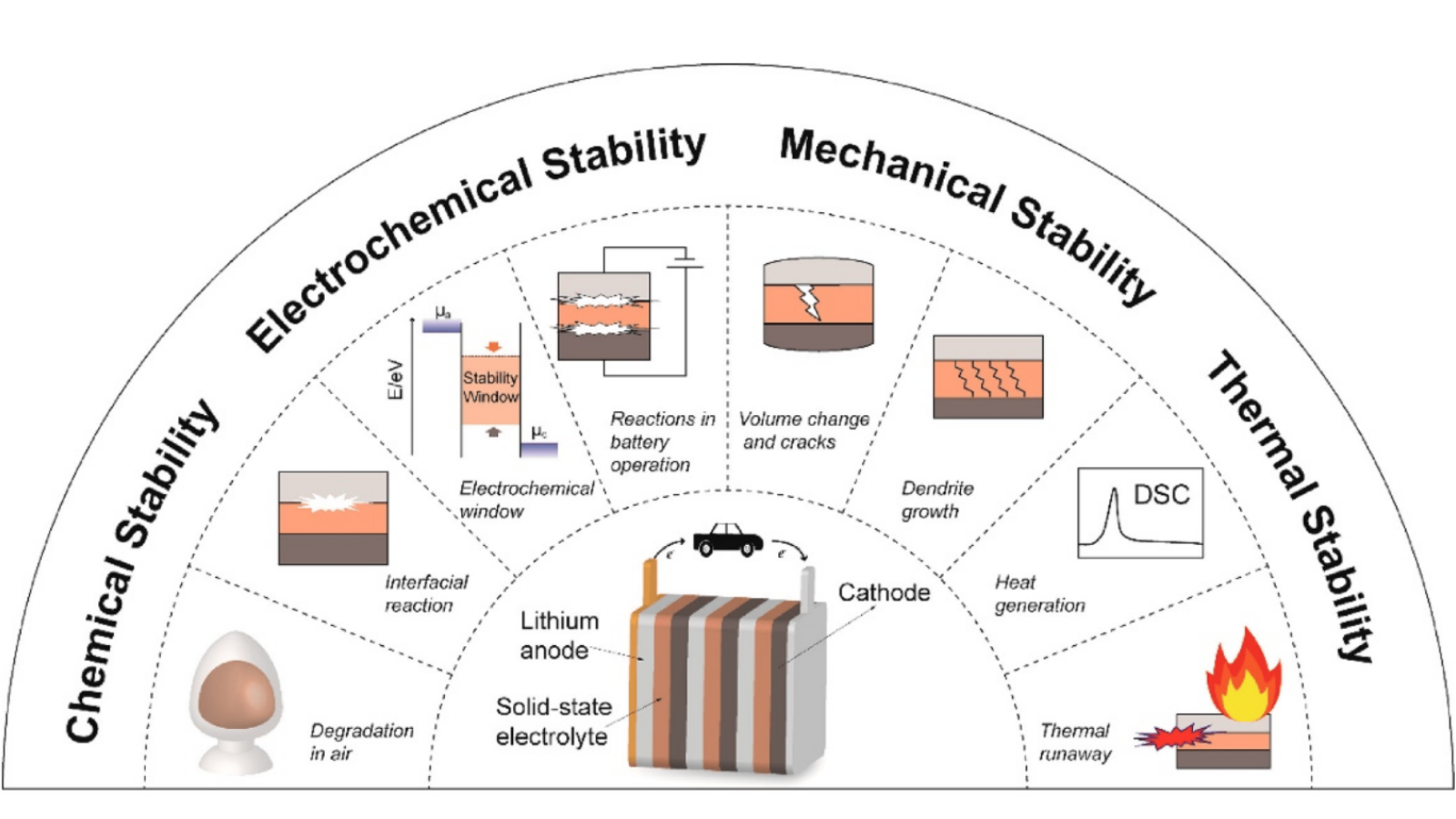
One of the most significant problems in solid-state batteries occurs where different materials meet. Unlike liquid electrolytes, which can naturally flow and maintain contact with electrode surfaces, solid materials have physical interfaces that are much harder to optimize.
This issue is known as interfacial resistance.
Inside a battery, lithium ions must move between the cathode, electrolyte, and anode during charging and discharging. When these solid components do not form a smooth and stable connection, ion movement becomes restricted. The result is increased resistance, reduced power output, and lower overall efficiency.
Several factors contribute to interfacial problems:
Uneven contact between solid materials
Chemical reactions at interfaces
Mechanical stress caused by volume changes during cycling
Formation of unwanted surface layers
For example, during repeated charging and discharging, electrode materials expand and contract. In a liquid electrolyte system, the electrolyte can adjust to some physical changes. Solid materials are less flexible, which can create gaps or stress points that interfere with ion transport.
Researchers are exploring different approaches to reduce interfacial resistance, including protective coatings, improved electrolyte compositions, and advanced material engineering. However, maintaining stable interfaces over thousands of battery cycles remains a major challenge.
Even if a solid-state battery works well in a laboratory environment, producing millions of units consistently introduces another set of problems.
Traditional lithium-ion battery manufacturing has benefited from decades of optimization. Companies have developed large-scale production lines, established supply chains, and standardized processes. Solid-state batteries require different materials, equipment, and quality-control methods.
One major challenge is creating thin, uniform solid electrolyte layers. These layers must be thick enough to provide mechanical stability but thin enough to allow efficient ion transport. Manufacturing defects such as cracks, uneven surfaces, or contamination can significantly affect performance.
Production challenges include:
Solid electrolytes may require specialized processing methods depending on their chemical composition. Some materials are sensitive to moisture or air exposure, increasing manufacturing requirements.
Certain solid-state designs require pressure during assembly or operation to maintain good contact between components. Applying and maintaining pressure at commercial scale adds mechanical complexity.
Battery manufacturers need extremely high production yields because small defects can cause entire battery cells to fail quality checks. Improving consistency remains one of the biggest obstacles to commercial deployment.
The manufacturing challenge is not simply making a working battery. It is making millions of identical batteries at a cost competitive with existing technologies.
One of the major advantages of solid-state batteries is their potential to use lithium metal anodes. Lithium metal can store significantly more energy than graphite, making it attractive for high-energy-density applications.
However, lithium metal introduces a well-known problem: dendrite growth.
During charging, lithium ions move toward the anode and form metallic lithium deposits. Under certain conditions, these deposits can grow into needle-like structures called dendrites.
Dendrites can create several problems:
Reduced battery efficiency
Internal short circuits
Faster degradation
Potential safety risks
For years, researchers hoped that solid electrolytes would completely prevent dendrite formation because solid materials are mechanically stronger than liquids. However, studies have shown that dendrites can still develop under certain conditions, especially when defects, pressure variations, or weak interfaces exist.
The relationship between mechanical strength and dendrite resistance is more complicated than originally believed. A solid electrolyte must not only be mechanically durable but also maintain excellent ionic conductivity and stable contact with electrodes.
A successful solid electrolyte must satisfy several competing requirements.
It needs:
High lithium-ion conductivity
Strong mechanical stability
Chemical compatibility with electrodes
Long-term durability
Manufacturability
These requirements are difficult to achieve simultaneously.
For example, some ceramic-based solid electrolytes offer strong mechanical properties and good chemical stability but can be brittle and difficult to manufacture. Polymer-based electrolytes may provide better flexibility but often have lower conductivity, especially at room temperature.
Researchers are investigating multiple electrolyte families, including:
Sulfide electrolytes
Oxide ceramic electrolytes
Polymer electrolytes
Composite materials
Each category has advantages and limitations, and no single material has yet emerged as the universal solution for commercial solid-state batteries.
Another major hurdle is the gap between small laboratory prototypes and real-world battery packs.
A laboratory cell may demonstrate impressive performance under controlled conditions, but commercial batteries must operate reliably:
Across wide temperature ranges
Through thousands of charge cycles
Under mechanical vibration and stress
At competitive manufacturing costs
Electric vehicle manufacturers, for example, require batteries that maintain performance over many years while meeting strict safety standards.
Scaling also requires developing complete battery ecosystems, including:
Manufacturing equipment
Recycling processes
Supply chains
Quality-control systems
Charging compatibility
The battery itself is only one part of commercialization.
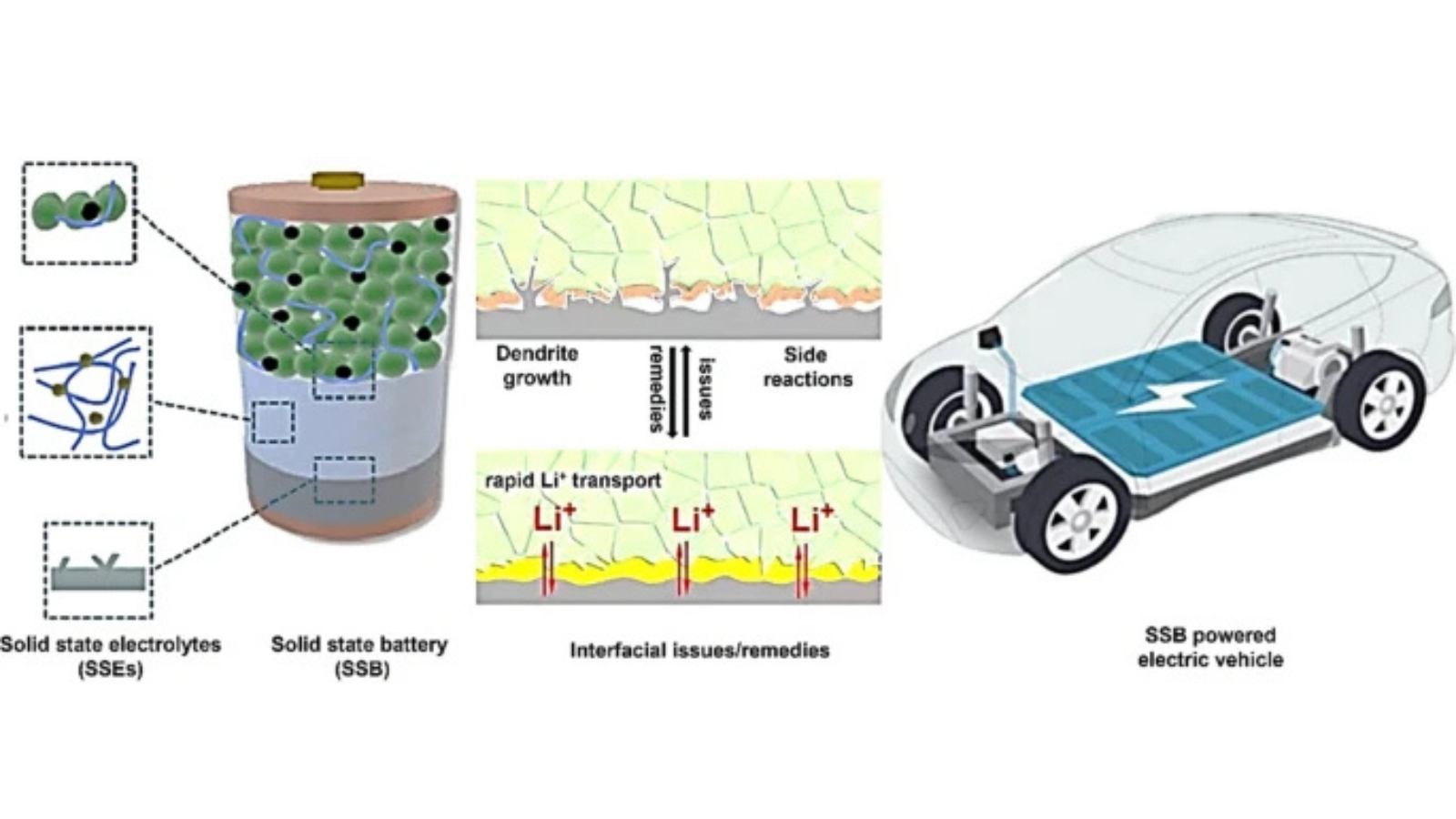
Despite these challenges, research and development continue rapidly. Several automotive and battery companies are investing heavily in solid-state technology, while universities and research institutions continue improving materials and manufacturing approaches.
Progress has been made in areas such as:
Better solid electrolyte formulations
Improved electrode coatings
More accurate battery testing methods
Advanced manufacturing techniques
However, widespread commercialization will likely depend on gradual improvements rather than a single breakthrough. Companies must demonstrate not only higher energy density but also reliability, affordability, and scalable production.
Solid-state batteries represent a significant opportunity for the future of energy storage, but several technical barriers remain before they can replace conventional lithium-ion batteries at large scale.
Interfacial resistance limits ion movement, manufacturing complexity makes mass production difficult, and dendrite growth continues to challenge lithium metal designs. These problems are interconnected, requiring solutions that balance performance, safety, durability, and cost.
The future of solid-state batteries will depend on continued advances in materials science, engineering, and manufacturing. While commercialization has taken longer than many early predictions suggested, solving these challenges could unlock a new generation of safer and more energy-dense batteries for electric vehicles, electronics, and renewable energy systems.