
Decoding the technologies of tomorrow, today.
Exploring the breakthrough innovations shaping our world. From AI infrastructure and robotics to biotech, quantum computing, and spatial tech.
Exploring the breakthrough innovations shaping our world. From AI infrastructure and robotics to biotech, quantum computing, and spatial tech.
A difficult AI task does not always need a more powerful model. Sometimes the better approach is to divide the work.
That idea is behind multi-agent systems, in which several AI agents collaborate on a larger objective. Instead of asking one agent to research, analyze, plan, write, check facts, and coordinate tools within a single context, a system can assign different responsibilities to specialized agents.
The architecture sounds intuitive: let each agent focus on what it does best, then combine the results. But specialization introduces its own costs. Agents need to communicate, share the right information, coordinate their actions, and recover when one of them makes a mistake.
The real engineering question is therefore not whether multiple agents are better than one. It is when dividing a task creates enough value to justify the additional complexity.
A multi-agent system contains multiple agents that perform distinct roles or tasks while working toward a shared objective. The agents may operate sequentially, in parallel, hierarchically, or through another coordination pattern.
Google Cloud describes a multi-agent architecture as a way of segmenting complex processes into discrete tasks that multiple specialized AI agents can execute collaboratively. Research surveys similarly identify different organizational structures, including centralized, distributed, cooperative, and role-based approaches.
The distinction from a conventional chatbot is significant.
A single agent might receive a request to research a market, analyze competitors, summarize findings, and prepare recommendations. A multi-agent system could instead assign research to one agent, data analysis to another, critical review to a third, and final synthesis to a coordinating agent.
Each agent can have its own instructions, tools, context, and access permissions.
That specialization can make a complicated workflow easier to organize—but only if the boundaries between the roles are well designed.
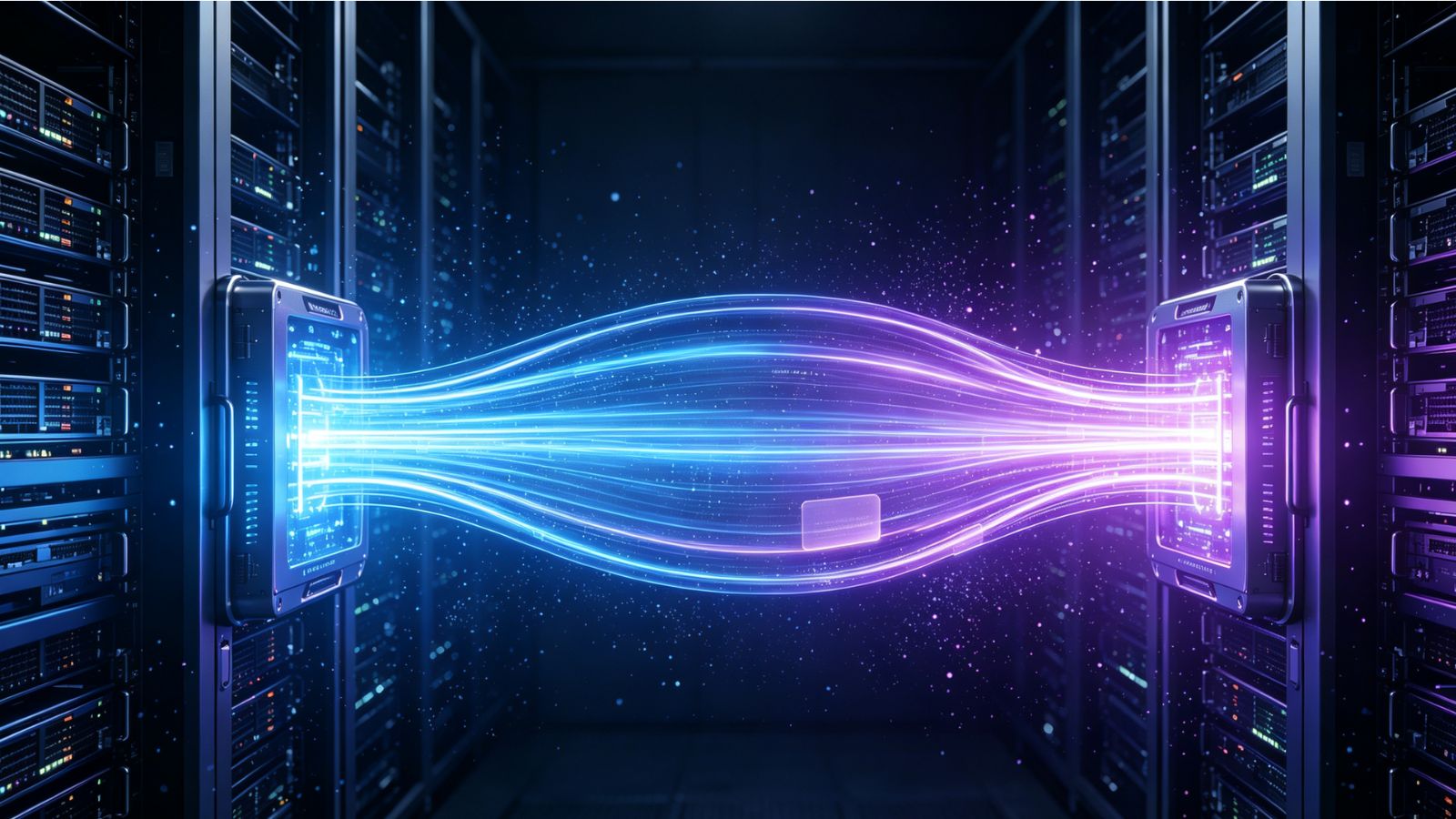
The strongest argument for multiple agents is task decomposition.
Large objectives often contain subtasks with different requirements. Researching documents is not the same activity as checking numerical calculations. Reviewing a draft requires different instructions from extracting information from a database.
Giving every responsibility to one agent can create an overloaded context. The system has to keep track of numerous instructions, intermediate results, tools, and decisions simultaneously.
Specialized agents allow developers to isolate some of those concerns.
For example, consider an internal business research workflow. One agent could locate relevant company documents, another could extract specific facts, and another could review the resulting analysis for unsupported conclusions. A final agent could then assemble the material into a report.
This structure can also make individual components easier to evaluate. If the final report contains an unsupported claim, developers can examine whether the problem originated in retrieval, analysis, review, or synthesis rather than treating the entire system as one opaque process.
Google's architecture guidance specifically recommends clearly defining the business goal and the task assigned to each agent.
Specialization becomes particularly useful when parts of a task can happen independently.
Suppose an agent needs information from several unrelated sources. Instead of processing every source one after another, separate agents may investigate different sources concurrently before another component combines the findings.
This can reduce the time required for certain workflows, although parallel execution does not automatically make a system faster. Coordination, model calls, data transfer, and downstream processing all add overhead.
The important distinction is between parallelizable work and dependent work.
If Task B cannot begin until Task A is complete, creating separate agents may add communication overhead without reducing the critical path. If several tasks can genuinely proceed independently, specialization has a stronger architectural justification.
Google Cloud's agent design guidance distinguishes sequential patterns from workloads in which independent tasks can be executed at the same time.
Dividing work creates a new problem: the agents have to understand one another.
An agent does not automatically know everything another agent discovered. Information must be passed between them, and the system has to determine what information is relevant.
Too little context can cause an agent to make decisions without important background. Too much context can increase processing costs and make it harder for the agent to focus on the task.
This is one reason context engineering has become an important part of multi-agent design. Google describes it as managing the information available to individual agents, including strategies for isolating, persisting, and compressing context.
A good architecture therefore does not simply connect agents together. It defines what each agent needs to know, what it should return, and what the next agent is allowed to assume.
There is another subtle trade-off: an agent with a narrow role may perform its assigned task well but lack the context necessary to recognize when its result is inappropriate.
Imagine a research agent that finds documents matching a request but does not understand the broader business objective. It may retrieve technically relevant information that is useless for the final decision.
Likewise, a reviewer that only checks grammar may fail to recognize a substantive factual problem.
Specialization works best when responsibilities are narrow enough to be manageable but broad enough to preserve the information needed for good decisions.
This is one reason multi-agent architecture is not simply a matter of assigning more roles. Developers have to decide where each responsibility begins and ends.
A single-agent application already has failure modes. A multi-agent application adds more places where things can go wrong.
One agent can misunderstand its assignment. Another can misinterpret the first agent's output. A coordinator can select the wrong next step. An agent can produce an incorrect result that is then treated as reliable by downstream agents.
Errors can therefore propagate through the workflow.
Recent research on multi-agent systems has identified coordination, communication, scalability, and reliability as continuing challenges. Surveys of the field also emphasize that collaboration mechanisms introduce additional architectural complexity rather than eliminating the limitations of individual language models.
Debugging can become harder as well. With one agent, a developer may inspect a single interaction. With several agents, the relevant evidence can be spread across multiple conversations, tool calls, intermediate outputs, and state transitions.
Observability becomes part of the architecture, not an optional afterthought.
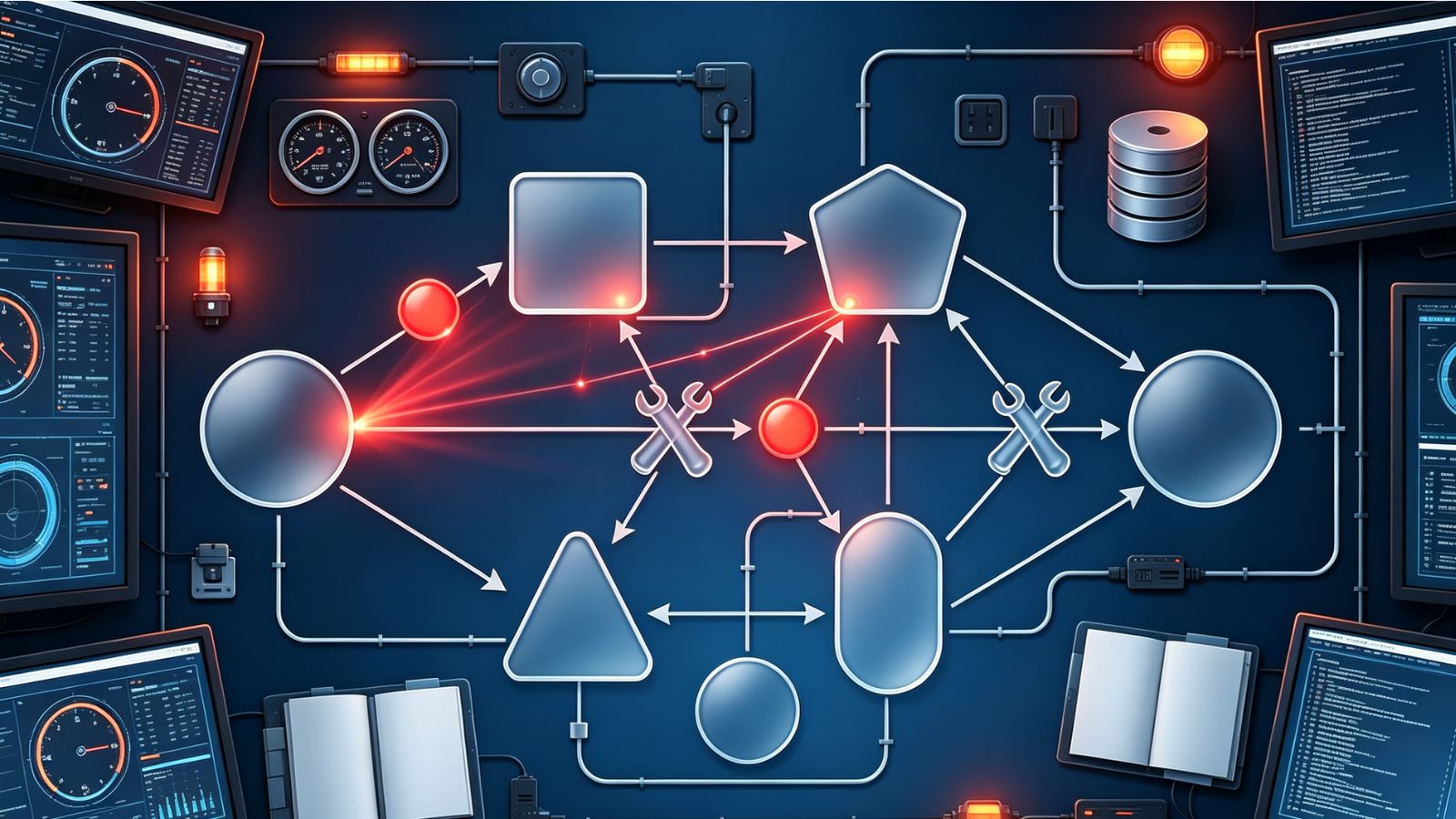
Every additional agent may require model inference, context processing, tool usage, or other infrastructure.
A workflow involving six agents does not automatically deliver six times the value of a single-agent system. In some designs, multiple agents repeatedly pass information back and forth, creating substantial overhead.
Google Cloud explicitly identifies increased computational costs, along with additional evaluation and security requirements, as considerations when moving from a single-agent design to a multi-agent system.
Model selection can also affect the economics. A simple classification or extraction task may not require the same model used for complex reasoning. Assigning an unnecessarily expensive model to every specialized role can make an otherwise useful architecture difficult to justify.
The best design often uses specialization selectively rather than turning every subtask into an independent agent.
A multi-agent system also expands the security boundary.
Different agents may have access to different documents, databases, APIs, or actions. If permissions are too broad, an agent may gain access to information or tools that its role does not require.
Google recommends clearly defined agent autonomy, human oversight, and observability for business-critical multi-agent systems. Its guidance also emphasizes precise access controls for individual specialized agents.
This leads to a practical principle: an agent should generally have only the tools and information necessary for its assigned responsibility.
Human approval can also be appropriate before consequential actions, particularly when an agent is able to modify records, communicate externally, make purchases, or trigger other real-world operations.
Not every multi-step task deserves a multi-agent architecture.
A single agent may be the better choice when:
The task has only a few steps.
The same context is needed throughout the workflow.
One model can reliably perform the required functions.
There is little benefit from parallel execution.
Simplicity and predictable maintenance are more important than modularity.
A multi-agent system becomes more attractive when:
The work naturally divides into distinct specialties.
Several independent tasks can run in parallel.
Different stages require different tools or permissions.
Individual components need to be evaluated separately.
The workflow is large enough that one agent's context becomes difficult to manage.
Different agents can use different models or strategies appropriate to their roles.
The key is to start with the simplest architecture that can meet the requirements. Anthropic's guidance on agentic systems similarly emphasizes choosing among simple workflows, single-agent systems, and multi-agent architectures according to the actual complexity and value of the task rather than adding autonomy for its own sake.
Multi-agent systems offer a useful architectural idea: complexity can sometimes be managed by assigning different responsibilities to different agents.
But specialization does not remove the fundamental weaknesses of AI models. It adds coordination, communication, cost, security, and monitoring requirements on top of them.
A well-designed multi-agent system should therefore have a clear reason for every agent that exists. If two agents perform nearly identical work, or if a simple deterministic workflow could accomplish the same thing more cheaply and predictably, adding another AI agent may only make the system harder to operate.
The strongest multi-agent architectures are not necessarily the ones with the most agents. They are the ones in which each agent has a meaningful responsibility, receives the context it needs, operates within appropriate permissions, and contributes something that would be difficult to achieve as effectively through a simpler design.
Google Cloud Architecture Center, Multi-agent AI system in Google Cloud.
Google Cloud Architecture Center, Choose a design pattern for your agentic AI system.
Google Cloud Architecture Center, Choose your agentic AI architecture components.
Anthropic, Building Effective AI Agents.
Li et al., A survey on LLM-based multi-agent systems: workflow, infrastructure, and challenges, Discover Artificial Intelligence, 2024.
Tran et al., Multi-Agent Collaboration Mechanisms: A Survey of LLMs, 2025.