
Decoding the technologies of tomorrow, today.
Exploring the breakthrough innovations shaping our world. From AI infrastructure and robotics to biotech, quantum computing, and spatial tech.
Exploring the breakthrough innovations shaping our world. From AI infrastructure and robotics to biotech, quantum computing, and spatial tech.
For most of the history of digital computing, memory and logic have been treated as separate functions. Transistors perform logical operations, while dedicated memory technologies store the information those operations need. This division has produced an extraordinarily flexible computing ecosystem, but it also creates a recurring cost: data often has to move between storage and computation before useful work can take place. As processors become more parallel and data-intensive workloads continue to grow, researchers are exploring hardware that can reduce this separation rather than simply making each individual transistor faster.
One of the most closely studied device concepts in this area is the memristor, or more broadly, the family of memristive and resistive-switching devices. These devices can change their electrical resistance or conductance in response to applied electrical signals and, depending on the technology, retain a programmed state after power is removed. That combination makes them interesting for non-volatile memory, compute-in-memory architectures, and neuromorphic systems. The important point, however, is not that a memristor automatically replaces a transistor. Its significance comes from giving circuit designers another physical mechanism for storing state and performing selected operations close to where that state resides.
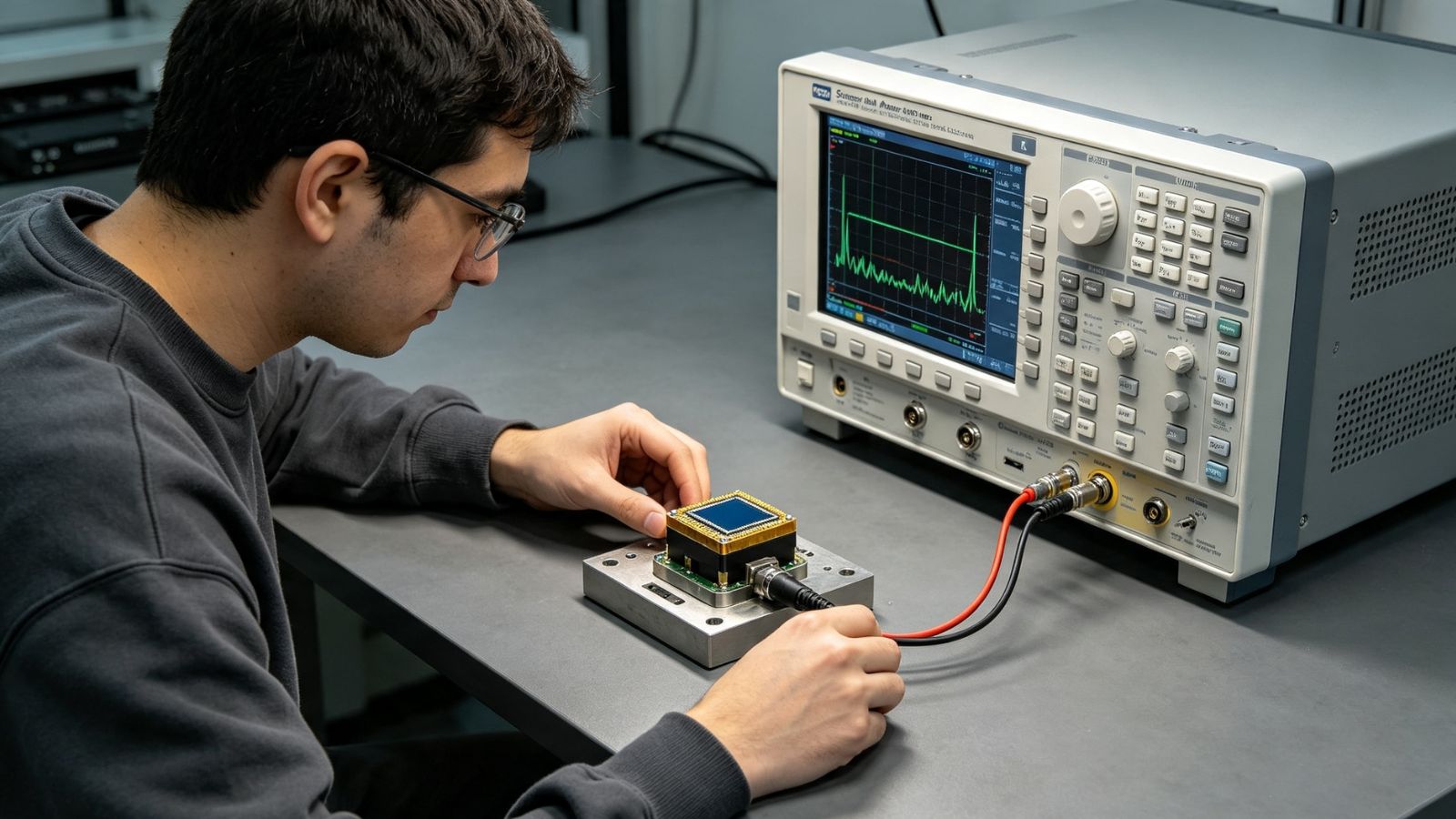
The theoretical concept of the memristor was introduced by Leon Chua in 1971 as a missing relationship within the framework of fundamental circuit elements. The idealized device was described as a component whose behavior connects electrical charge and magnetic flux, complementing the relationships represented by resistors, capacitors, and inductors. For many years, the memristor remained primarily a theoretical concept rather than a conventional electronic component. In modern device research, however, the word is often used more broadly to describe physical devices that exhibit memory-dependent resistance or conductance, particularly resistive-switching technologies.
A practical memristive device does not simply behave like an ordinary resistor with a permanently fixed value. Electrical stimulation can alter its internal physical state, changing the resistance or conductance that a circuit subsequently measures. Depending on the device technology, that state can remain after external power is removed, which gives the device non-volatile characteristics. The stored state is not necessarily an infinitely precise or perfectly stable number, however. Retention, resistance drift, temperature sensitivity, switching variability, and device-to-device differences all matter when thousands or millions of such elements are assembled into a larger circuit. For that reason, modern memristive engineering is as much about controlling imperfect physical behavior as it is about exploiting it.
Memristive research gained significant attention in 2008 when researchers at Hewlett-Packard reported a titanium-dioxide device whose resistive-switching behavior was interpreted as a physical realization of the memristor concept. That work became an important milestone because it demonstrated how nanoscale material structures could exhibit a form of electrical memory without relying on the conventional charge-storage mechanism used by many traditional memory cells. It also helped connect a theoretical circuit concept with a broader field of research into resistive-switching materials and devices.
The terminology can become confusing because memristor, memristive device, and resistive RAM (RRAM or ReRAM) are not always used with identical meanings. In research literature, "memristive" can describe a wider class of devices whose resistance depends on their previous electrical history, while RRAM generally refers to memory technologies that store information through changes in resistance. Some devices may approximate the behavior of an idealized memristor more closely than others. This distinction matters because the engineering properties of a particular device—such as endurance, retention, switching speed, precision, and variability—depend on its materials and physical mechanism rather than on the memristor label alone.

Several physical mechanisms can produce a change in resistance. One important category is Valence Change Memory (VCM), which commonly uses transition-metal oxides and relies on changes involving oxygen vacancies. An applied electric field can redistribute these defects within the material, altering the pathways through which electrical current flows. Another category is Conductive Bridging RAM (CBRAM), in which mobile metal ions can migrate through a solid electrolyte and form or dissolve a nanoscale conductive connection between electrodes. Although the physical details differ, both approaches use changes in material structure to create distinguishable electrical states.
The difficult part is not simply making a microscopic device switch between two resistance levels. A useful computing technology must make large populations of devices behave predictably enough for a circuit to interpret their states. Manufacturing variation can cause nominally identical devices to switch at different voltages or settle at somewhat different resistance values. Repeated switching can also affect endurance, while temperature and operating conditions may influence retention and resistance drift. These effects become increasingly important when a device is expected to represent more than a simple binary state. Multi-level operation can provide greater information density or computational flexibility, but it also requires tighter control over the physical characteristics of each cell.
The architectural appeal of memristive devices comes from their ability to combine persistent state with electrical behavior that can participate directly in a circuit. In a conventional system, stored information normally has to be read into a separate computational element before an operation can be performed. A memristive array can instead encode information in the conductance of its individual elements, allowing the physical properties of the array to contribute to selected computations. This idea is particularly interesting for workloads dominated by matrix operations, where many values must be multiplied and accumulated repeatedly.
Consider a crossbar array in which conductance values represent numerical weights. Input signals can be applied along one dimension of the array, while the resulting currents are collected along another. The electrical relationships within the array naturally combine contributions from multiple cells, creating a physical mechanism for parallel multiply-and-accumulate operations. This does not mean that an entire computer can be reduced to a passive grid of memristors. Real systems still need input interfaces, sensing circuits, control logic, data conversion, and communication with conventional digital components. The potential advantage is narrower but important: some computational work can occur where the relevant data is physically stored, reducing selected forms of movement between memory and separate arithmetic units.
This capability has made memristive devices particularly interesting for compute-in-memory (CIM) and related in-memory computing architectures. Instead of treating memory as a passive location from which a processor repeatedly retrieves data, CIM uses the memory structure itself—or circuitry closely integrated with it—to perform selected operations. In a crossbar implementation, stored conductance values can represent model weights or other numerical parameters, while incoming signals interact with those values directly within the array. The resulting parallelism can be useful for workloads in which the same large collections of values are repeatedly involved in mathematical operations.
Artificial intelligence is one example, but it is important not to reduce memristive computing to an "AI chip" story. Similar architectural ideas can apply to signal processing, pattern recognition, optimization, and other workloads with suitable mathematical structures. The benefit also depends on how the complete system is designed. Analog or mixed-signal implementations may require digital-to-analog and analog-to-digital conversion, while digital implementations face different limitations involving memory organization and supported operations. Consequently, the relevant comparison is not the theoretical speed of a memristor array against a conventional processor. It is whether a complete memristive system can perform a useful workload with lower energy, acceptable precision, and manageable software and hardware complexity.
Memristive devices are sometimes described as enabling non-volatile logic, but the relationship requires more explanation. A non-volatile memory element can retain a state without continuous external power, while a non-volatile logic architecture uses persistent state as part of a broader computational system. The distinction is important because simply placing a memristor next to conventional logic does not make the entire processor non-volatile. Achieving persistent computation requires designers to determine which state must survive power removal and how control, memory, registers, and other system components will be restored.
The practical benefit is therefore better described as support for more aggressive power-management strategies. If selected system state can remain stored without continuous power, a device may be able to shut down parts of its circuitry and restore that state without rebuilding everything from conventional storage. The actual recovery time and energy consumption depend on the architecture, and persistent state alone does not guarantee instant system resume. Processor registers, control state, peripheral conditions, and other volatile information may still need to be preserved or reconstructed. Memristive technology can contribute to this design strategy, but it should not be presented as a complete solution to the persistence problem.
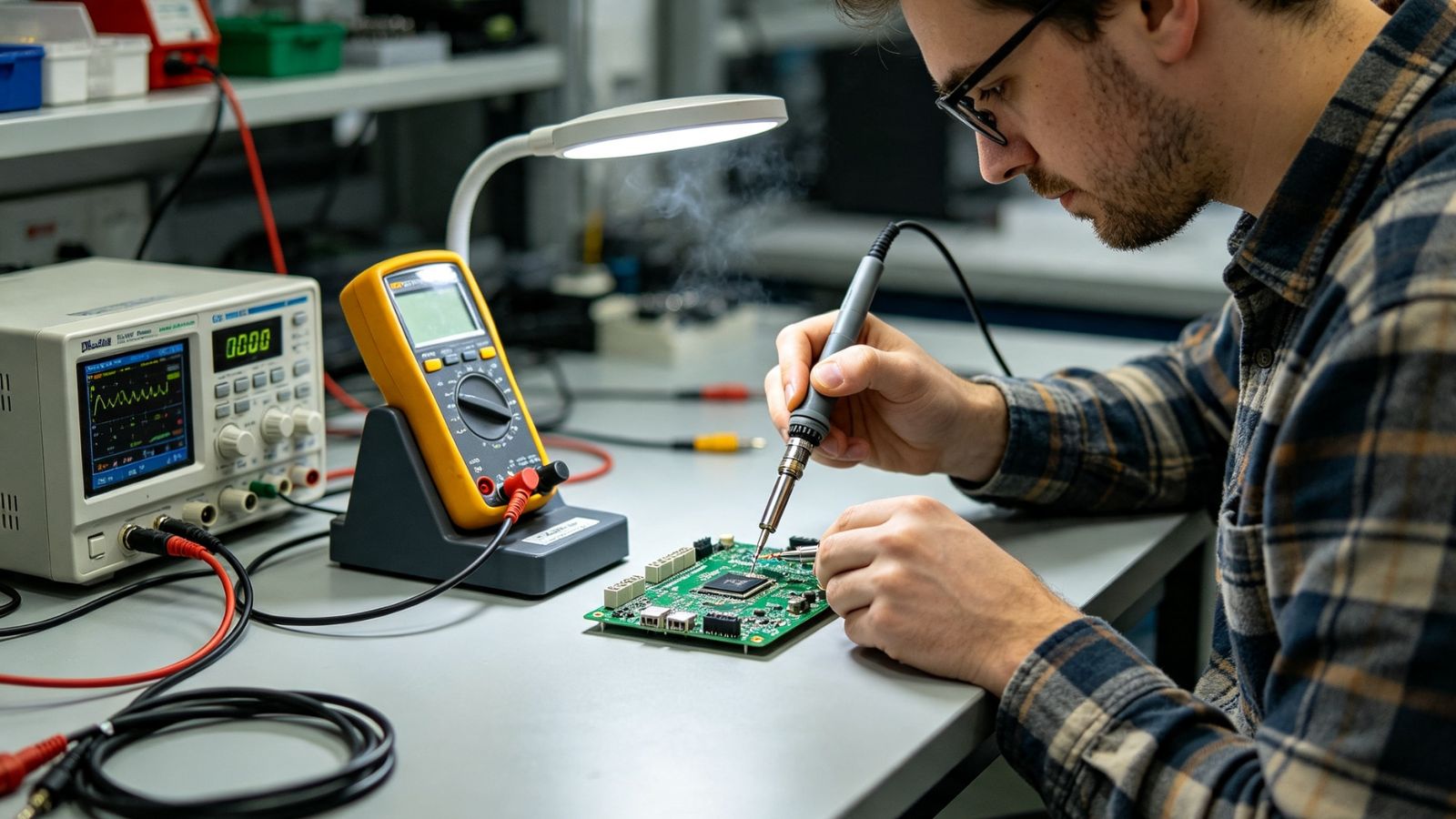
Memristive computing is most attractive when the workload has a structure that maps naturally onto the physical behavior of the device. Matrix-heavy operations are a particularly obvious example because crossbar arrays can perform many related calculations concurrently. Low-power edge systems are another potential application because reducing repeated data transfers can be valuable when energy and thermal budgets are constrained. Neuromorphic systems may also benefit from devices that can represent adjustable conductance states, since those states can serve as physical analogues of connection strengths in certain hardware implementations.
These potential applications do not mean that memristive hardware is automatically better than conventional CMOS for every task. General-purpose processors remain difficult to replace because they offer mature programming models, reliable digital logic, precise arithmetic, and enormous software ecosystems. Workloads with irregular control flow, demanding numerical precision, or frequent communication between different computational stages may not map efficiently onto a specialized memristive array. The strongest use cases are therefore likely to be heterogeneous systems in which conventional digital circuits continue to handle control and general-purpose computation while memristive structures accelerate a narrower set of operations. The value comes from specialization rather than from eliminating traditional computing hardware.
The most important question surrounding memristive technology is not whether an individual device can demonstrate useful switching. Researchers have already shown many promising device behaviors. The harder problem is producing large, reliable, manufacturable systems in which millions or billions of devices behave predictably enough to support useful computation. CMOS technology has decades of manufacturing optimization behind it, including mature fabrication processes, highly developed design tools, established reliability standards, and an enormous ecosystem of processors and software. A new device technology must therefore deliver more than an interesting physical effect before it can compete at system scale.
Variability is one of the central challenges. Resistive switching can depend on microscopic changes in materials, which means that two nominally identical devices may not behave exactly alike. Endurance, retention, precision, temperature dependence, and programming energy can also create tradeoffs that are less visible in simplified demonstrations. Integrating new materials with established semiconductor manufacturing adds another layer of difficulty because advanced fabrication facilities are optimized around tightly controlled processes and contamination requirements. These limitations do not make memristive devices impractical, but they mean that the path from laboratory prototype to commercial processor involves circuit design, manufacturing, testing, packaging, software, and system engineering—not just improvements to the switching device itself.
Hardware alone cannot determine whether a new computing technology succeeds. Modern software stacks assume that processors, memory, and accelerators expose particular interfaces and predictable digital behavior. A memristive accelerator may require specialized methods for mapping numerical values onto physical conductance states, compensating for device variation, scheduling operations, calibrating arrays, and managing precision. Developers also need ways to decide which portions of an application should run on conventional processors and which should be delegated to a memristive subsystem. Without these tools, even impressive hardware results can remain difficult to use outside carefully designed demonstrations.
This creates an important distinction between device-level efficiency and system-level efficiency. A memristive cell may require very little energy to change state, but the surrounding system still consumes energy for control, communication, sensing, conversion, calibration, and data preparation. Likewise, an array may demonstrate substantial parallelism while the complete application remains constrained by input and output operations. Evaluating the technology therefore requires looking beyond individual devices or crossbar calculations. The more meaningful question is whether the entire computing system delivers a useful improvement in energy, performance, density, or responsiveness for a specific workload after all supporting hardware and software are included.
The long-term significance of memristive technology is less about replacing the transistor than about expanding the set of physical mechanisms available to computer architects. CMOS remains exceptionally effective at implementing precise digital logic, control systems, and general-purpose processors. Memristive devices introduce a different capability: electrical state can persist in a compact structure while also influencing subsequent computation. That property creates opportunities for architectures in which memory and computation are more closely connected than they are in conventional systems.
The most realistic future is therefore likely to be heterogeneous rather than purely memristive. Conventional digital processors can continue to provide programmability and control, while memristive arrays handle specialized operations that benefit from persistent analog or multi-level states and highly parallel computation. Whether those architectures become commercially important will depend on improvements in manufacturing consistency, endurance, precision, software support, and system integration. Memristors are not a magic replacement for CMOS, nor do they eliminate the challenges of moving data through a computer. Their more interesting contribution is architectural: they offer engineers another way to think about where information is stored, how physical state can represent computation, and how the boundary between memory and logic might be redesigned.