
Decoding the technologies of tomorrow, today.
Exploring the breakthrough innovations shaping our world. From AI infrastructure and robotics to biotech, quantum computing, and spatial tech.
Exploring the breakthrough innovations shaping our world. From AI infrastructure and robotics to biotech, quantum computing, and spatial tech.
For years, data center power planning followed a relatively predictable model. A conventional enterprise facility might consume a few megawatts, with server racks drawing only a fraction of that load. Cooling systems were designed around comparatively modest heat densities, and utilities could often accommodate new facilities through incremental upgrades to existing infrastructure.
AI has changed that equation.
Large training and inference systems now pack far more computing hardware into each rack, while the largest planned data center campuses are moving toward power requirements measured in hundreds of megawatts and, in some cases, the gigawatt range. The result is a new engineering problem: electricity is no longer a background utility that can simply be delivered after the computing architecture has been designed.
Power availability, distribution, cooling, substations, transmission capacity, and grid interconnection are becoming part of the computing architecture itself.
That shift is particularly important for facilities built around dense AI accelerator clusters. A data center can have abundant computing capacity on paper and still struggle to deploy it if the electrical infrastructure cannot deliver enough power reliably and efficiently.
The most visible change is happening at the rack level.
Traditional enterprise servers were often designed around relatively modest rack power densities. A rack containing conventional CPU-based systems might consume several kilowatts, with the exact figure depending on the hardware configuration and workload. Air cooling was generally sufficient, provided the facility was designed with appropriate airflow management.
Dense AI systems place very different demands on the building.
Modern accelerator racks can draw tens of kilowatts, and some high-density configurations are designed around power levels approaching or exceeding 100 kilowatts per rack. Future systems may push density even further as accelerator performance and memory bandwidth increase.
That creates two closely connected problems.
The first is electrical. Delivering a large amount of power through a relatively small physical space requires careful attention to voltage, conductor capacity, protection, voltage drop, and distribution equipment. At lower distribution voltages, the same power level requires more current, which can increase conductor size and electrical losses.
The second is thermal. Almost all of the electrical power consumed by computing hardware ultimately becomes heat. A rack drawing 100 kilowatts is therefore also a roughly 100-kilowatt thermal load that must be removed continuously.
These constraints reinforce each other. Higher rack density requires more electrical capacity, which produces more heat, which in turn increases the demands placed on cooling infrastructure.
A facility operating at tens or hundreds of megawatts cannot rely on exactly the same electrical architecture used in a small enterprise data center.
Engineers have to decide where power should be transformed, how it should be distributed across the building, and how much redundancy is appropriate for the workload.
One way to reduce current is to distribute power at a higher voltage for as much of the electrical path as practical before performing the final transformation required by the IT equipment.
The underlying relationship is straightforward: for a given amount of power, increasing voltage reduces the current required to deliver that power. Lower current can reduce resistive losses and make high-capacity distribution physically easier to manage.
The exact architecture depends on the facility. Medium-voltage distribution may be carried farther into the building before power is stepped down, while transformers, switchgear, busways, and rack-level power systems handle the final stages.
This approach does not eliminate electrical losses, but it can make the physical distribution system more manageable as total load increases.
Large AI facilities also require substantial power protection.
A training workload can run for many hours or days, and unexpected interruptions can disrupt computation, trigger recovery procedures, or require workloads to restart from saved checkpoints. The cost of an outage therefore extends beyond the electricity itself.
Uninterruptible power supply systems can bridge short interruptions and provide time for backup generation or controlled shutdown procedures, depending on the facility design. Modern data centers may use lithium-ion battery systems, traditional battery technologies, or other UPS architectures.
Power distribution within the white space is another area undergoing change.
Instead of routing large numbers of individual cables to every rack, facilities can use overhead busway systems. These modular electrical distribution systems can deliver substantial amounts of power along server rows while simplifying rack connections and future expansion.
The objective is not merely to move more electricity. It is to create a distribution architecture that can be expanded, maintained, and operated safely as rack densities continue to increase.
Electrical planning cannot be separated from thermal engineering.
A rack consuming 80 or 100 kilowatts produces a comparable amount of heat that has to be removed from the equipment and ultimately rejected to the surrounding environment. At sufficiently high densities, conventional room-level air cooling becomes increasingly difficult to apply efficiently.
That is one reason liquid cooling is becoming more important for dense AI systems.
Direct-to-chip liquid cooling can transfer heat away from processors more effectively than air in applications with very high thermal densities. Depending on the design, warm-water cooling, chilled-water systems, rear-door heat exchangers, immersion cooling, or combinations of these technologies may be considered.
The choice affects more than the cooling plant. It also influences rack design, plumbing, pumps, heat exchangers, maintenance procedures, and the amount of electrical power consumed by supporting infrastructure.
In other words, the power budget for an AI data center cannot be evaluated by looking only at the GPUs.
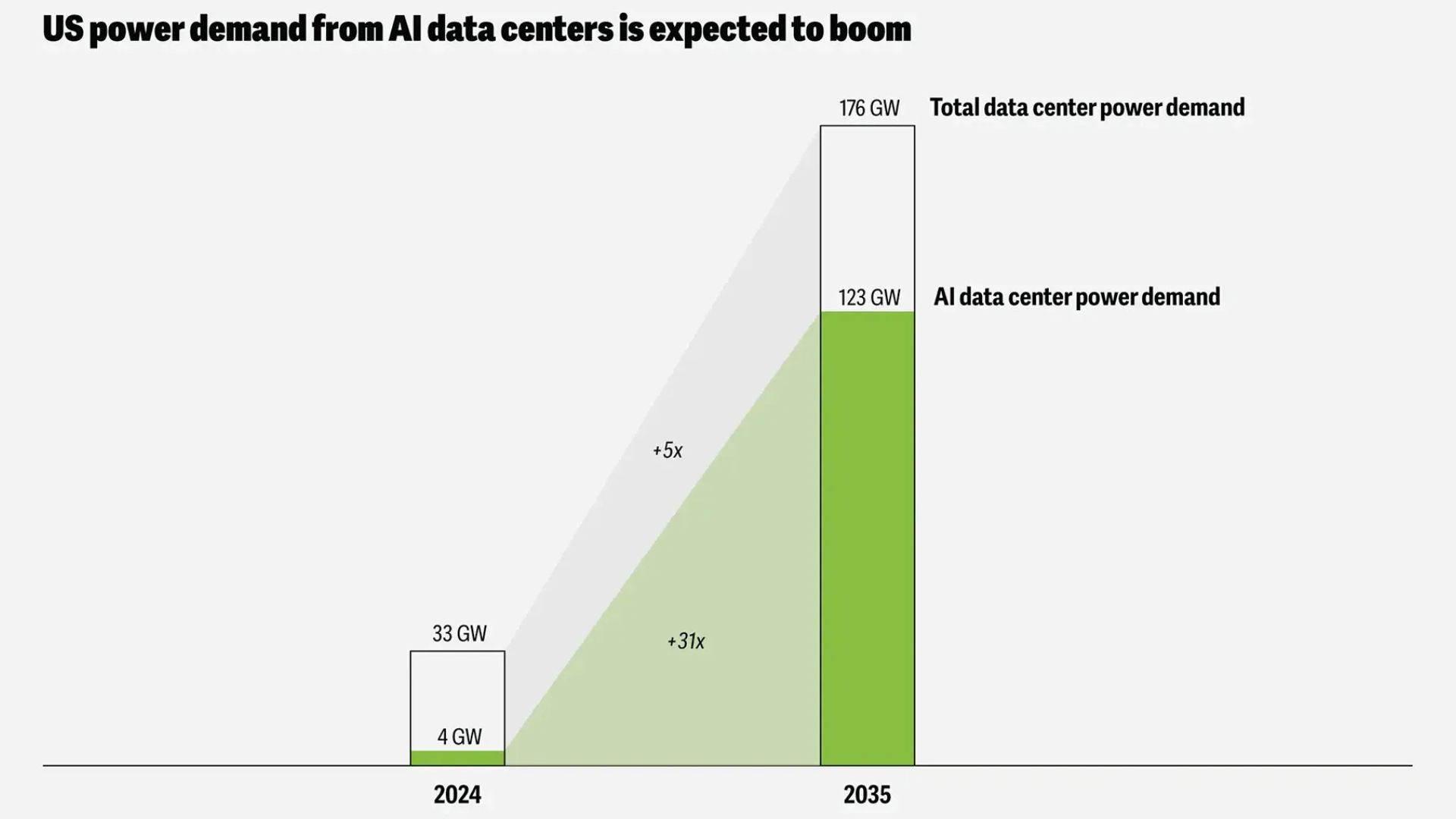
The largest challenge may sit outside the facility.
A data center can build substations, backup systems, cooling plants, and server halls, but it still needs a reliable connection to an electrical system capable of supplying the required load.
Large AI facilities are arriving at a time when many electricity markets are already planning for higher demand from manufacturing, electrification, transportation, and other industries. A new data center requesting hundreds of megawatts can therefore create a much larger interconnection requirement than a conventional enterprise facility.
The result is a growing focus on transmission capacity, substations, transformers, and utility planning.
High-voltage transmission infrastructure takes time to plan and build. Large projects may require permitting, environmental reviews, land acquisition, equipment procurement, and coordination among multiple organizations.
Transformers can also become a significant constraint. A facility may have a suitable site and sufficient land while still facing delays if the necessary high-voltage equipment is unavailable or if the surrounding grid lacks enough capacity.
This changes the way developers evaluate locations.
Historically, factors such as fiber connectivity, land cost, tax incentives, and proximity to major population centers were major considerations for data center site selection. For very large AI facilities, available electrical capacity can be just as important.
A site with excellent fiber connectivity may be less attractive if the local grid cannot support the required load within the project's development timeline.
One response to grid constraints is to supplement utility power with generation located near or directly connected to the data center.
This approach is often described as behind-the-meter generation. Rather than depending entirely on electricity delivered through the regional grid, the facility can use dedicated generation resources to provide some portion of its power requirements.
The technology options vary considerably.
Natural gas generators can provide dispatchable electricity and can be used to supplement grid supply when additional capacity is needed.
Their value comes from controllability. Unlike solar or wind generation, a gas-fired generator can generally be dispatched according to demand, subject to equipment and fuel constraints.
However, this approach also introduces emissions, fuel-supply considerations, permitting requirements, and operating costs. It is therefore not simply a way to eliminate grid dependence.
Nuclear generation is another area attracting attention because nuclear plants can provide large amounts of electricity continuously with relatively low operational carbon emissions.
Direct or nearby integration between nuclear generation and large electricity consumers is technically and commercially complex, however. Regulatory requirements, transmission arrangements, ownership structures, reliability rules, and the physical characteristics of the generation site all matter.
Nuclear power can therefore be part of a long-term power strategy, but it is not a simple plug-in replacement for a conventional utility connection.
Solar generation, battery energy storage, and other renewable resources can also contribute to an AI data center's energy supply.
Their challenge is variability.
Solar output changes throughout the day and depends on weather conditions. Battery storage can shift electricity across time, but the amount of storage required depends on the duration and reliability target of the facility.
A practical energy strategy may therefore combine renewable generation with grid power, storage, and other dispatchable resources rather than relying on a single technology.
High-density AI facilities also raise the consequences of electrical failures.
A short interruption at a small office and a disturbance affecting a large AI campus are very different events. At hundreds of megawatts, a power problem can affect thousands of servers and a large amount of active computation simultaneously.
That makes redundancy essential.
Data centers can use multiple utility feeds, redundant substations, backup generators, UPS systems, independent distribution paths, and carefully coordinated protection systems. The appropriate configuration depends on the facility's reliability objectives and the workloads it supports.
AI training introduces another consideration: not every failure has to be invisible, but the system should be designed so that a localized electrical problem does not unnecessarily become a large-scale computational failure.
Checkpointing, workload scheduling, hardware redundancy, and recovery mechanisms can reduce the impact when an interruption does occur.
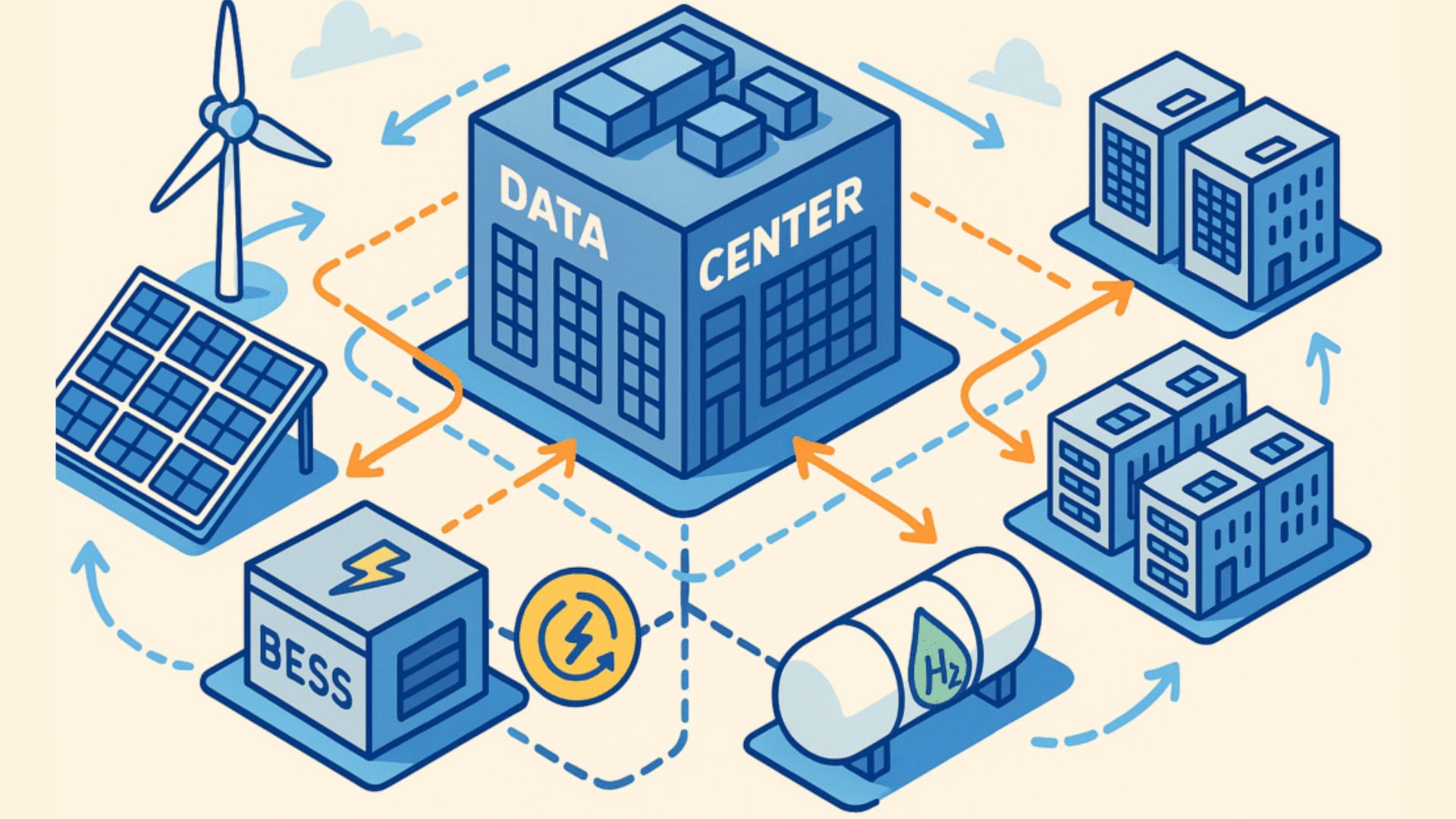
The relationship between power and computing is changing the geography of data center development.
A location with abundant land is not necessarily useful if sufficient electricity cannot be delivered. Likewise, a region with cheap electricity may have limited transmission capacity or a long queue for new interconnections.
Developers therefore need to evaluate several variables together:
available electrical capacity;
transmission and substation infrastructure;
expected interconnection timelines;
local generation resources;
renewable energy availability;
water and cooling resources;
fiber connectivity;
land availability;
permitting requirements; and
long-term expansion potential.
The best site is increasingly the one that balances these constraints rather than optimizing a single variable.
For much of the cloud computing era, software and hardware teams could treat electricity as an infrastructure layer largely managed by someone else.
That assumption becomes harder to maintain as AI clusters grow.
A decision to deploy a larger accelerator cluster can trigger consequences throughout the facility. More accelerators mean more electrical demand. More electrical demand means larger distribution equipment and potentially more grid capacity. More computing power also means more heat, which increases the requirements of the cooling plant.
The system is tightly coupled.
This is why future AI infrastructure projects increasingly require collaboration between chip designers, data center architects, electrical engineers, cooling specialists, utilities, and grid planners.
The computing architecture determines the workload. The workload influences rack density. Rack density affects cooling and electrical distribution. The facility's total load affects the utility connection. The utility connection, in turn, can influence where the entire facility is built.
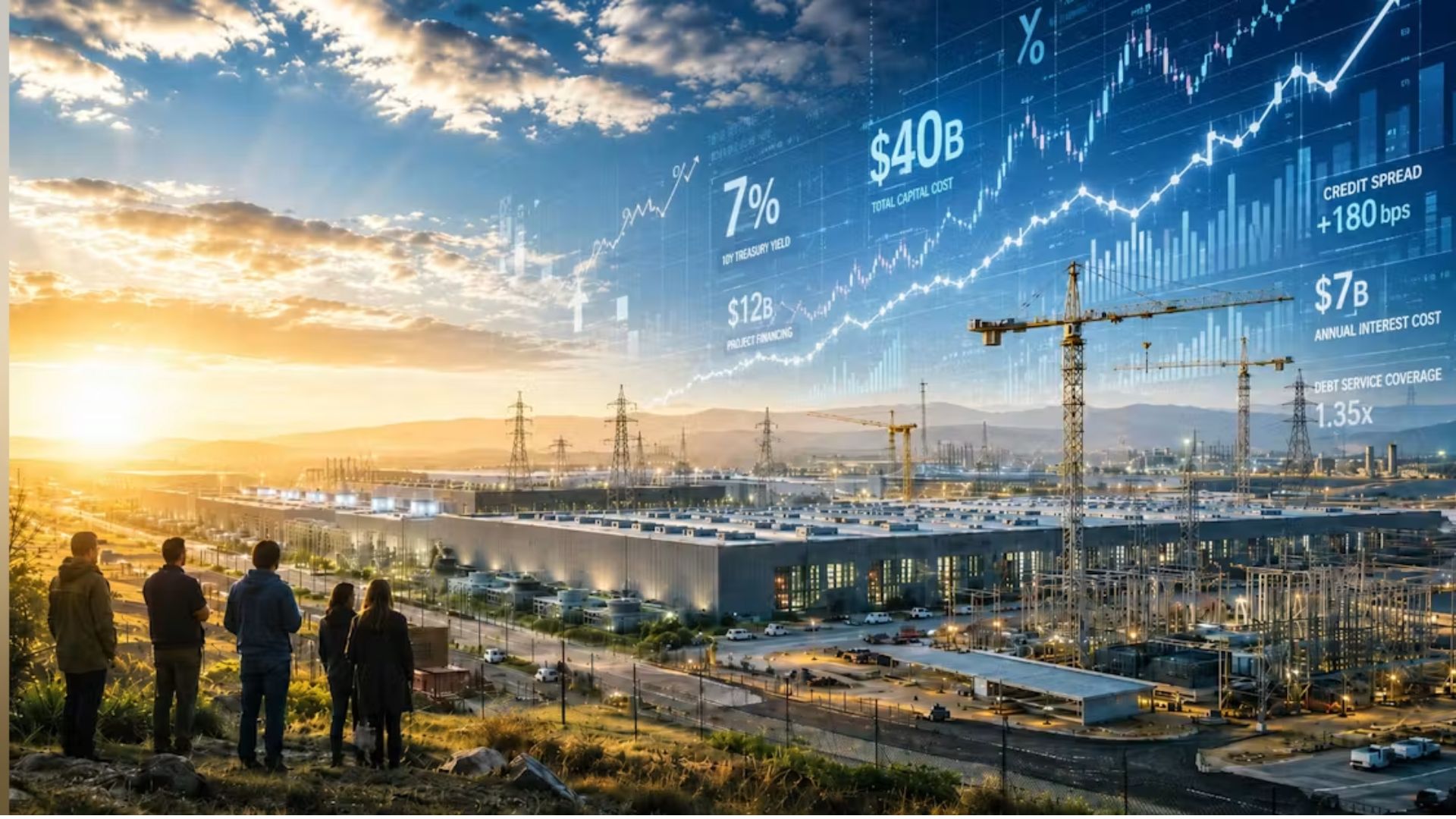
Building a next-generation AI data center is becoming an industrial engineering problem as much as a computing problem.
Accelerator performance still matters, but it is only one part of the equation. Delivering tens or hundreds of megawatts reliably requires careful decisions about voltage levels, transformers, switchgear, busways, UPS systems, cooling, backup generation, substations, transmission capacity, and grid interconnection.
At the rack level, higher power densities are pushing facility designers toward more sophisticated electrical distribution and liquid-cooling systems. At the campus level, large electricity requirements are making grid capacity and transmission infrastructure central factors in data center planning.
There is no single solution. Some projects may combine utility power with backup generation and battery storage. Others may place greater emphasis on renewable energy, nuclear generation, or long-term utility agreements. The right mix depends on local grid conditions, reliability requirements, economics, permitting, and the technical characteristics of the AI workload.
What has changed is the role of electricity itself. For large AI systems, power is no longer simply something the data center consumes after the computing architecture has been chosen. It is one of the constraints that shapes the architecture, the site, and the path to scaling.