
Decoding the technologies of tomorrow, today.
Exploring the breakthrough innovations shaping our world. From AI infrastructure and robotics to biotech, quantum computing, and spatial tech.
Exploring the breakthrough innovations shaping our world. From AI infrastructure and robotics to biotech, quantum computing, and spatial tech.
For most of modern medical history, healthcare has been built around isolated moments of observation. A patient schedules an appointment, describes recent symptoms, undergoes a physical examination, and perhaps completes a laboratory test before leaving with a diagnosis or treatment plan. Although this model remains highly effective for many conditions, it often fails to capture how health actually unfolds in everyday life. Chronic illnesses fluctuate, neurological symptoms vary throughout the day, and behavioral changes associated with mental health conditions frequently emerge outside clinical environments.
Digital phenotyping has emerged as an attempt to bridge this gap. Rather than relying exclusively on periodic clinical encounters, researchers are exploring how data generated through smartphones, wearable devices, and connected technologies can help model human behavior and physiology continuously. The goal is not to replace physicians or traditional diagnostic methods. Instead, digital phenotyping seeks to provide additional context by identifying patterns that might otherwise remain invisible during short clinical visits. This approach transforms ordinary device interactions into measurable behavioral signals that can complement conventional healthcare assessments.

At the center of digital phenotyping is the idea that health-related information can be gathered through both intentional participation and passive observation. These two data streams serve different purposes, but together they provide a more comprehensive picture of daily functioning. Active data collection captures information that people deliberately provide, while passive sensing collects behavioral signals automatically through device sensors and digital interactions. Understanding the distinction between these approaches is essential because each comes with different strengths, limitations, and practical considerations.
Active sensing includes tools such as electronic surveys, symptom diaries, smartphone-based cognitive assessments, and short questionnaires completed throughout the day. Researchers often use ecological momentary assessments to collect information about mood, stress, sleep quality, pain intensity, or medication adherence in real-world environments rather than laboratory settings. This approach can provide highly specific information that reflects a person's subjective experience, which is often impossible to obtain through sensors alone. However, active participation creates a significant challenge. The more frequently people are asked to report symptoms or complete assessments, the more likely they are to stop participating, leading to incomplete datasets and reduced long-term reliability.
Passive sensing addresses this limitation by collecting information automatically. Smartphones and wearable devices continuously generate data through accelerometers, gyroscopes, location services, touchscreen interactions, and communication logs. Researchers can analyze movement patterns, sleep duration, mobility changes, and device usage behaviors without requiring constant user input. Importantly, most research frameworks focus on metadata rather than message content itself. For example, changes in communication frequency may provide insight into social engagement patterns without examining the actual text of messages. This distinction highlights one of the central principles of digital phenotyping: the value often lies in behavioral patterns rather than personal content.
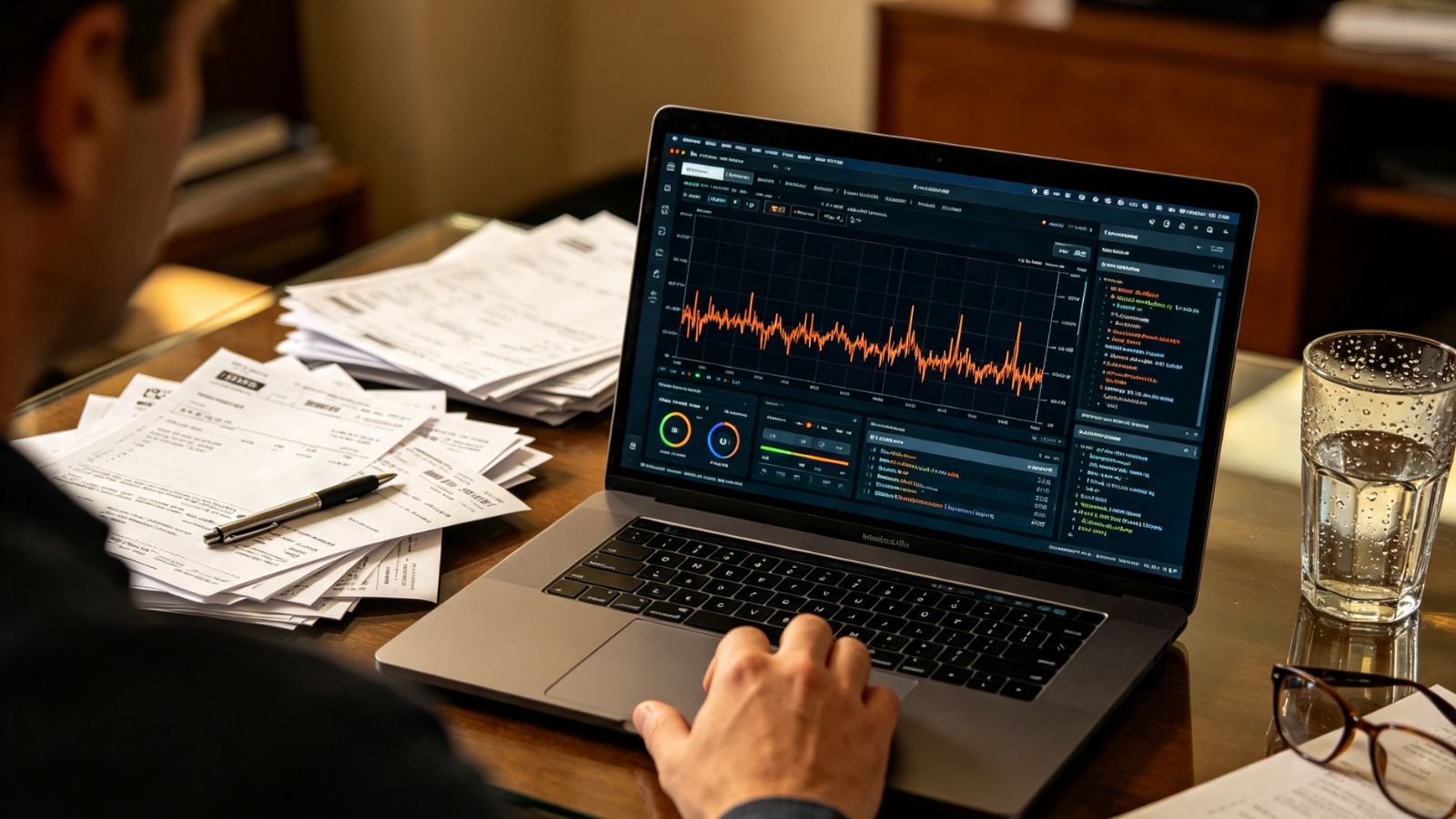
Raw sensor data has very little clinical value until it is transformed into meaningful behavioral indicators. A stream of GPS coordinates, accelerometer measurements, or screen interaction timestamps does not automatically reveal anything about a person's health. Digital phenotyping depends on computational pipelines that convert these fragmented data points into interpretable features. This process typically involves signal processing, feature extraction, statistical modeling, and machine learning algorithms designed to identify relationships between behavioral changes and specific health outcomes.
Researchers frequently establish individual baselines before attempting to identify clinically relevant deviations. This personalized approach recognizes that healthy behavior varies dramatically from person to person. One individual may routinely walk several miles each day, while another spends most of the day working at a desk. A model that ignores these differences risks interpreting normal behavior as evidence of illness. By comparing current activity against a person's historical patterns rather than against population averages, researchers can improve sensitivity while reducing unnecessary alerts.
Several research areas illustrate how this modeling process works in practice. In studies involving mood disorders, investigators have examined whether reduced mobility, irregular sleep schedules, declining communication frequency, and changes in smartphone interaction patterns correlate with depressive symptoms. In neurology, researchers have explored whether gait instability, tremor characteristics, and movement variability captured through wearable devices can help monitor neurodegenerative conditions. These applications remain active areas of scientific investigation, but they demonstrate how ordinary digital behaviors can potentially become measurable biomarkers when analyzed within an appropriate clinical framework.
The promise of continuous health monitoring inevitably raises difficult questions about privacy. Traditional healthcare systems collect information during appointments, laboratory testing, or hospital admissions. Digital phenotyping, however, extends data collection into homes, workplaces, transportation systems, and virtually every other environment in which people carry connected devices. This expansion dramatically increases both the quantity and sensitivity of collected information, requiring a much more sophisticated approach to consent and data governance.
One of the most significant challenges involves informed consent. Many users agree to lengthy privacy policies without fully understanding how behavioral data can be analyzed and interpreted. Location histories, activity patterns, device interaction rhythms, and communication metadata can collectively reveal remarkably detailed information about daily routines. Even when individual data points appear harmless in isolation, combining multiple datasets can generate highly sensitive behavioral profiles. Researchers and regulatory organizations continue to debate how consent frameworks should evolve to provide users with greater transparency and more meaningful control over their information.
Data security represents an equally important concern. Large-scale behavioral datasets create attractive targets for unauthorized access because they contain information that extends far beyond traditional medical records. In response, researchers are increasingly exploring privacy-preserving technologies such as on-device processing, federated learning, differential privacy, and end-to-end encryption. These approaches aim to minimize unnecessary data transmission while allowing analytical models to improve continuously. The long-term success of digital phenotyping will depend not only on predictive accuracy but also on whether users believe that their information is being collected, stored, and analyzed responsibly.
Although digital phenotyping offers exciting possibilities, it should not be viewed as an all-purpose diagnostic solution. Human behavior is influenced by countless variables that extend far beyond health status. A sudden reduction in physical activity might indicate depression, but it could also reflect a vacation, an injury, poor weather, a demanding work schedule, or something as simple as forgetting to carry a smartphone. Separating meaningful clinical signals from ordinary behavioral variation remains one of the field's greatest challenges.
Algorithmic bias introduces another layer of complexity. Device usage differs substantially across age groups, socioeconomic backgrounds, occupations, geographic regions, and cultural environments. A predictive model developed using data from highly connected urban populations may perform poorly when applied to rural communities or older adults with different technology habits. Without diverse datasets, digital phenotyping risks amplifying existing healthcare inequalities rather than reducing them. Researchers must continuously evaluate whether their models generalize across populations or merely reflect the characteristics of the groups used during model development.
Clinical validation also remains essential. Behavioral models can identify correlations, but correlations do not automatically establish causation. For this reason, digital phenotyping is increasingly viewed as a complementary layer of information rather than a replacement for physicians, laboratory testing, imaging studies, or established diagnostic criteria. Integrating digital biomarkers into healthcare will require rigorous validation studies, transparent methodologies, and close collaboration among clinicians, data scientists, ethicists, and regulatory agencies.
Digital phenotyping represents a significant shift from episodic observation toward continuous behavioral measurement. By combining data from smartphones, wearable devices, and connected sensors, researchers are building new frameworks for understanding how health evolves throughout daily life rather than during isolated clinical encounters. This transition reflects a broader movement toward personalized medicine, in which healthcare increasingly adapts to the unique characteristics and routines of individual patients.
The field remains in an important developmental stage. Questions surrounding privacy, consent, algorithmic fairness, data ownership, and clinical validation are still being actively debated. Nevertheless, the underlying concept continues to attract substantial scientific interest because it addresses a fundamental limitation of traditional healthcare: the inability to observe health continuously in natural environments. As sensing technologies improve and regulatory frameworks mature, digital phenotyping may eventually become an important supplement to conventional medicine, providing clinicians with a richer, more dynamic understanding of human health and behavior.