
Decoding the technologies of tomorrow, today.
Exploring the breakthrough innovations shaping our world. From AI infrastructure and robotics to biotech, quantum computing, and spatial tech.
Exploring the breakthrough innovations shaping our world. From AI infrastructure and robotics to biotech, quantum computing, and spatial tech.
The transition toward renewable electricity is changing how power grids are designed and operated. Solar and wind energy have become major sources of new electricity generation because they produce power without direct carbon emissions during operation. However, renewable resources have a fundamental limitation: their output depends on environmental conditions rather than constant demand.
Solar panels generate the most electricity during daylight hours, while wind production can vary throughout the day and across seasons. Electricity demand, meanwhile, continues regardless of whether renewable generation is available. This mismatch between when electricity is produced and when it is needed is known as intermittency.
Grid-scale energy storage provides a solution by absorbing excess electricity when renewable generation is high and releasing energy when supply falls below demand. While short-duration batteries can help manage hourly fluctuations, long-duration energy storage (LDES) is increasingly viewed as essential for supporting power systems with high levels of renewable generation.
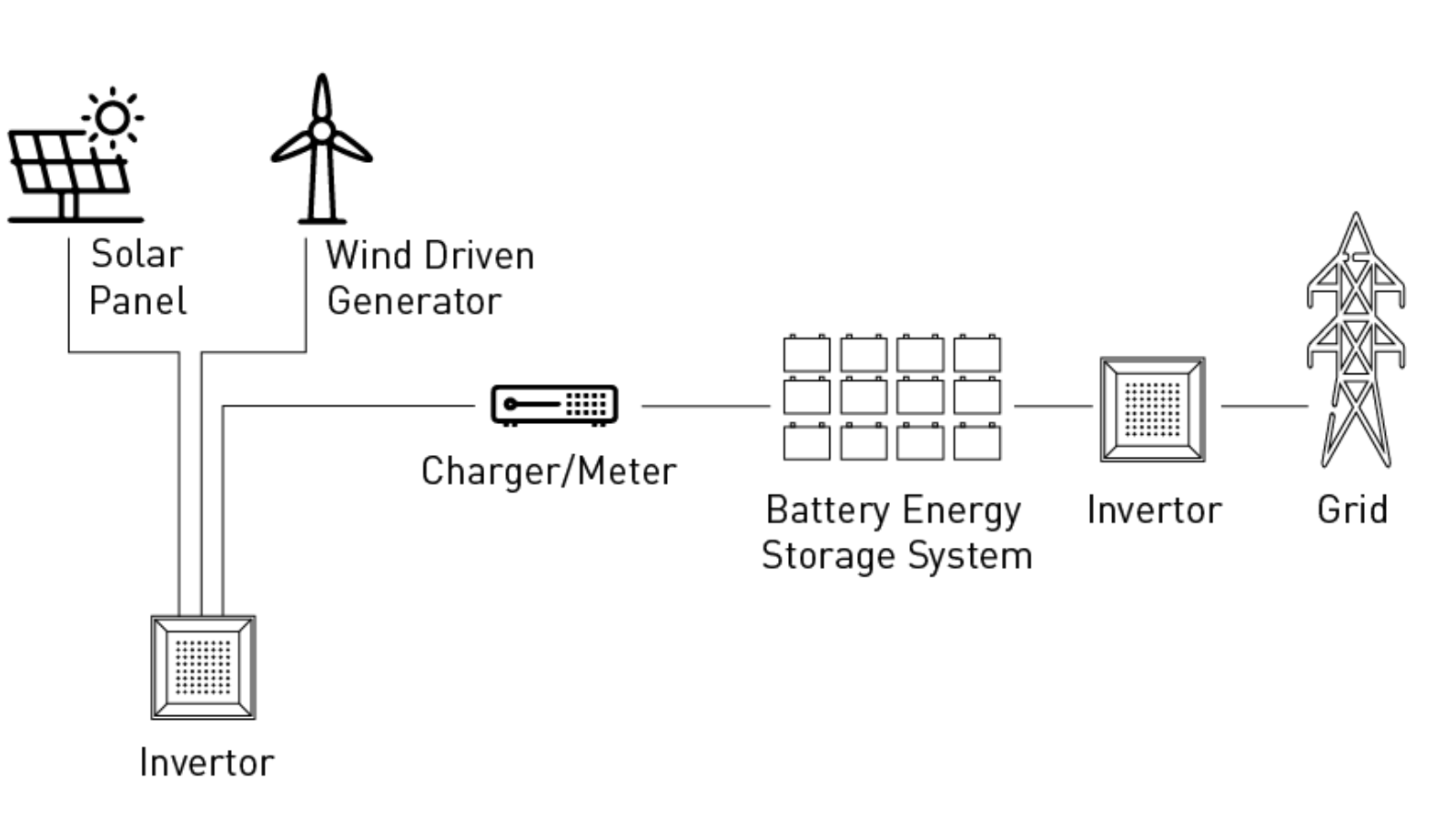
A grid-scale energy storage system is more than a large battery. It is an integrated architecture that combines energy storage components, power conversion equipment, control systems, and grid communication technologies.
A typical storage facility includes several major elements:
Energy storage medium: The component that stores electricity, such as batteries, pumped hydro reservoirs, compressed air systems, or thermal storage materials.
Power conversion system: Equipment that converts electricity between direct current (DC) and alternating current (AC) so the storage system can interact with the electrical grid.
Energy management system: Software that controls charging, discharging, and operational decisions.
Grid connection infrastructure: Transformers, switchgear, and protection equipment that allow safe integration with transmission or distribution networks.
The architecture must balance multiple requirements, including response speed, storage duration, efficiency, reliability, and cost.
A storage system designed for frequency regulation may need to respond within seconds, while a system designed to shift renewable energy from one part of the day to another may need to operate for many hours.
Traditional power grids were built around controllable generation sources such as coal, natural gas, and nuclear plants. Operators could adjust output to match electricity demand patterns.
Renewable generation introduces a different operating model. Electricity availability is influenced by weather conditions and natural cycles.
Several challenges emerge as renewable penetration increases:
Solar generation often peaks around midday, but electricity demand frequently reaches its highest levels in the evening. Without storage, excess daytime solar energy may be difficult to use efficiently.
A long-duration storage system can capture surplus solar electricity and release it after sunset, reducing the need for backup generation.
Wind and solar output can change significantly because of weather patterns. A cloudy period or low-wind event can reduce renewable generation for hours or even days.
Long-duration storage provides additional flexibility by maintaining electricity availability during extended periods of reduced renewable output.
Some renewable resources vary across seasons. For example, solar production can be much higher during summer months, while electricity demand may increase during winter heating periods in certain regions.
Seasonal storage technologies may eventually help address these longer-term differences.
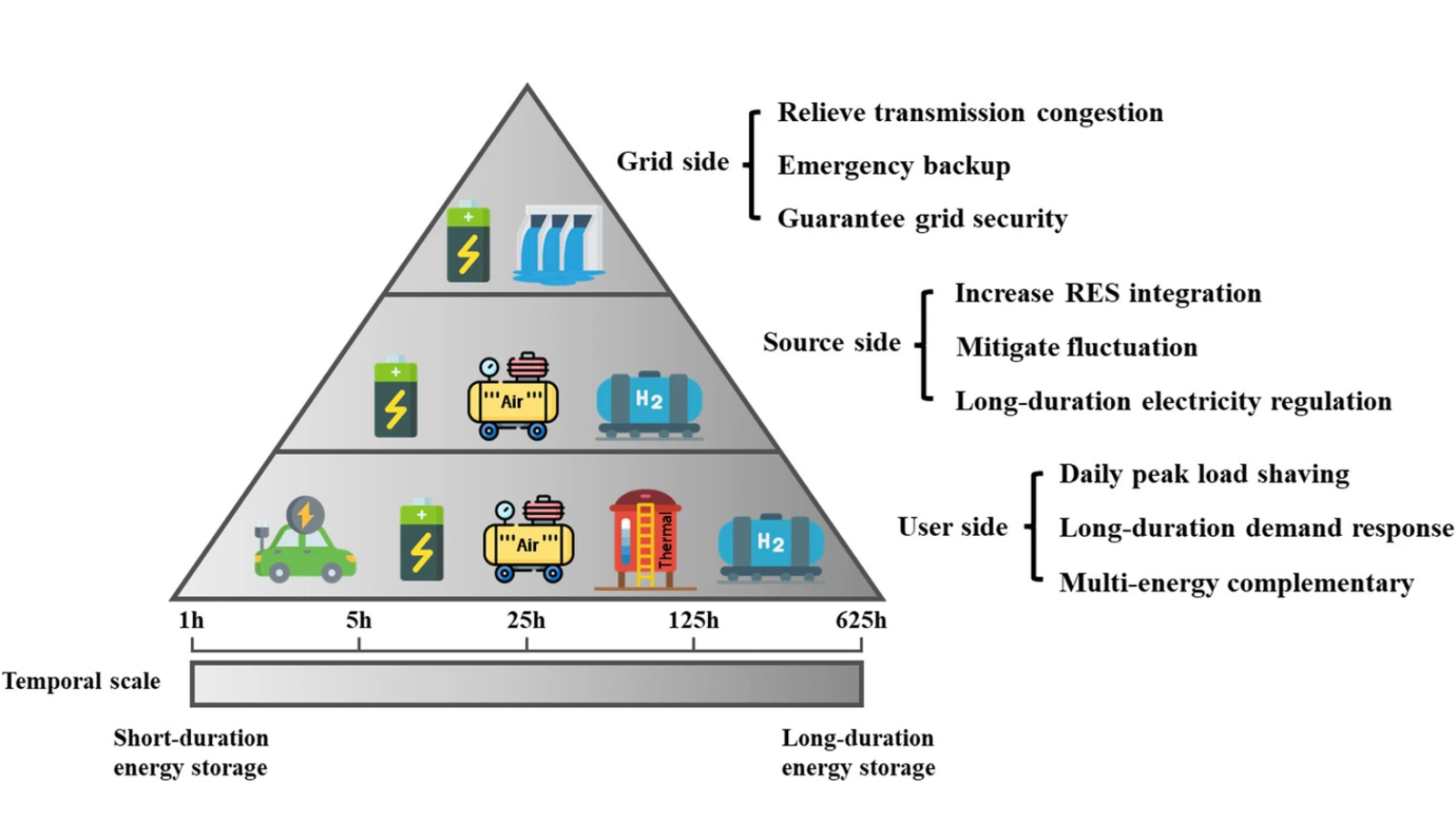
Energy storage systems are often classified by how long they can deliver electricity at their rated power.
Short-duration storage typically provides energy for minutes to a few hours. Long-duration storage generally refers to systems capable of delivering electricity for many hours, although definitions vary among organizations and researchers.
The U.S. Department of Energy has identified long-duration energy storage as an important technology area for improving grid reliability and supporting renewable integration. The department has highlighted the need for storage technologies capable of providing reliable electricity over extended periods.
The key difference is that long-duration systems are designed not just for fast response but for sustained energy delivery.
No single storage technology can meet every grid requirement. Different systems provide different advantages.
Lithium-ion batteries are currently the most widely deployed grid-scale battery technology.
Advantages include:
High efficiency
Fast response times
Established manufacturing supply chains
Proven performance
However, lithium-ion systems are often optimized for shorter-duration applications. Increasing storage duration can significantly increase costs because more battery cells are required.
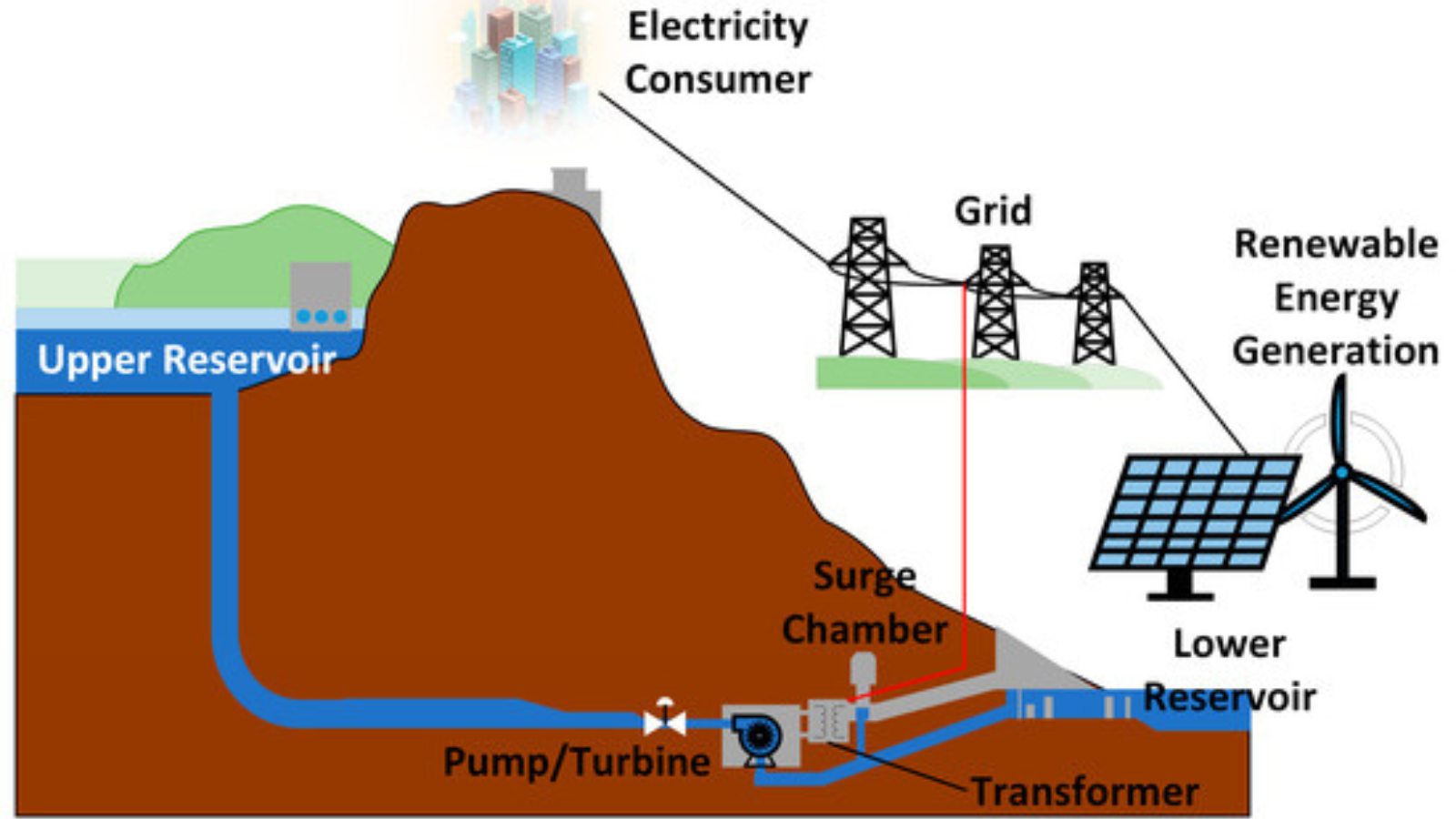
Pumped hydro is one of the oldest and largest forms of energy storage.
The system uses electricity to pump water to a higher elevation. When energy is needed, water flows downward through turbines to generate electricity.
Benefits include:
Large storage capacity
Long operating life
Proven technology
Limitations include geographic requirements and long construction timelines.
Compressed air systems store energy by using electricity to compress air, which is later released to generate electricity.
These systems can provide longer-duration storage but often require specific geological conditions and complex infrastructure.
Flow batteries store energy in liquid electrolytes contained in external tanks.
Their design allows energy capacity and power output to be scaled separately, making them attractive for long-duration applications.
Potential advantages include:
Long cycle life
Flexible sizing
Reduced dependence on scarce materials
Challenges include improving cost competitiveness and commercial maturity.
Modern energy storage depends heavily on digital control systems. Storage facilities must continuously evaluate electricity prices, grid conditions, renewable forecasts, and system requirements.
Energy management software determines when to charge and discharge based on factors such as:
Renewable generation levels
Electricity demand
Grid stability needs
Market conditions
Battery health
Advanced control systems can also help storage assets provide grid services such as frequency regulation and voltage support.
As electricity systems become more complex, software becomes increasingly important for coordinating thousands of distributed energy resources.
Although energy storage technology is improving, economics remain a major barrier.
A storage project must justify its cost through the value it provides, including:
Avoided fuel costs
Improved grid reliability
Reduced need for new generation infrastructure
Better renewable energy utilization
The challenge is that long-duration storage may provide benefits that are difficult to capture through traditional electricity markets. Many grid systems were designed around selling electricity rather than valuing flexibility and reliability.
Policy frameworks, market reforms, and continued technology improvements will influence how quickly long-duration storage expands.
As renewable electricity becomes a larger share of power generation, the ability to store energy over longer periods becomes increasingly important.
Long-duration storage can help:
Reduce renewable energy curtailment
Improve grid reliability
Support higher renewable penetration
Reduce dependence on fossil fuel backup systems
Provide resilience during supply disruptions
However, storage is only one part of a modern electricity strategy. Future grids will likely combine renewable generation, energy efficiency, transmission expansion, demand management, and multiple storage technologies.
Grid-scale energy storage is becoming a fundamental component of renewable electricity systems. While short-duration batteries help manage daily fluctuations, long-duration storage provides the flexibility needed to handle extended periods of renewable variability.
The future of clean electricity depends not only on generating more renewable power but also on ensuring that electricity remains available when and where it is needed. Through advances in battery technology, mechanical storage, software controls, and grid architecture, long-duration energy storage will play a central role in building more reliable and resilient power systems.