
Decoding the technologies of tomorrow, today.
Exploring the breakthrough innovations shaping our world. From AI infrastructure and robotics to biotech, quantum computing, and spatial tech.
Exploring the breakthrough innovations shaping our world. From AI infrastructure and robotics to biotech, quantum computing, and spatial tech.
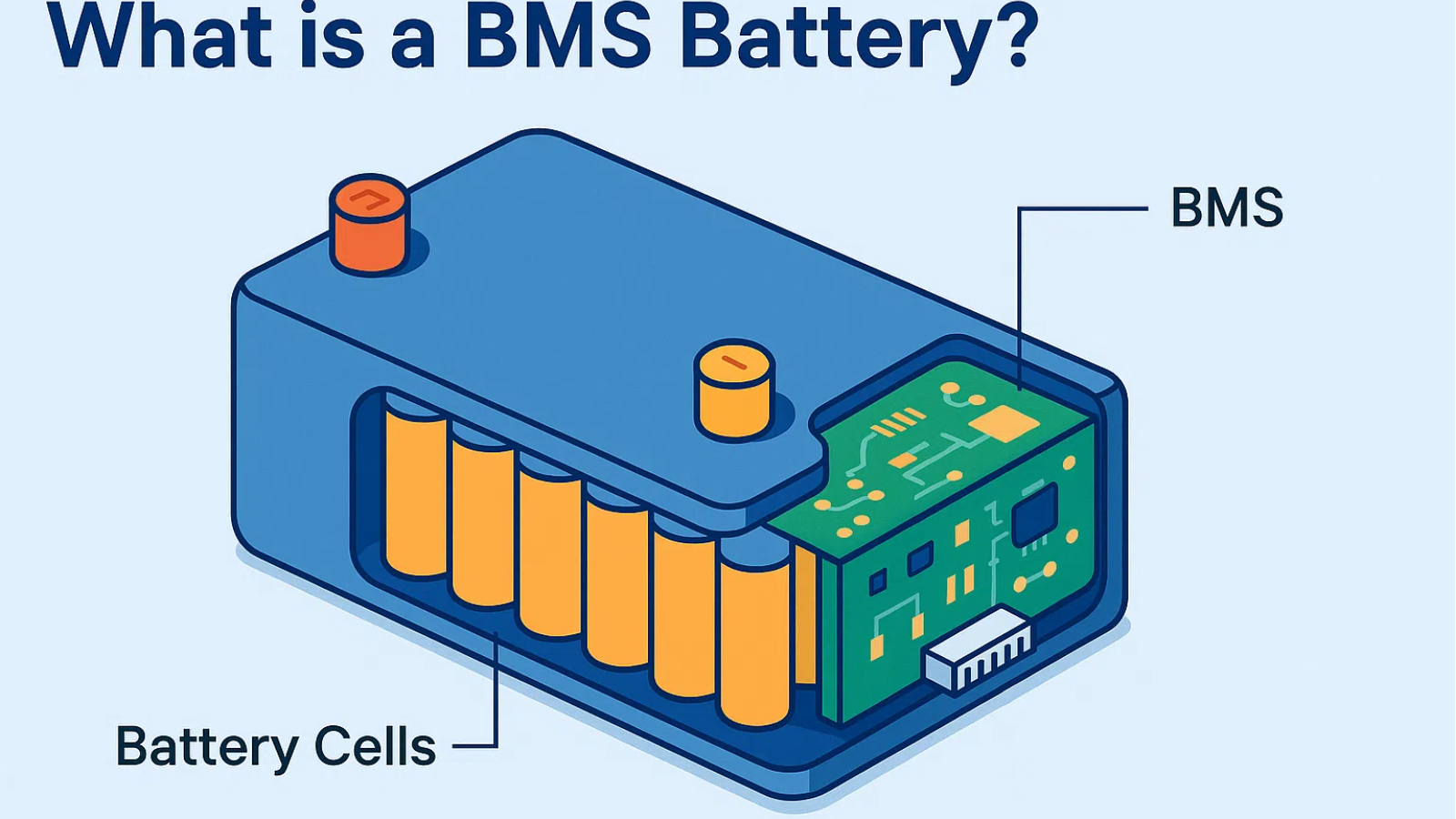
A Battery Management System (BMS) is an electronic control system responsible for monitoring, protecting, and optimizing rechargeable battery packs. Although lithium-ion batteries are widely used in electric vehicles, smartphones, energy storage systems, and industrial equipment, individual battery cells require careful management to operate safely and efficiently.
A battery pack is usually made up of multiple cells connected together to provide higher voltage and capacity. These cells do not always behave identically. Differences in manufacturing, temperature, aging, and usage patterns can cause individual cells to charge or discharge at different rates. Without proper monitoring, these variations can reduce battery performance, shorten lifespan, or create safety risks.
A BMS acts as the control layer between the battery pack and the device using its energy. It combines sensors, electronic circuits, embedded software, and communication systems to measure battery conditions and make decisions about charging, discharging, and protection.
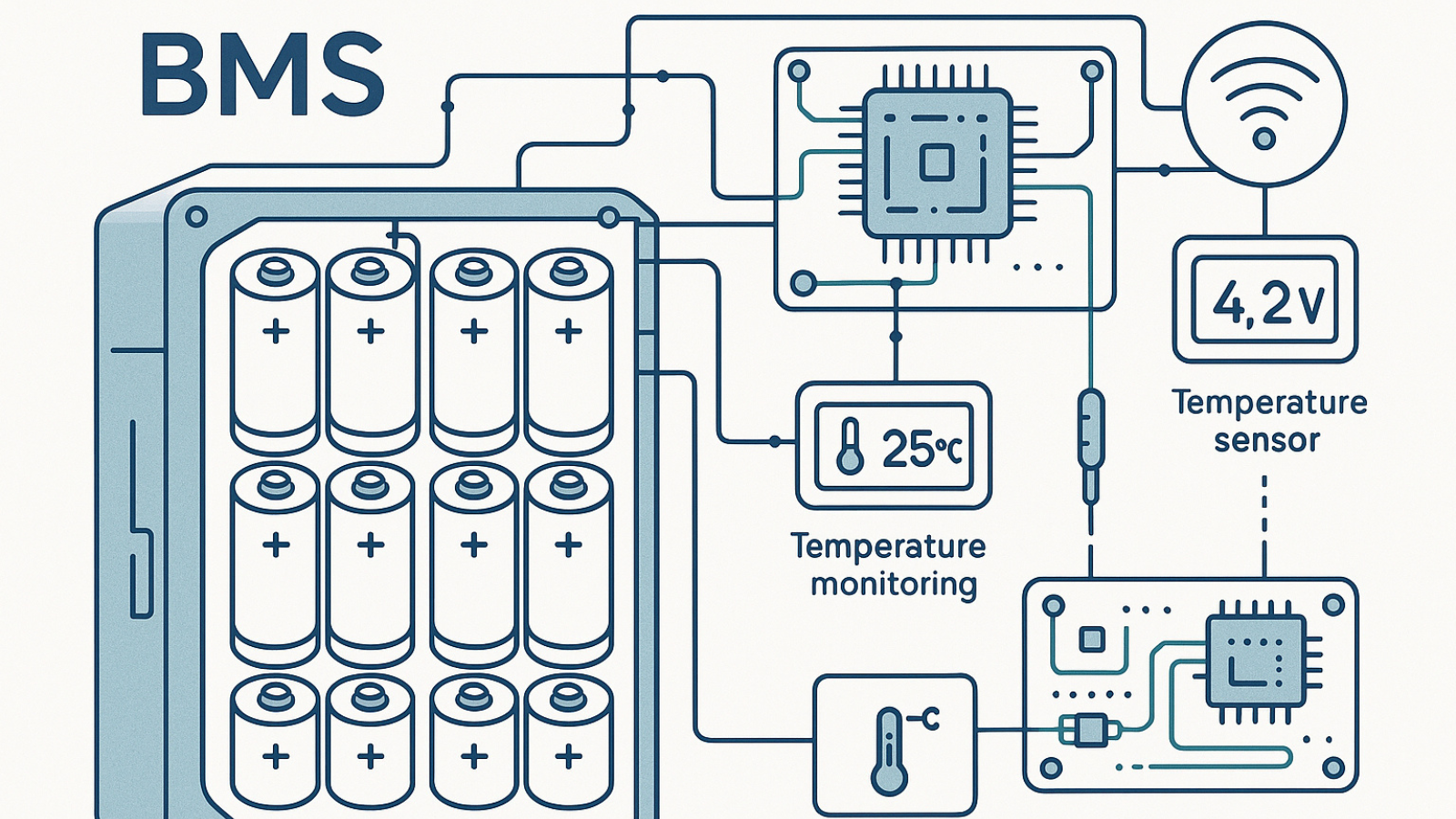
A modern BMS performs several essential tasks that help maintain battery reliability.
One of the primary responsibilities of a BMS is collecting real-time information from battery cells.
Sensors inside the system measure:
Individual cell voltages
Pack voltage
Charging and discharging current
Cell and battery temperatures
Operating conditions
Voltage monitoring is especially important because lithium-ion cells operate within specific voltage limits. Overcharging can damage cells, while excessive discharge can permanently reduce capacity.
Temperature monitoring is equally important. Battery performance changes significantly with temperature, and extreme heat or cold can accelerate degradation. A BMS can use temperature data to adjust charging limits or trigger protective actions when conditions become unsafe.
Battery safety is one of the most important reasons BMS technology exists. Rechargeable batteries store large amounts of energy, and improper operation can lead to overheating, reduced performance, or dangerous failures.
A BMS provides multiple layers of protection.
When a battery cell reaches its maximum safe voltage, continuing to charge can cause chemical stress inside the cell. A BMS monitors voltage levels and can communicate with charging equipment to reduce or stop charging when necessary.
Allowing lithium-ion cells to discharge below their recommended voltage range can cause irreversible chemical changes. The BMS can disconnect the load or limit power output to prevent excessive discharge.
High current levels can generate excessive heat and damage battery components. Current sensors allow the BMS to detect abnormal charging or discharge conditions and activate protective responses.
Temperature sensors help identify overheating conditions. Depending on the design, a BMS may reduce current flow, activate cooling systems, or disconnect the battery from the device.
These safety functions are especially important in applications such as electric vehicles and grid energy storage, where battery packs contain thousands of individual cells and operate under demanding conditions.
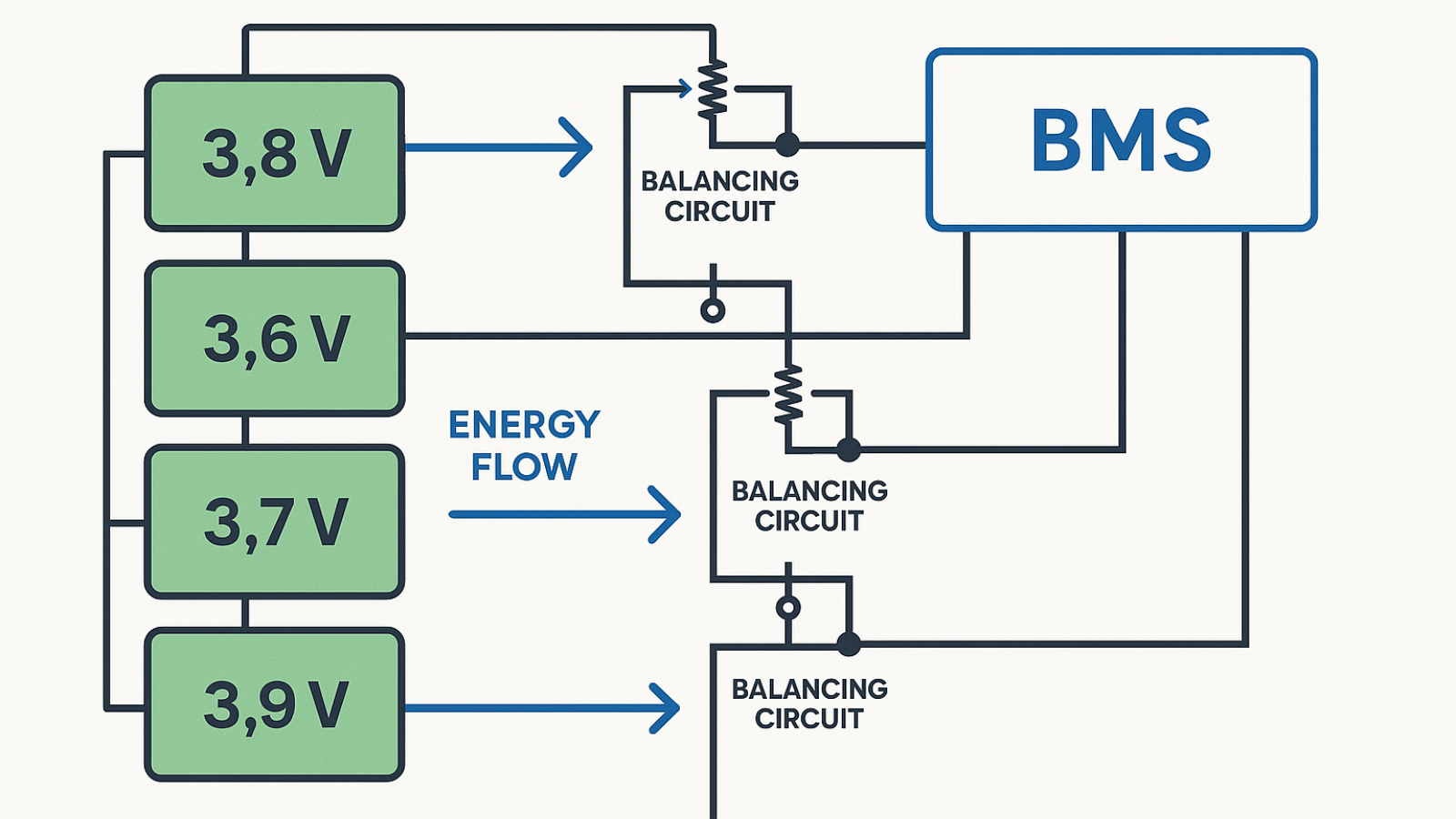
Battery packs are built from multiple cells, but those cells do not always maintain identical charge levels. Even small differences can accumulate over repeated charging cycles.
Cell balancing is a BMS function designed to correct these differences.
There are two main balancing approaches:
Passive balancing removes excess energy from higher-voltage cells through resistors. The energy is converted into heat and released.
This method is relatively simple and inexpensive but wastes some energy during balancing.
Active balancing transfers energy between cells instead of wasting it. Energy can move from higher-charged cells to lower-charged cells, improving overall efficiency.
Active balancing systems are more complex and expensive but may provide advantages in larger battery applications where maximizing available capacity is important.
Proper balancing helps ensure that no single weak or overcharged cell limits the performance of the entire battery pack.
Although a BMS includes physical electronics, software plays a central role in how the system operates.
Embedded software processes sensor data, applies safety rules, estimates battery conditions, and controls communication with other systems.
Important software functions include:
State of Charge (SOC) represents the remaining energy available in a battery, similar to a fuel gauge in a vehicle.
Accurately estimating SOC is challenging because battery behavior changes with temperature, age, charging speed, and usage patterns. BMS software typically combines measurements such as voltage, current flow, and historical battery behavior to calculate an estimate.
State of Health (SOH) measures the condition of a battery compared with its original performance.
A battery gradually loses capacity as it ages. A BMS can track factors such as capacity loss, charging cycles, and internal resistance to estimate remaining battery condition.
SOH information helps manufacturers and users understand battery aging and plan maintenance or replacement.
A BMS rarely operates alone. It communicates with other electronic systems to coordinate battery operation.
In electric vehicles, for example, the BMS exchanges information with:
Vehicle control systems
Charging systems
Motor controllers
Thermal management systems
Communication protocols such as CAN (Controller Area Network) are commonly used in automotive applications because they allow electronic components to exchange information reliably.
Energy storage systems may also connect BMS platforms with monitoring software that tracks battery performance, operating conditions, and maintenance requirements.
Beyond safety, a well-designed BMS helps improve battery efficiency and usable lifespan.
A BMS contributes by:
Preventing harmful operating conditions
Maintaining cell balance
Improving charging control
Providing accurate battery information
Supporting thermal management
Battery life depends on many factors, including chemistry, usage patterns, charging habits, and environmental conditions. A BMS cannot prevent all battery aging, but it helps keep cells operating within conditions that reduce unnecessary stress.
Despite their importance, BMS designs face several technical challenges.
Accurate battery estimation remains difficult because batteries are complex chemical systems. Factors such as temperature changes, aging, and irregular usage can make predictions less precise.
Another challenge is balancing cost and performance. Advanced BMS features, such as active balancing and sophisticated monitoring algorithms, increase system complexity and expense.
Large battery systems also create challenges related to cybersecurity. Because modern BMS platforms rely increasingly on software and communication networks, protecting them from unauthorized access has become an important engineering consideration.
As electric vehicles, renewable energy storage, and portable electronics continue expanding, BMS technology is becoming increasingly advanced.
Future systems are expected to incorporate improved sensors, better battery prediction models, artificial intelligence-based analysis, and more advanced communication capabilities.
Research is also focused on creating smarter BMS platforms that can adapt to battery aging, optimize charging strategies, and provide more accurate information about remaining capacity and battery health.
A reliable BMS will remain a critical component of future energy systems because battery performance depends not only on the chemistry inside the cells but also on how effectively those cells are monitored and controlled.
Battery Management Systems provide the intelligence required to operate modern rechargeable batteries safely and efficiently. By combining electronic sensors, control circuits, and software algorithms, a BMS manages charging, protects against dangerous conditions, balances individual cells, and tracks battery health.
As battery technology continues developing across transportation, consumer electronics, and renewable energy applications, the role of BMS technology will become even more important. The system behind the battery is often just as important as the battery itself when it comes to achieving reliable performance, safety, and long-term value.