
Decoding the technologies of tomorrow, today.
Exploring the breakthrough innovations shaping our world. From AI infrastructure and robotics to biotech, quantum computing, and spatial tech.
Exploring the breakthrough innovations shaping our world. From AI infrastructure and robotics to biotech, quantum computing, and spatial tech.
For years, data center expansion was discussed mainly in terms of electricity. Developers looked for sites with access to large amounts of reliable power, while analysts tracked the industry's growth in megawatts and gigawatts. The rapid expansion of artificial intelligence has added another resource to that calculation: water. As AI servers become more power-dense, the amount of heat that has to be removed from each rack increases as well. That does not mean every AI facility will consume large amounts of freshwater. Cooling design matters enormously. Still, water availability, local climate, wastewater infrastructure, and long-term water stress are becoming increasingly important factors in deciding where large data centers can be built.
Nearly all of the electricity used by computing equipment eventually becomes heat. A conventional server can often be cooled with air moving through the rack and the surrounding facility, but higher-density computing makes that approach more difficult. Modern AI systems can place substantially more heat into a relatively small physical footprint, increasing the need for efficient heat transfer.
Liquid has an important advantage here: it can carry large amounts of heat with relatively little flow compared with air. That is why direct liquid cooling and other liquid-based systems are attracting growing attention as AI computing densities rise. The important distinction, however, is between using liquid to collect heat and using water at the facility level. A closed liquid loop can capture heat from chips without continuously consuming freshwater. The heat still has to be rejected somewhere, and the method used for that final step determines much of the facility's water demand.
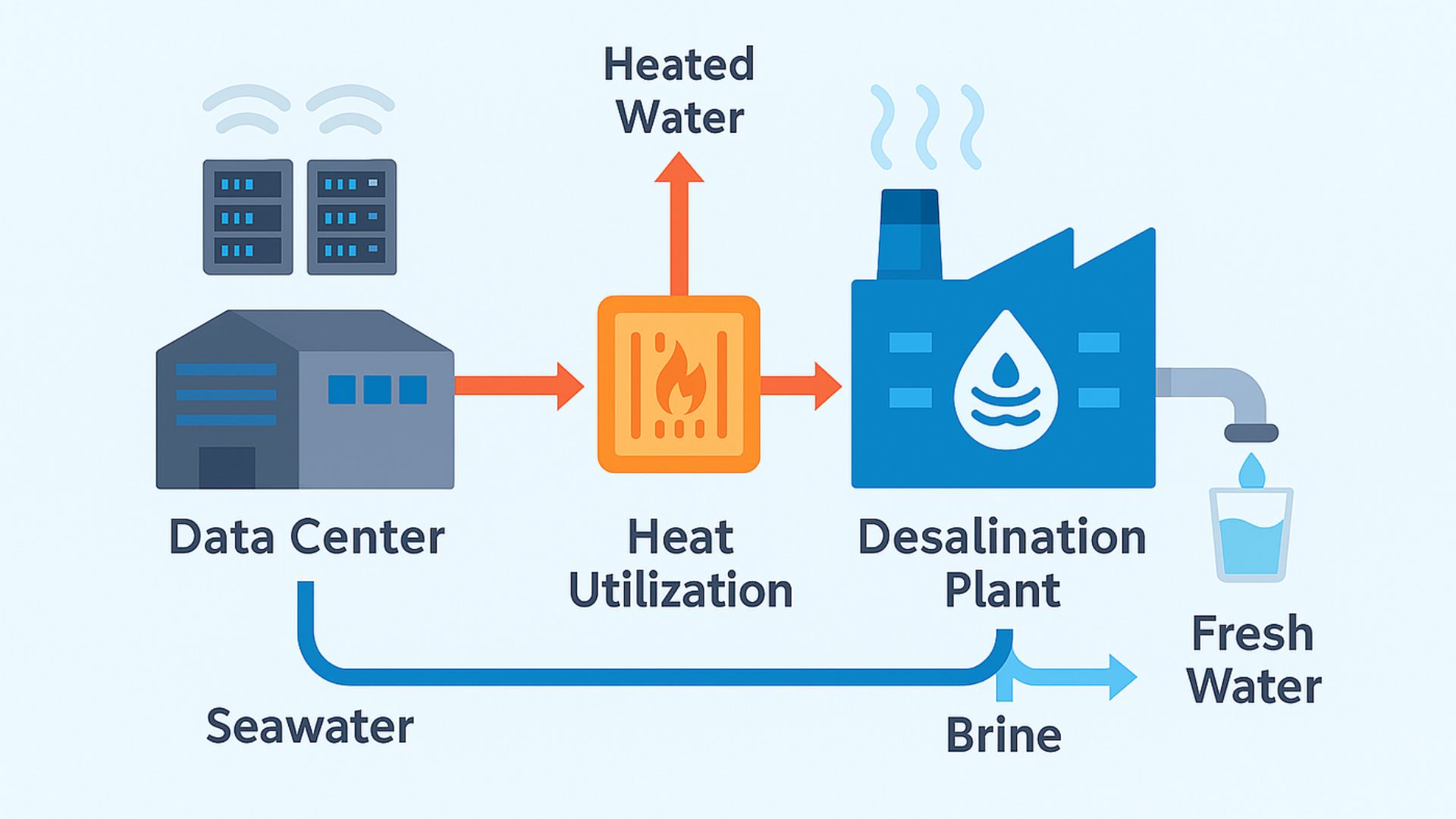
Many data centers rely, at least in part, on cooling towers or other evaporative systems. In a cooling tower, warm water is exposed to moving air. A portion of the water evaporates, carrying heat into the atmosphere, while the remaining water is cooled and circulated again. Some additional water is discharged as blowdown to control the concentration of dissolved minerals and then replaced with makeup water.
This process can be very effective, particularly in climates where evaporative cooling performs well. It also creates a direct relationship between heat load and water consumption. The U.S. Department of Energy notes that cooling-tower water use depends on factors such as the cooling load and cycles of concentration, rather than on facility size alone.
That distinction matters when discussing AI data centers. Two facilities with similar computing capacity can have very different water profiles if one uses extensive evaporative cooling while the other relies more heavily on dry cooling, air-side economizers, or a hybrid system.
Direct-to-chip liquid cooling addresses the heat problem much closer to its source. Instead of relying entirely on room air to carry heat away from high-power processors, a liquid loop circulates through cold plates positioned near the chips. The liquid absorbs heat and transfers it to another part of the cooling system.
This approach can improve thermal performance and make higher-density racks easier to manage. It can also reduce the amount of air movement required inside the data center. But direct-to-chip cooling should not automatically be treated as a water-saving technology. The final heat-rejection system still determines whether the facility needs cooling towers, dry coolers, chilled-water equipment, or some combination of technologies.
The U.S. Department of Energy describes direct liquid cooling systems in which heat is transferred from IT equipment to a recirculating loop and then passed through a cooling distribution unit before being rejected elsewhere in the facility. Other designs use different heat-rejection arrangements.
In other words, "liquid-cooled" does not necessarily mean "high water consumption," and it does not necessarily mean "waterless," either.
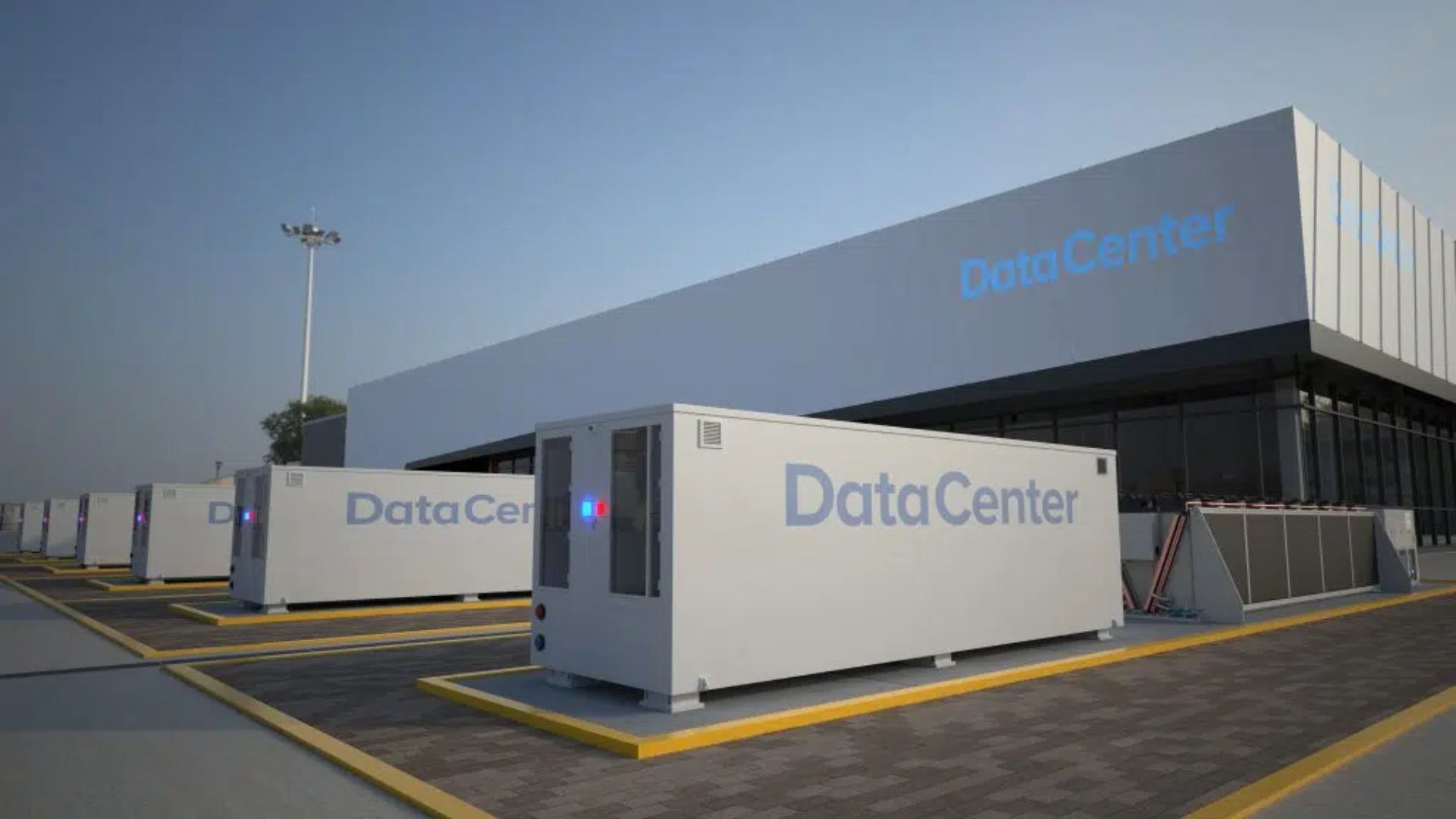
Closed-loop cooling can reduce the need for continuous freshwater makeup because the same coolant is circulated repeatedly. This is particularly useful when the objective is to separate chip-level thermal management from the facility's broader water supply.
Operators can also use non-potable or reclaimed water in some applications. Reclaimed wastewater can reduce competition with drinking-water supplies, although it introduces additional treatment and infrastructure requirements. The environmental implications depend on where the water comes from, how it is treated, and what would otherwise happen to that water within the local watershed.
Water efficiency is therefore more complicated than simply counting gallons entering a facility. Data center operators and researchers commonly use Water Usage Effectiveness (WUE) to evaluate site water consumption relative to IT energy use. The metric helps compare facilities with different sizes and operating conditions and provides a more useful basis for discussing cooling efficiency than a single daily water figure.
Electricity and water are both physical infrastructure constraints, but they behave differently geographically. Electricity can be transmitted over long distances through interconnected grids, allowing developers to draw power from generation resources that may be far from the facility itself. Water is much more dependent on local conditions, including available supply, watershed characteristics, municipal infrastructure, regulations, and seasonal variability.
That difference becomes important when a large computing campus is proposed in a region already dealing with water stress. A developer may have access to land, fiber connectivity, and sufficient electrical capacity while still facing questions about whether the local water system can support the additional demand.
Climate adds another layer. A hot, dry location may have greater cooling requirements than a cooler location, while a region with abundant water may still impose restrictions on withdrawals or have limited treatment capacity. As a result, the most attractive location for a data center is increasingly determined by a combination of power availability, network connectivity, land, climate, water resources, and permitting conditions rather than by any single factor.
One of the less obvious challenges is that reducing water use does not always reduce total resource consumption.
Evaporative cooling can reject heat efficiently and may require less electrical energy than some forms of mechanical cooling. Air-cooled systems can sharply reduce or eliminate direct site water consumption, but they may require more electricity, particularly under demanding environmental conditions. LBNL's 2024 U.S. Data Center Energy Usage Report highlights this trade-off: cooling systems with lower water use are not automatically better in every efficiency category.
This makes cooling design an optimization problem rather than a simple race toward zero water use. Operators have to consider water, electricity, climate, reliability, equipment density, and operating costs together.
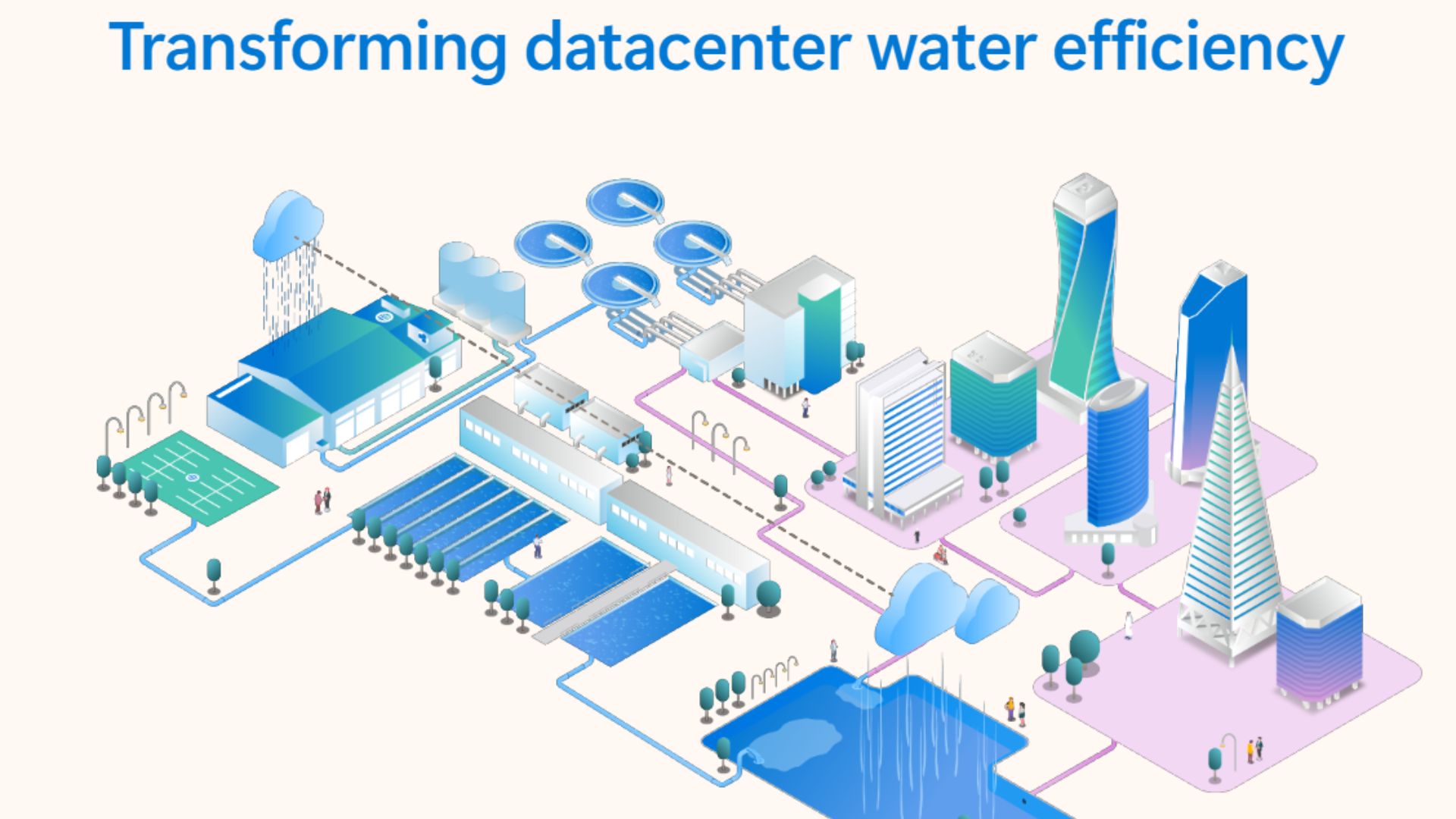
As AI infrastructure expands, water is becoming one of several resource constraints that developers need to evaluate before committing to a location.
Climate and ambient conditions: Cooler environments can create more opportunities for economizer operation and reduce dependence on mechanical cooling during favorable weather. The benefit depends on humidity, air quality, seasonal conditions, and the specific cooling architecture.
Reliable water infrastructure: Where water-based cooling is planned, developers need to consider not just the nominal availability of water but also municipal treatment capacity, supply reliability, drought conditions, and local regulations.
Low-water cooling designs: Dry coolers, air-side economizers, hybrid systems, and other approaches can reduce direct water consumption. Their suitability depends heavily on climate and the required operating conditions.
Water reuse: Reclaimed water and on-site treatment can reduce reliance on potable supplies in appropriate locations. These systems require additional infrastructure and careful management, but they can provide another option where freshwater resources are constrained.
Heat reuse: Another emerging option is to treat waste heat as a resource rather than simply something to discard. Research from Lawrence Berkeley National Laboratory has examined ways to integrate higher-temperature data center waste heat into broader energy systems.
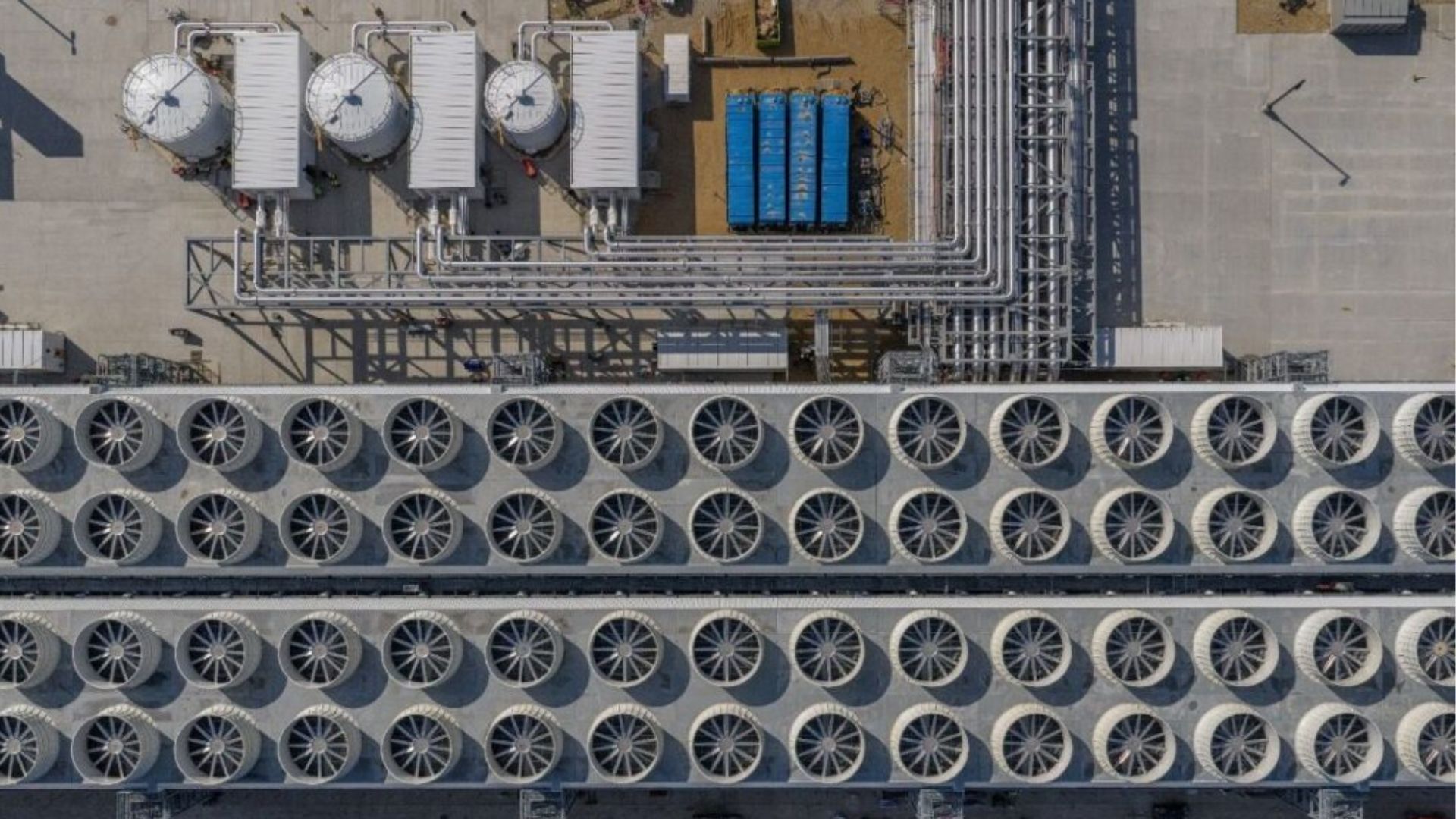
The growth of AI is not simply a story about faster processors and larger power supplies. Every additional unit of computing capacity creates physical requirements for electricity, cooling equipment, buildings, network connections, and ultimately heat rejection.
Water will not be the deciding factor for every data center. Some facilities can operate with relatively low site water consumption, particularly when climate and cooling architecture allow extensive use of dry or hybrid systems. Others may depend much more heavily on evaporative cooling.
That variation is precisely why water deserves a larger role in infrastructure planning. Rather than treating water as a secondary utility, developers increasingly need to evaluate it alongside electricity, fiber, land, climate, and permitting from the beginning of the site-selection process. The future geography of AI infrastructure will be shaped not by computing demand alone, but by the ability of local physical systems to support it.