
Decoding the technologies of tomorrow, today.
Exploring the breakthrough innovations shaping our world. From AI infrastructure and robotics to biotech, quantum computing, and spatial tech.
Exploring the breakthrough innovations shaping our world. From AI infrastructure and robotics to biotech, quantum computing, and spatial tech.
The transition toward cleaner energy systems depends heavily on advances in materials science. Technologies such as batteries, solar cells, hydrogen electrolyzers, fuel cells, carbon capture systems, and energy-efficient electronics all rely on materials with carefully optimized properties.
Historically, discovering new materials has been a slow and expensive process. Researchers often synthesized candidate materials, tested their performance experimentally, analyzed results, and refined designs through repeated cycles. This trial-and-error approach could require years of laboratory work before identifying a promising material.
High-throughput computational screening and machine learning are changing this process by allowing researchers to evaluate thousands or even millions of potential materials digitally before conducting physical experiments. Instead of searching blindly through the enormous space of possible chemical structures, scientists can use computational tools to prioritize the most promising candidates.
These approaches do not eliminate laboratory research, but they help direct experimental efforts toward materials with the highest probability of success.
The number of possible materials that could theoretically be created is enormous. Even small changes in chemical composition, atomic arrangement, or manufacturing conditions can dramatically alter performance.
For energy applications, researchers must evaluate multiple properties simultaneously.
A battery material, for example, may need:
High energy storage capacity
Fast ion movement
Chemical stability
Long cycle life
Low production cost
Environmental compatibility
A material that performs well in one category may fail in another. High electrical conductivity may come with poor stability, while excellent durability may limit energy efficiency.
This complexity creates a challenge known as the materials discovery problem: identifying useful materials from a vast landscape of possible combinations.
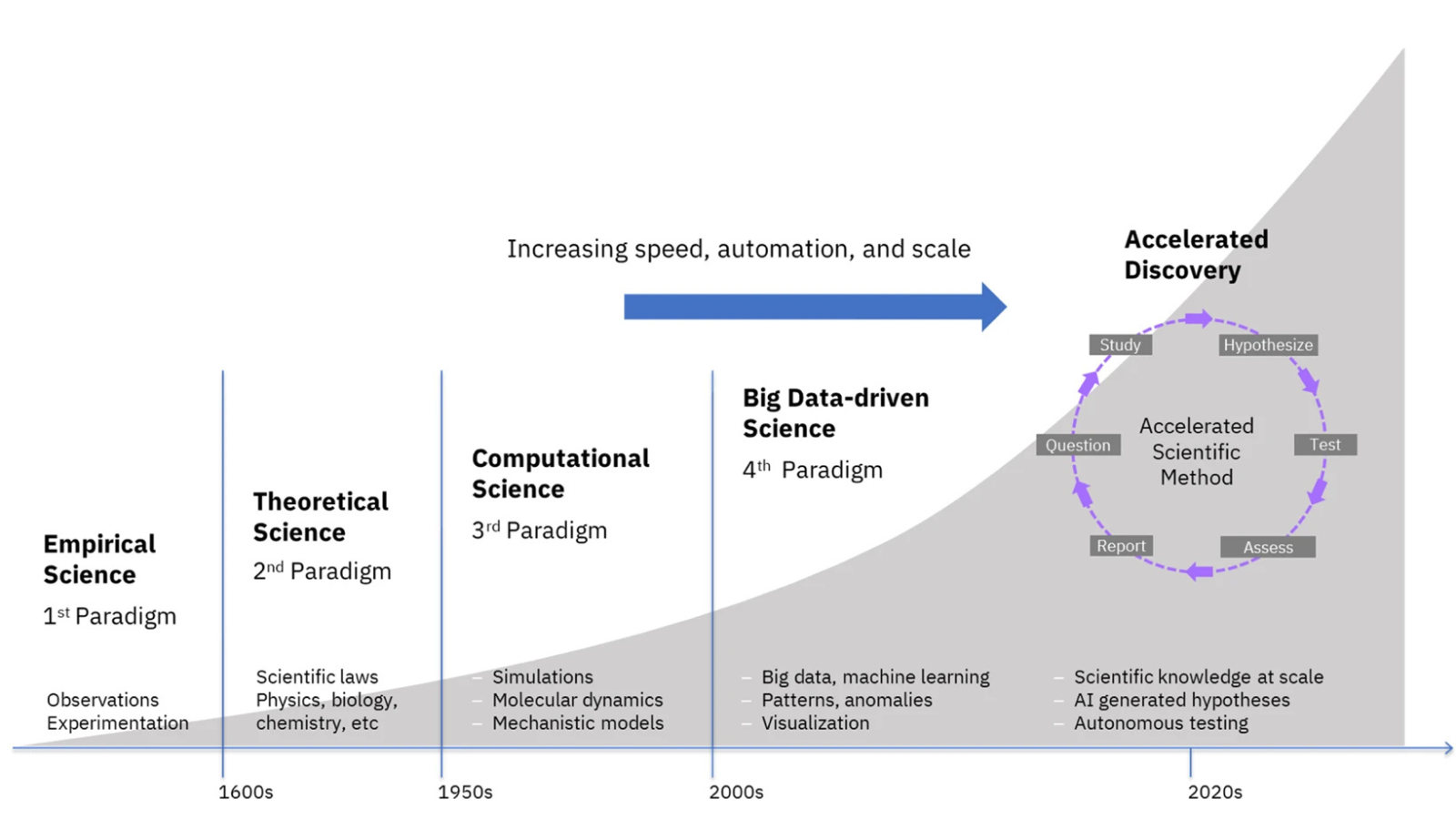
High-throughput computational screening uses computer simulations to rapidly evaluate large numbers of candidate materials.
Instead of physically producing each material, researchers first predict important properties using computational methods.
The process typically involves:
1. Generating candidate materials
2. Simulating their structures and properties
3. Ranking candidates based on performance criteria
4. Selecting the most promising materials for laboratory testing
Computational screening can analyze factors such as:
Crystal structure stability
Electronic properties
Chemical reactions
Ion transport behavior
Mechanical characteristics
This approach allows researchers to eliminate unsuitable candidates before investing time and resources into experimental synthesis.
Many computational materials studies rely on quantum mechanical methods, particularly density functional theory (DFT).
DFT allows scientists to estimate how electrons behave within a material by calculating its electronic structure.
These calculations can help predict:
Band gaps in semiconductor materials
Chemical stability
Reaction energies
Magnetic properties
Electrical conductivity trends
For example, researchers developing new battery materials can use simulations to examine how easily lithium ions move through a crystal structure before creating physical samples.
However, traditional quantum simulations have limitations. They can be computationally expensive, especially when evaluating thousands of complex materials.
This limitation has encouraged the development of faster approaches based on machine learning.
Machine learning models identify patterns in existing data and use those patterns to predict properties of new materials.
Instead of calculating every property from first principles, machine learning algorithms learn relationships between material structures and performance characteristics.
A typical workflow includes:
Collecting existing experimental and computational data
Representing materials through numerical features
Training a predictive model
Evaluating new candidate materials
Updating the model with new experimental results
Once trained, machine learning models can evaluate potential materials much faster than traditional simulations.
For example, a model that has learned relationships between atomic composition and battery performance can rapidly rank thousands of possible compounds.
The growth of open materials databases has made computational discovery more powerful.
Large databases collect information about:
Crystal structures
Chemical compositions
Simulated properties
Experimental measurements
Examples include databases developed by academic institutions and research organizations that provide researchers with millions of calculated material properties.
These resources allow scientists to search existing knowledge rather than repeatedly calculating the same information.
The combination of large datasets, computational simulations, and machine learning creates a feedback loop where each discovery improves future predictions.
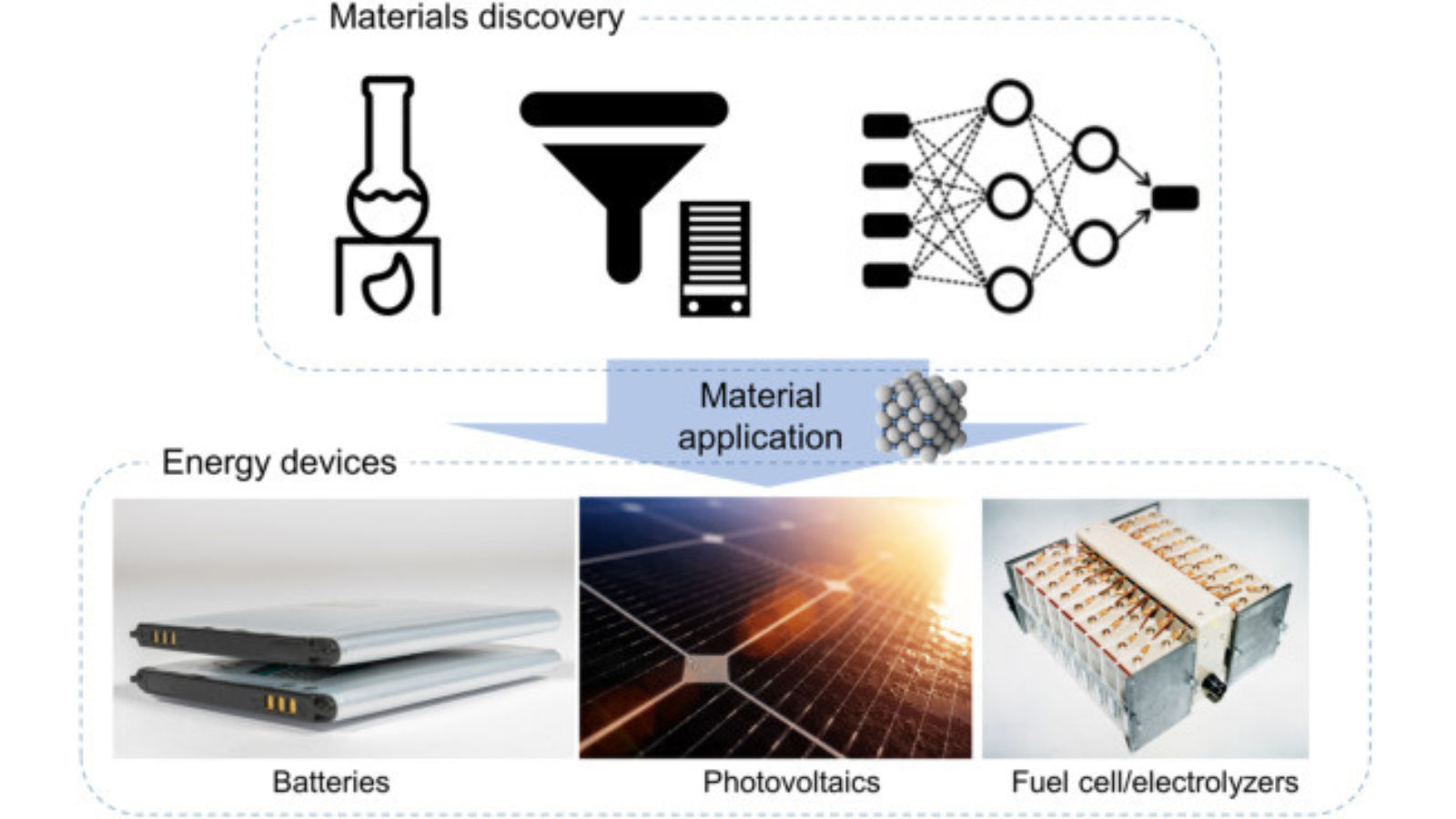
Battery research is one of the most active areas for computational materials discovery.
Researchers use machine learning and simulations to search for:
Higher-capacity electrode materials
Safer solid electrolytes
Faster ion-conducting compounds
More sustainable material alternatives
Solid-state batteries, for example, require electrolytes that combine high ionic conductivity with mechanical stability. Computational screening can help identify promising chemical structures before experimental testing.
Photovoltaic research requires materials that efficiently absorb sunlight, transport charges, and remain stable over long periods.
Machine learning models can evaluate potential solar materials based on:
Light absorption properties
Electronic structure
Stability
Manufacturing compatibility
This approach has accelerated research into emerging photovoltaic technologies, including perovskite solar cells and advanced thin-film materials.
Clean hydrogen technologies depend on catalysts that improve the efficiency of electrolysis.
Finding effective catalysts traditionally requires testing many chemical combinations.
Computational screening can predict:
Catalytic activity
Surface reactions
Material stability
Resource availability
This helps researchers identify alternatives to expensive catalyst materials such as platinum.
Carbon capture technologies require materials capable of selectively absorbing carbon dioxide while using minimal energy during regeneration.
Machine learning can help evaluate:
Adsorption capacity
Chemical stability
Regeneration requirements
Molecular interactions
Researchers are using these approaches to explore materials such as metal-organic frameworks and porous polymers.
Although machine learning has accelerated discovery, computational predictions cannot fully replace laboratory testing.
Real-world materials often behave differently because of manufacturing imperfections, operating conditions, and complex interactions that simulations may not capture.
The most effective approach combines:
Computational prediction
Automated laboratory experiments
Experimental validation
Continuous model improvement
This process is sometimes called a closed-loop discovery system.
In such systems, artificial intelligence identifies promising candidates, robotic laboratories test them, and the results improve future predictions.
Despite rapid progress, several challenges remain.
Machine learning models depend on reliable data. Inconsistent measurements, incomplete datasets, or inaccurate simulations can reduce prediction accuracy.
Many advanced materials have little existing experimental information, making it difficult for models to learn reliable patterns.
A material that appears promising in simulation may fail because of manufacturing difficulties, degradation, or unexpected chemical behavior.
Some machine learning models provide accurate predictions without clearly explaining why a material performs well. Researchers increasingly focus on developing models that provide both predictions and scientific insight.
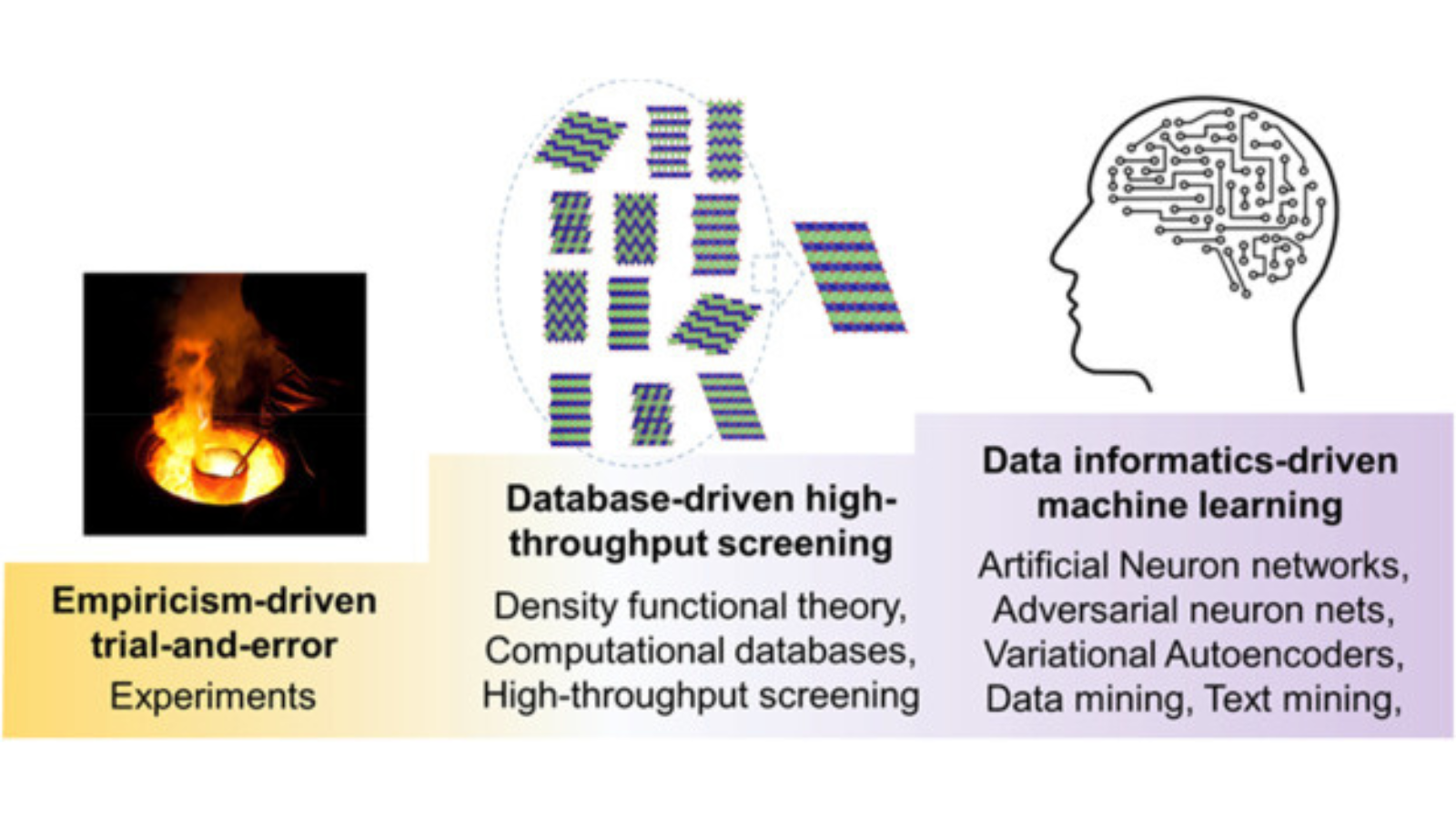
The combination of high-throughput screening, artificial intelligence, and automated experimentation is transforming how energy materials are discovered.
Future research systems may operate as intelligent laboratories capable of:
Designing new materials
Predicting performance
Conducting automated experiments
Optimizing manufacturing conditions
These capabilities could significantly reduce the time required to develop technologies for energy storage, renewable generation, hydrogen production, and carbon management.
However, successful commercialization will still require engineering validation, cost analysis, manufacturing development, and long-term reliability testing.
High-throughput computational screening and machine learning are reshaping clean energy research by allowing scientists to explore enormous material possibilities more efficiently. Instead of relying primarily on slow experimental trial and error, researchers can now combine simulations, artificial intelligence, and laboratory testing to accelerate discovery.
These tools will not replace traditional materials science, but they provide a powerful way to focus human expertise on the most promising opportunities. As clean energy technologies become more advanced, faster materials discovery will play an increasingly important role in developing safer batteries, more efficient solar cells, improved hydrogen systems, and next-generation climate solutions.